
Evidence brief for clinic investors
Hip pain at night: what the research shows
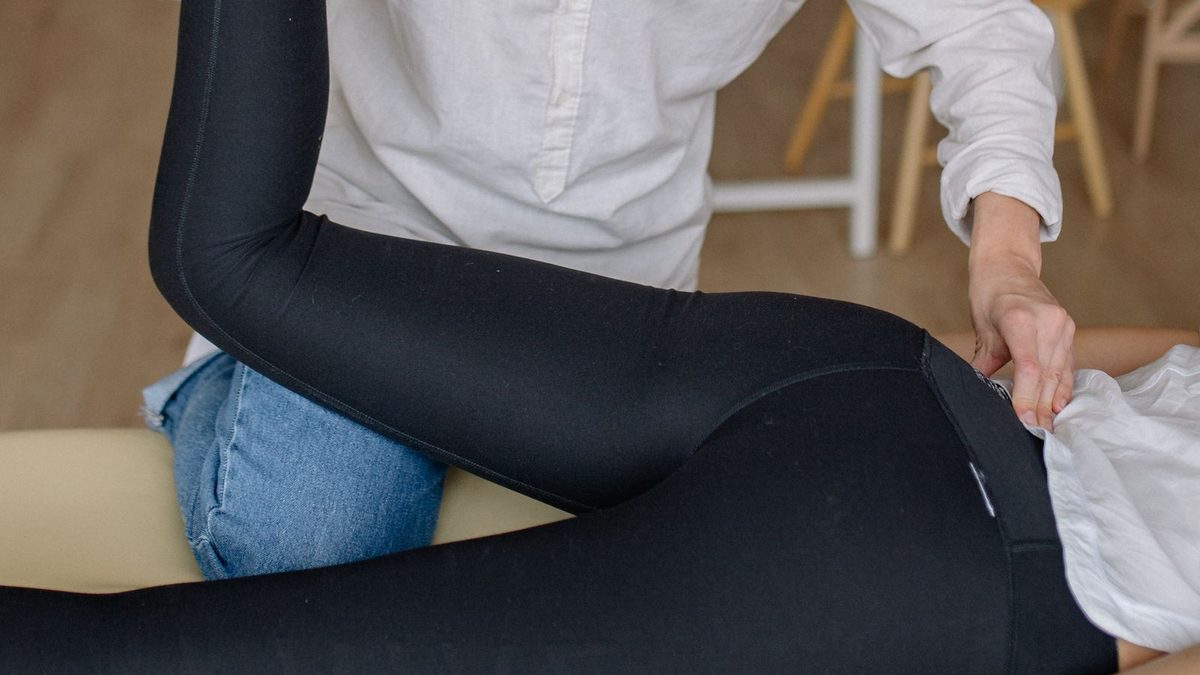
Hip pain at night usually comes in one of two forms. One is a burning ache on the outside of the hip that wakes people when they roll onto that side. The other is a deeper ache in the groin or the hip joint that comes and goes through the night, common in hip osteoarthritis. For anyone weighing a clinic business, it is one of the complaints that sends people looking for help. This brief covers what the research says about why the hip hurts in bed, how night pain and sleep relate, what guidelines list first, and what pulsed electromagnetic field (PEMF) research has and has not tested in the hip.
Why does the side of the hip hurt when lying on it?
Pain on the outside of the hip, long called trochanteric bursitis, is now usually traced to the gluteal tendons rather than the bursa. Lying on the painful side compresses those tendons, and disturbed sleep is one of the features researchers list for the condition.
Narrative review, gluteal tendinopathy (Grimaldi et al., Sports Medicine, 2015). Tendinopathy of the gluteus medius and minimus tendons is described as a primary local source of lateral hip pain, most often in mid-life and more often in women. The authors write that the condition interferes with sleep in side lying and with common weight-bearing tasks, and that the combination of excessive compression and high tensile load is thought to be the most damaging to these tendons, with hip adduction a key factor. They found a dearth of evidence for any treatment and recommend managing tendon load through exercise and education. (PubMed 25969366)
Trial protocol, the LEAP trial in gluteal tendinopathy (Mellor et al., BMC Musculoskeletal Disorders, 2016). The background states that lateral hip pain is common, particularly in women aged 40 to 60, that it can affect sleep and daily activities, and that it is often diagnosed as trochanteric bursitis although imaging and surgical studies show gluteus medius and minimus tendinopathy as the most common pathology. The protocol planned to randomize 201 people; the results are below. (PubMed 27139495)
Cross-sectional study, 62 women with greater trochanteric pain syndrome (Minetto et al., University of Turin, Frontiers in Medicine, 2025). Pain was higher in the evening (median 5 out of 10) than in the morning or afternoon (median 4). The median Pittsburgh Sleep Quality Index score was 9.0, above the cut-off of 5 used for poor sleep, and median sleep duration was 6.0 hours. Women with more tendon-related disability had worse sleep scores and more central body fat than those with less. This is a convenience sample with no comparison group and no treatment. (PubMed 41416075)
How common is night pain in hip osteoarthritis?
Common, but it comes and goes. Most people with hip or knee osteoarthritis in a large focus group study reported it, while in a cohort with early hip symptoms about a quarter to a third did at any one time.
Focus group study, 26 groups, 123 people with hip or knee osteoarthritis in 6 centers in 4 countries (Woolhead et al., Arthritis Care & Research, 2010). 81% experienced night pain. Hip and knee participants described similar experiences. Night pain appeared at every stage of the disease and grew more severe as it progressed, but it was variable and intermittent. The three themes were predicting night pain, sleep disturbance, and the routines people built around it. The authors note that night pain may not be a distinct marker of disease severity. (PubMed 20191575)
OARSI/OMERACT focus group study, 143 people aged 40 and over: 52 with hip and 91 with knee osteoarthritis (Hawker et al., Osteoarthritis and Cartilage, 2008). Participants described a dull ache that became more constant over time, punctuated by short episodes of more intense, often unpredictable pain. The pain itself and its impact on mobility, mood and sleep were the most distressing features, and unpredictable intense pain had the greatest impact on quality of life. (PubMed 18296075)
Cohort study, 170 people with hip pain suspected to be early osteoarthritis, followed 10 years (van Berkel et al., CHECK study, Osteoarthritis and Cartilage Open, 2023). Mean age 55.7, 76% women. Night pain was measured with the WOMAC question on pain at night while in bed. Its prevalence ranged from 22% to 35% across follow-up and fell slightly over 10 years; fatigue stayed at 14% to 18%. Hip pain was linked to both, but night pain did not explain the link between hip pain and fatigue. (PubMed 37214788)
How is hip pain linked to sleep?
In both directions, as far as observational studies can show. Poor sleep went with flares of hip osteoarthritis pain, and symptomatic hip or knee osteoarthritis went with insomnia.
Internet-based case-crossover study, 252 people with symptomatic hip osteoarthritis followed for 90 days, 130 analysed (Fu et al., Journal of Rheumatology, 2019). A pain flare was a rise of 2 points on a 0 to 10 scale. Poor sleep quality (odds ratio 1.72; 95% CI 1.04 to 2.86) and greater fatigue (1.92; 1.21 to 3.05) were associated with flares and stayed associated after adjusting for physical activity and night pain. Short sleep duration was not. Only half the participants were analysed, and an association does not show which comes first. (PubMed 30936279)
Community cohort, 2,682 adults, 28% with symptomatic hip or knee osteoarthritis (Allen et al., Johnston County Osteoarthritis Project, Journal of Rheumatology, 2008). In adjusted models, symptomatic osteoarthritis was associated with higher odds of any sleep problem (odds ratio 1.25; 95% CI 1.02 to 1.54), insomnia (1.29; 1.07 to 1.56) and insufficient sleep (1.35; 1.12 to 1.62), independent of self-rated health and depression. Hip and knee were not reported separately. The authors recommend routine screening for sleep problems. (PubMed 18484690)
Hip pain at night is not always tendon or joint wear. A physician should see hip or groin pain with fever, a hot or swollen joint, unexplained weight loss, a history of cancer, pain after a fall in an older person, long-term steroid use, or night pain that is constant and does not ease with a change of position. In children and teenagers, hip or knee pain with a limp always needs a physician.
What do guidelines and trials list first?
For hip osteoarthritis, education and structured exercise. For lateral hip pain, education on tendon load plus exercise, which beat both a steroid injection and wait-and-see in the largest trial. None of these sources names PEMF.
OARSI guidelines for knee, hip and polyarticular osteoarthritis (Bannuru et al., Osteoarthritis and Cartilage, 2019). Evidence was sought for 60 interventions. Core treatments for hip osteoarthritis were arthritis education and structured land-based exercise. Intra-articular corticosteroids, hyaluronic acid and aquatic exercise were not recommended for hip osteoarthritis; oral and transdermal opioids were strongly not recommended. PEMF does not appear in the abstract. (PubMed 31278997)
American College of Rheumatology / Arthritis Foundation guideline for hand, hip and knee osteoarthritis (Kolasinski et al., Arthritis Care & Research, 2020). Strong recommendations included exercise, weight loss for people with knee or hip osteoarthritis who are overweight, self-management programs, tai chi, cane use and oral NSAIDs. Cognitive behavioral therapy, balance exercises, yoga, acupuncture and thermal modalities were conditional. PEMF does not appear in the abstract. (PubMed 31908149)
Randomized, single-blinded trial, 204 adults aged 35 to 70 with MRI-confirmed gluteal tendinopathy, 167 of them women (Mellor et al., LEAP, BMJ, 2018). Fourteen physiotherapy sessions of load-management education plus exercise over 8 weeks, against one corticosteroid injection and against wait and see. At 8 weeks, success on global rating of change was reported by 51 of 66, 38 of 65 and 20 of 68; mean pain was 1.5, 2.7 and 3.8 out of 10. At 52 weeks education plus exercise still led on global improvement, but pain no longer differed from the injection group (difference −0.26; 95% CI −1.06 to 0.55). Night pain was not reported separately in the abstract. (PubMed 29720374)
Systematic review of gluteal tendinopathy treatments, randomized trials of medium or high quality to August 2024 (Bremer et al., Clinical Rehabilitation, 2025). Exercise and education had moderate-strength evidence of a medium short-term effect on pain (SMD 0.95; 95% CI 0.58 to 1.33) and function (SMD 0.91; 95% CI 0.53 to 1.28). Corticosteroid injection had a small short-term effect on pain (SMD 0.51). PEMF is not among the treatments named. (PubMed 40223303)
Did any PEMF trial measure hip pain at night?
No. We found no PEMF trial of any kind in lateral hip pain, no sham-controlled PEMF trial in hip osteoarthritis, and no PEMF study that reported night pain or sleep in the hip.
On 20 November 2026 we searched PubMed for PEMF, pulsed electromagnetic, magnetotherapy or magnetic field therapy combined with the hip and night, nocturnal or sleep. It returned two records: a 1984 pilot report in Perthes disease, a childhood hip condition, and a trial of transcranial magnetic stimulation for delirium after hip fracture surgery. Neither measured hip pain at night. A second search combining the same PEMF terms with trochanteric or gluteal tendinopathy returned two records unrelated to the hip. Our lateral hip pain brief and hip osteoarthritis brief report the wider searches behind this answer. What follows is the closest evidence there is, labelled by what it studied.
Comparison of two active magnetic treatments, 30 men with hip osteoarthritis (Koczy et al., Medicine, 2019, Poland). Fifteen received magnetostimulation and fifteen magnetoledtherapy; there was no sham or placebo group. Pain fell significantly in both groups (p < 0.05), blood β-endorphin rose in both, and painkiller use fell by 13% in the magnetoledtherapy group only. Night pain and sleep were not reported. Without a sham group, the drop in pain cannot be attributed to the magnetic field. (PubMed 31348243)
Cochrane review, 9 randomized sham-controlled trials, 636 participants with osteoarthritis (Li et al., 2013). General osteoarthritis, not the hip: the trials that can be checked are in the knee and the neck, and there is no hip subgroup. Pain relief was rated 15.10 points more than placebo on a 0 to 100 scale (95% CI 9.08 to 21.13) after 4 to 26 weeks. Physical function (mean difference 4.55, not significant) and quality of life did not differ from placebo. (PubMed 24338431)
Meta-analysis, 15 randomized placebo-controlled trials in osteoarthritis (Yang et al., Physical Therapy, 2020). Mostly knee trials, no hip subgroup. Against placebo: pain standardized mean difference 1.06 (95% CI 0.61 to 1.51), stiffness 0.37 (95% CI 0.07 to 0.67), function 0.46 (95% CI 0.14 to 0.78). The evidence covered short-term effects only. (PubMed 32251502)
Where does the PEMF evidence stop?
Before the hip, and before the night. The one case series that looked at the hip separately found it the joint where the treatment worked least well, and the closest sham-controlled tendon trial found nothing added to exercise.
Weak result for the hip. Uncontrolled case series, 576 patients with spinal, knee or hip complaints (Sadlonova & Korpas, Bratislava Medical Journal, 1999, in Slovak). The authors reported PEMF as more effective in knee osteoarthritis than in spinal pain, and least effective in hip osteoarthritis. There was no control group. (PubMed 10758749)
Null result. Randomized sham-controlled trial, 65 adults with Achilles tendinopathy, 33 active PEMF and 32 sham (Ko et al., Orthopaedic Journal of Sports Medicine, 2024). The Achilles tendon, not the hip. Both groups did 12 weeks of eccentric exercise; one added 8 weeks of PEMF. VISA-A scores rose from 57.9 to 71.7 with PEMF and from 55.1 to 66.8 with sham, with no difference between groups (P = .527), and pain during sport fell alike in both (P = .346). One co-author holds a PEMF patent and co-founded a PEMF company. Our Achilles tendinopathy brief covers its follow-up. (PubMed 39534390)
- No PEMF study we found measured hip pain at night, pain lying on the side, or sleep in people with hip pain.
- Direct PEMF evidence in lateral hip pain is zero: no sham-controlled trial, no comparative trial, no case series.
- In hip osteoarthritis the only hip-specific comparison had 30 men, two active treatments and no sham group.
- The sham-controlled osteoarthritis reviews are knee-led, report no hip subgroup, and found no significant difference in function in the Cochrane review.
- The nearest sham-controlled tendon trial, in the Achilles, was null.
- A result applies to the protocol tested, not to every device sold as PEMF.
What should a buyer ask when evaluating a clinic model?
- How does the intake tell lateral hip pain from hip joint osteoarthritis, and who refers fever, a hot joint, weight loss, a fall or constant night pain to a physician?
- Does the model sit alongside education and exercise, which guidelines and the largest lateral hip trial put first, or try to replace them?
- Will the clinic record night pain, pain lying on the side and sleep for every client, since no PEMF trial has?
- Does any claim about the hip at night cite a PEMF trial in the hip? Ask for it by name. We found none.
- Can the seller show you the null and weak results above as readily as the positive knee trials?
What has the FDA decided about PEMF technology?
Two FDA pathways matter here. PEMF bone-growth stimulators reached the market through premarket approval: PMA P790002, approved in 1979 for fractures that had not united. Devices that apply pulsed electromagnetic energy for adjunctive use in postoperative pain and edema are classified under 21 CFR 890.5290(b), nonthermal shortwave therapy, and reach the market through 510(k). Neither indication covers hip osteoarthritis, lateral hip pain or pain at night, and every FDA decision is specific to one device, model and intended use. Our guide PEMF and the FDA shows how to check a particular device's record.
Where can I read the research myself?
Every study on this page links to its PubMed abstract. A wider library of PEMF studies, each checked against the original paper, is at pemf-research.com. On this site, see the briefs on hip osteoarthritis, trochanteric bursitis and lateral hip pain, groin pain and adductor strain, piriformis syndrome and insomnia and sleep, and the companion questions on knee pain at night, back pain at night and sciatica at night.
Who publishes these guides?
These guides are written by PainFree. PainFree has run pain-relief clinics in Israel for 25 years, and more than 70 operate today; its Israeli site, in Hebrew, is painfree.org.il. We would want any buyer to read the evidence behind a clinic model this carefully, ours included.
Related research on this site
This article is general information for prospective business owners. It is not legal, financial or medical advice. We do not make earnings claims, and this page is not an offer to sell a franchise or a business opportunity. Study results describe the trials cited, not any particular device or clinic. Equipment supplied to US clinics will meet the applicable US regulatory requirements.