
Evidence brief for clinic investors
Sciatica at night: what the research shows
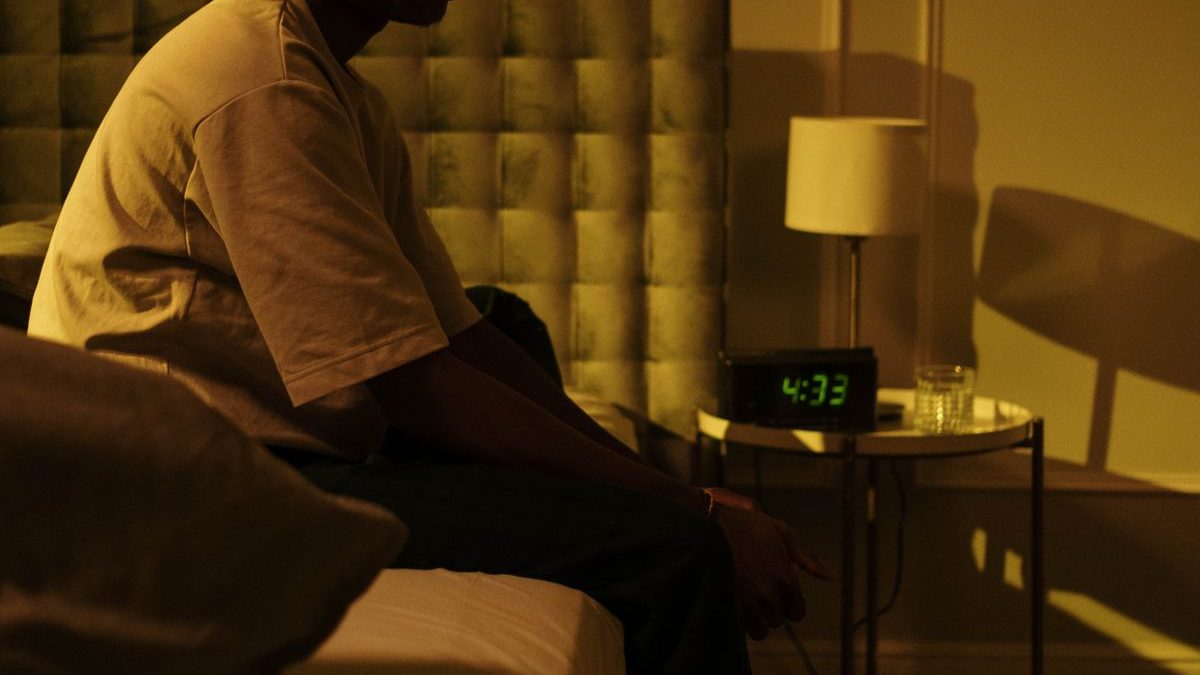
Leg pain that wakes people at night, or that makes lying down hard, is one of the most common complaints people with sciatica describe. If you are evaluating a clinic business built on pulsed electromagnetic field (PEMF) technology, this is what the research says about sciatica at night: when it is a warning sign, what the bed rest and drug trials found, how long sciatica usually lasts, and where the PEMF evidence stops, null results included.
Why can sciatica feel worse at night?
We found no study that measured why radicular leg pain changes at night, so we do not offer a mechanism. What the research does show is that night pain is common in people seen for back pain and disrupts their sleep, without being a marker of serious disease on its own.
Prospective study, 482 consecutive patients in a back pain triage clinic (Harding et al., Spine, 2005). 213 had night pain and 90 had it every night. No serious pathology was identified. People with night pain had 4.95 hours of continuous sleep (range 2 to 7) and were woken 2.5 times a night (range 0 to 6), and those with pain every night had higher Oswestry, pain and anxiety-depression scores. The abstract does not separate patients with leg pain from those with back pain only. (PubMed 16135990)
The wider picture of night pain in the lower back, including the inflammatory back pain pattern, is covered in back pain at night: what the research shows.
When is sciatica at night a warning sign?
Night pain on its own is not the warning sign. The signs that call for urgent assessment are those of cauda equina syndrome, such as numbness in the saddle area, difficulty passing urine, or loss of bladder or bowel control. A systematic review found these signs miss many cases, but when they are present they justify prompt diagnostic workup.
Systematic review, 7 diagnostic studies, 569 participants, red flags compared with MRI-confirmed cauda equina syndrome (Dionne et al., Musculoskeletal Science and Practice, 2019). Pooled data covered reduced anal tone, leg pain, back pain, saddle anaesthesia, urinary retention, urinary incontinence and bowel incontinence. Pooled sensitivity ranged from 0.19 to 0.43 and pooled specificity from 0.62 to 0.88. The authors conclude the red flags appear more specific than sensitive, and that when present they should be considered justification for prompt diagnostic workup. (PubMed 31132655)
For a clinic the practical point is referral: anyone describing these symptoms needs a physician first, the same night if they are new.
Does bed rest help sciatica?
Not in the randomized trial that tested it. Two weeks of bed rest did no better than watchful waiting, and most people in both groups had improved by 12 weeks.
Randomized trial, 183 people with lumbosacral radicular syndrome severe enough to justify two weeks of bed rest (Vroomen et al., New England Journal of Medicine, 1999). Bed rest against watchful waiting for two weeks, with outcome assessors blinded. After two weeks, 70% of the bed-rest group (64 of 92) and 65% of the watchful-waiting group (59 of 91) reported improvement (adjusted odds ratio 1.2; 95% CI 0.6 to 2.3). After 12 weeks, 87% in both groups had improved. Pain intensity, function, time off work and rates of surgery did not differ. (PubMed 9971865)
Do sleep position, pillows or the mattress matter?
There is no trial evidence for sciatica. We found no randomized trial of sleeping position or a pillow between the knees in people with sciatica, and the best-known mattress trial deliberately left out people with leg pain.
Randomized, double-blind, multicentre trial, 313 adults with chronic non-specific low back pain and no referred pain, who had backache in bed and on rising (Kovacs et al., The Lancet, 2003). At 90 days a medium-firm mattress did better than a firm one for pain in bed (odds ratio 2.36; 95% CI 1.13 to 4.93) and disability (2.10; 1.24 to 3.56); for pain on rising the confidence interval crossed 1 (1.93; 0.97 to 3.86). Because people with referred pain were excluded, the result cannot be carried over to sciatica. (PubMed 14630439)
Sleep position advice for sciatica is therefore comfort guidance, not tested evidence, and a buyer should read it that way in any clinic material.
Does nerve-pain medication help sciatica?
The large placebo-controlled trial of pregabalin, a drug often given for nerve pain, found no difference in leg pain and more side effects. It did not report night pain separately.
Randomized, double-blind, placebo-controlled trial, 209 patients with acute or chronic sciatica (Mathieson et al., New England Journal of Medicine, 2017). Pregabalin 150 to 600 mg a day for up to 8 weeks. Leg pain at week 8 was 3.7 with pregabalin and 3.1 with placebo on a 10-point scale (adjusted mean difference 0.5; 95% CI −0.2 to 1.2; P=0.19), and at week 52 it was 3.4 against 3.0 (P=0.46). No secondary outcome differed. There were 227 adverse events with pregabalin and 124 with placebo, and dizziness was more common with pregabalin. (PubMed 28328324)
How long does sciatica usually last?
Many cases improve over months whatever is done, which is why any trial without a sham or placebo group is hard to read. In primary care just over half of people with back-related leg pain had improved at a year, and in severe sciatica nearly all reported recovery at a year with or without early surgery.
Prospective cohort, 609 adults seeing their family doctor with back-related leg pain, UK (Konstantinou et al., The Spine Journal, 2018). Good outcome was defined as a 30% or greater fall in Roland-Morris disability. At 12 months, 55% had improved, in the whole sample and in the sciatica subgroup. Longer leg pain duration and the patient's belief that the problem would last a long time were among the strongest factors linked to not improving. (PubMed 29174459)
Randomized trial, 283 patients with severe sciatica for 6 to 12 weeks (Peul et al., New England Journal of Medicine, 2007). Early surgery against prolonged conservative care with surgery if needed; 39% of the conservative group were treated surgically after a mean of 18.7 weeks. Disability over the first year did not differ overall (P=0.13). Leg pain eased faster with early surgery (P<0.001), but the probability of perceived recovery at one year was 95% in both groups. (PubMed 17538084)
Systematic review, 31 studies of lumbar disc herniation managed conservatively (Chiu et al., Clinical Rehabilitation, 2015). This is not a PEMF study. Spontaneous regression was seen in 96% of sequestrations, 70% of extrusions, 41% of protrusions and 13% of bulges. (PubMed 25009200)
What does PEMF research show for sciatica?
A few small trials, mostly positive, one null, and none designed around night pain. A 40-patient placebo-controlled trial in disc-related radiculopathy (PubMed 23083041) reported between-group differences in pain and in the sleeping section of the Oswestry questionnaire after 3 weeks; a pilot after lumbar surgery found no significant difference from sham. Full detail is in our herniated disc and sciatica brief.
Randomized placebo-controlled trial, 40 patients with lumbar radiculopathy due to disc prolapse (Omar et al., International Journal of Rheumatic Diseases, 2012). Single center (Suez Canal University), 20 patients per group, assessed at baseline and after 3 weeks. Between-group differences were significant for pain on a visual analogue scale (P=0.024), total Oswestry score (P<0.001) and its domains, including sleeping (P<0.001), walking, sitting and standing (each P<0.001). Somatosensory evoked potential latency and amplitude also differed. The abstract reports p-values only, with no effect sizes. (PubMed 23083041)
Systematic review and meta-analysis, 13 randomized trials in neuropathic pain; the main analysis pooled 9 sham-controlled trials, 688 patients (Lara-Reyes et al., Neurology International, 2026). In the spinal and radicular subgroup, which rested on 3 trials, the pooled standardized mean difference was −2.35 (95% CI −4.42 to −0.29). The global estimate was −1.01 (p=0.03), but heterogeneity was extreme (I² = 92.8%) and the result was no longer significant after trim-and-fill correction for publication bias. (PubMed 41745713, full text PMC12943413)
Randomized trial, 100 patients with L5/S1 lumbar radiculopathy (Thuile & Walzl, NeuroRehabilitation, 2002). A magnetic field twice daily for 2 weeks plus medication, against medication alone. Disc herniation was an exclusion criterion. Time to pain relief and painless walking was 8.2±0.5 days with the magnetic field against 11.7±0.5 days without (p<0.04). The trial had no sham group and was not blinded. (PubMed 12016348)
Did any PEMF trial measure sciatica pain at night?
No. None of the PEMF trials above selected patients by night pain or measured night pain, night waking or sleep with a sleep instrument. The nearest thing is one item of a disability questionnaire in a single 40-patient trial.
The Oswestry sleeping section in the Omar trial is part of a back-disability questionnaire, reported as a p-value with no size of change. It is a hint, not a night-pain result. Anyone who says PEMF has been shown to help sciatica at night is going beyond the published trials.
Where does the PEMF evidence stop?
At several points a buyer should know before reading any marketing. The one double-blind sham-controlled trial in leg pain found no significant difference between groups, the positive trials are small, and none was built around night pain.
Pilot double-blind, sham-controlled trial, three arms, 36 patients with persistent back and leg pain after lumbar surgery (Sorrell et al., Journal of Pain Research, 2018). Leg pain fell 45.0% in the 42-μs arm, 17.0% in the 38-μs arm and 24.5% with sham; back pain fell 40.2% against 25.6% with sham. All between-group comparisons were not statistically significant (p>0.05). (PubMed 29950893)
- No PEMF trial cited here measured night pain or sleep as an outcome, so none can be read as a result for sciatica at night.
- Omar 2012 is small (40 patients), single-center and 3 weeks long; the abstract does not describe blinding and gives no effect sizes.
- The 2026 meta-analysis radicular subgroup rests on 3 trials with a very wide confidence interval, and the pooled result did not survive correction for publication bias.
- Thuile & Walzl 2002 had no sham and no blinding, and excluded herniated disc.
- Sciatica often improves on its own over weeks to months, so trials without a sham group cannot separate a device from the natural course.
- A result belongs to the protocol that was tested, not to every device sold under the PEMF label.
What should a buyer ask when evaluating a clinic model?
- How are people with leg pain screened for cauda equina symptoms and progressive weakness, and to whom are they referred, and how fast?
- Does the clinic material describe sciatica as an area of small, early PEMF trials, with the null trial shown as readily as the positive ones?
- Does the material avoid promising better nights, given that no PEMF trial measured night pain?
- Will leg pain, night waking and sleep be measured for every client, so the clinic knows what it delivers?
What has the FDA decided about PEMF technology?
The FDA record of PEMF starts in 1979, when a PEMF bone growth stimulator received premarket approval (PMA P790002) for non-union fractures. Pain and swelling after surgery have their own FDA classification regulation, 21 CFR 890.5290(b), nonthermal shortwave therapy: a prescription device that applies pulsed electromagnetic energy and is used adjunctively for postoperative pain and soft-tissue edema, reviewed through 510(k). Neither indication is sciatica or night-time leg pain. Each FDA decision covers one device, one model and one indication, and it does not carry over to other devices or uses. Our guide PEMF and the FDA explains how to look up a device's own record.
Where can I read the research myself?
Every study above links to its PubMed abstract. More published PEMF studies, each checked against the original paper: pemf-research.com. Compare with our herniated disc and sciatica and neuropathic pain briefs, and with back pain at night and disc bulge recovery time.
Who publishes these guides?
These guides are written by PainFree. PainFree has run pain-relief clinics in Israel for 25 years, and more than 70 operate today; its Israeli site, in Hebrew, is painfree.org.il. We would want any buyer to read the evidence behind a clinic model this carefully, ours included.
Related research on this site
This article is general information for prospective business owners. It is not legal, financial or medical advice. We do not make earnings claims, and this page is not an offer to sell a franchise or a business opportunity. Study results describe the trials cited, not any particular device or clinic. Equipment supplied to US clinics will meet the applicable US regulatory requirements.