
Evidence brief for clinic investors
Back pain when bending over: what the research shows
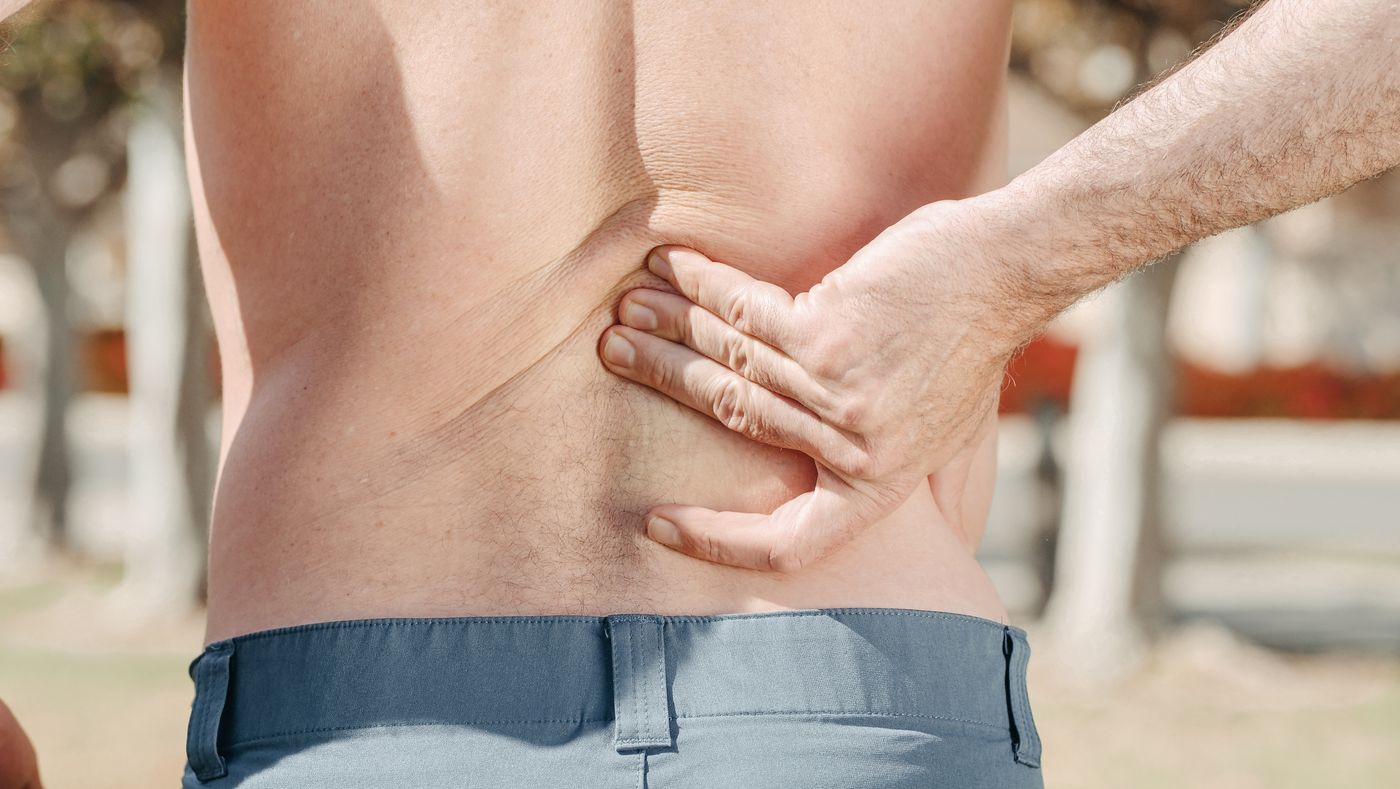
Tying a shoe, loading a dishwasher, lifting a child or a box: for many people with low back pain, the movement that catches is the forward bend, and sometimes the straightening up afterwards. Clinicians call this flexion-related or flexion-intolerant pain. This brief looks at what the research says about where such pain may come from (disc, facet joint or muscle), whether a rounded back when lifting is really the culprit, what guidelines put first, and what pulsed electromagnetic field (PEMF) trials did and did not measure.
What does flexion intolerance mean?
It means the back hurts more, or the pain spreads, when the lumbar spine bends forward. Some clinical systems sort patients by the direction of movement that provokes or eases their pain, and the best-known trial of that approach found that most people with back pain have such a direction.
Multicenter randomized trial, 312 people with acute, subacute or chronic low back pain, with or without sciatica (Long, Donelson and Fung, Spine, 2004). A standardized mechanical assessment looked for a directional preference: an immediate, lasting improvement from repeated flexion, extension or side-glide movements. 230 people (74%) had one and were randomized to exercises matching that direction, exercises in the opposite direction, or non-directional exercises. A third of the opposite and non-directional groups withdrew within 2 weeks because they were no better or worse; no one in the matched group withdrew. The matched group improved more on every outcome (p < 0.001), including a threefold drop in medication use. The authors note the subgroup finding has important implications only if it can be repeated. (PubMed 15564907)
For the person who hurts on bending, flexion is the provoking direction. The trial above did not report results separately for that subgroup, so it says that the direction matters, not which exercise suits a flexion-intolerant back.
Does pain on bending forward point to a disc?
It can, but the sign is not specific enough to diagnose a disc on its own. Bending forward loads the disc more than standing upright does, and one movement-testing sign, centralization, is closely linked to a painful disc when it is present. Most patients with a painful disc do not show it.
In-vivo pressure measurement, one 45-year-old male volunteer, L4-L5 disc (Wilke et al., Spine, 1999). A sensor implanted in a healthy disc read 0.5 MPa in relaxed standing and 1.1 MPa standing bent forward. Lifting a 20 kg weight with a rounded, flexed back read 2.3 MPa, with bent knees 1.7 MPa, and holding it close to the body 1.1 MPa. This is a single person with a non-degenerated disc, so it describes load, not the source of anyone's pain. (PubMed 10222525)
Prospective blinded study, patients with chronic disabling low back pain referred for discography (Donelson et al., Spine, 1997). During a McKenzie movement assessment, pain centralized (retreated toward the spine) in 50% of patients, and 74% of those had a positive discogram. In the 25% whose pain did not respond at all, only 12.5% had a positive discogram. The authors report that the assessment separated disc from non-disc pain (p < 0.001). (PubMed 9160470)
Diagnostic accuracy study, 107 patients with persistent low back pain, discography as the reference (Laslett et al., The Spine Journal, 2005). Centralization had a sensitivity of 40%, a specificity of 94% and a positive likelihood ratio of 6.9 for a painful disc. With severe disability the specificity fell to 80%, and with psychosocial distress to 89%. 38 patients could not tolerate the full examination and were excluded. In practice: when pain centralizes, a disc is likely; when it does not, a disc is not ruled out. (PubMed 15996606)
Our herniated disc and sciatica brief and degenerative disc brief cover the disc conditions themselves.
Can bending pain come from the facet joints?
Less often, by the one line of research that tested it. In studies that numbed the facet joints, the patients who responded tended to be the ones whose pain was not made worse by bending forward or by straightening up from it.
Preliminary study, 40 patients given facet joint blocks (Revel et al., Archives of Physical Medicine and Rehabilitation, 1992). Of 90 manoeuvres and symptoms, seven were more frequent in the 22 responders: older age, no worsening on coughing, relief lying down, no worsening on forward flexion, no worsening on rising from flexion, no worsening on hyperextension, and no worsening on extension-rotation. Four of the seven together gave a sensitivity of 81.8% and a specificity of 77.8%, which the authors said needed testing in a new group. (PubMed 1387521)
Randomized, blinded comparison of lidocaine and saline facet injections, 80 patients (Revel et al., Spine, 1998). 43 patients met at least five of the seven criteria and 37 did not. Lidocaine gave more relief than saline in the criteria group (p = 0.01), and five of seven criteria, always including relief when lying down, identified 92% of lidocaine responders. The authors state the criteria are a tool for selecting trial patients, not definite diagnostic criteria for facet pain. (PubMed 9779530)
That does not mean a painful bend excludes the facet joints; it means that, in these samples, flexion pain leaned away from them. The facet joint pain brief covers that condition and its trials.
What happens in the back muscles when you bend forward?
In most people without back pain, the long back muscles go quiet near the bottom of a full forward bend, a pattern called the flexion relaxation phenomenon. In about half of people with chronic non-specific low back pain, that switch-off is missing and the muscles keep working.
Systematic review and meta-analysis, 27 studies (21 pooled), chronic non-specific low back pain (Gouteron et al., European Spine Journal, 2022). An altered flexion relaxation response was found in 55% of patients (95% CI 32% to 79%). The flexion relaxation ratio differed from people without back pain by −1.19 (95% CI −1.92 to −0.45), and repeat measurements were reproducible. Heterogeneity was above 80% in every analysis, and the authors say more research is needed before the ratio can be used as a marker. (PubMed 34553264)
Whether muscles that stay switched on cause the pain on bending, or are the body's way of guarding a painful back, these studies cannot say.
Is bending with a rounded back what causes back pain?
The pooled evidence does not support that. People with and without back pain bend about as far when they lift, and a rounded back was not shown to be a risk factor. What did stand out as a short-term trigger of a new episode was handling heavy loads, especially in younger adults.
Systematic review with meta-analysis of lumbar flexion during lifting (Saraceni et al., Journal of Orthopaedic & Sports Physical Therapy, 2020). Four studies measuring flexion between the lumbar vertebrae found no difference in peak flexion between people with and without back pain (1.5°, 95% CI −0.7° to 3.7°, longitudinal; −0.9°, 95% CI −2.5° to 0.7°, cross-sectional). Seven studies using trunk-to-pelvis angles found people with back pain lifted with 6.0° less flexion. 9 of 11 studies found no between-group difference, and study quality was low. The authors conclude that greater lumbar flexion during lifting was not shown to be a risk factor for back pain starting or persisting. (PubMed 31775556)
Case-crossover study, 999 people with a new episode of acute low back pain, 300 primary care clinics in Sydney (Steffens et al., Arthritis Care & Research, 2015). Each person reported exposure to 12 possible triggers in the 96 hours before onset. Odds ratios ranged from 2.7 for moderate or vigorous activity to 25.0 for being distracted during a task. For heavy loads, the odds ratio was 13.6 at age 20, 6.0 at age 40 and 2.7 at age 60. Risk was highest between 7 a.m. and noon. Exposure was self-reported after the pain began. (PubMed 25665074)
Back pain on bending can also be the first sign of something that needs a physician first: pain after a fall or other trauma, pain with fever or weight loss, a history of cancer, numbness in the saddle area, new bladder or bowel problems, or weakness spreading in a leg. Our brief on sudden lower back pain goes through the red flags with their numbers.
What do clinical guidelines recommend first?
Non-drug care. For acute back pain the American College of Physicians lists heat, massage, acupuncture or spinal manipulation; for chronic back pain, exercise and a range of movement, mind-body and rehabilitation approaches come before medicines. PEMF is not named in the guideline abstract.
Clinical practice guideline, noninvasive care of low back pain (Qaseem et al., American College of Physicians, Annals of Internal Medicine, 2017). Because most acute and subacute back pain improves over time whatever is done, the first choice is superficial heat (moderate-quality evidence), massage, acupuncture or spinal manipulation; NSAIDs or muscle relaxants if a drug is wanted. For chronic pain the first choice includes exercise, multidisciplinary rehabilitation, acupuncture, mindfulness-based stress reduction, tai chi, yoga, motor control exercise, low-level laser therapy, cognitive behavioral therapy and spinal manipulation, with drugs considered only after that. (PubMed 28192789)
Did any PEMF trial measure pain on bending?
No, not that we found. No PEMF trial we located selected patients because bending hurt, or reported pain on bending as an outcome. The closest is one sham-controlled trial that measured how far the lower back bends forward, which is range of motion, not pain during the movement.
Randomized, patient-blinded trial, 50 people with chronic non-specific low back pain (Elshiwi et al., Cairo University, Brazilian Journal of Physical Therapy, 2019). Both groups had the same conventional physical therapy for 12 sessions over 4 weeks, with either a 50 Hz, 20 gauss PEMF field or a sham field. The abstract lists between-group differences in lumbar flexion range (MD −1.27; 95% CI −1.09 to −1.45), extension (MD −1.1), side-bending (MD 8.2 right, 10.4 left) and disability (MD 8.14; 95% CI 6.5 to 9.96), all in favour of the PEMF group, but does not give the unit or the measuring method for the flexion figure. The pain difference had a 95% CI of −0.34 to 3.35, which crosses zero, although the abstract calls it significant. No adverse events. (PubMed 30177406)
Meta-analysis, 14 randomized trials and 618 people with low back pain (Sun et al., Sichuan University, Clinical Rehabilitation, 2022). Against placebo, the pooled pain result was SMD −1.01 (95% CI −1.42 to −0.60; I² = 31%); in the chronic subgroup SMD −0.60 (95% CI −0.94 to −0.25; I² = 67%). The acute subgroup did not reach significance (SMD −0.46; 95% CI −0.99 to 0.07), and physical function did not differ (SMD −0.45; 95% CI −0.98 to 0.07; I² = 86%). Bending was not analysed separately. (PubMed 35077249)
Systematic review without pooling, 9 randomized trials and 420 people with non-specific low back pain (Kull et al., Medical University of Vienna, 2023). Five trials reported a significant advantage for PEMF on pain and function; four did not. Mean PEDro quality score was 7.2, and protocols ran from 10 to 30 minutes, 2 to 7 times a week, at 3 to 50 Hz and 2 to 150 mT. No serious adverse events were reported. (PubMed 37999784)
Where does the PEMF evidence stop?
At the complaint on this page, and at trials where the sham group caught up or the outcome that matters most did not move.
Null result between groups. Randomized double-blind, placebo-controlled trial, 42 people with chronic low back pain (Alzayed and Alsaadi, Asian Spine Journal, 2020). PEMF with exercise against sham with the same exercise, assessed at weeks 3, 6, 9 and 13. The PEMF group's pain and disability scores improved by week 3 and the sham group's by week 6, after which there was no difference between the groups at weeks 6 and 13. The authors conclude PEMF does not seem to be superior to other options. (PubMed 31575112)
Null result for pain and disability. Randomized pilot study, 75 US service members with chronic low back pain (Nayback-Beebe et al., Nursing Outlook, 2017). Usual care against usual care plus PEMF, followed to 1 month after treatment. Physical and mental quality-of-life scores differed between groups (p = .011 and p = .018); pain and back-related disability did not reach significance. Anxiety symptoms were higher in the PEMF group (p = .007), which the authors called surprising. (PubMed 28893387)
- No PEMF trial we found measured pain during or after bending forward, and none enrolled people by flexion-provoked pain.
- The one trial that measured lumbar flexion reported range of motion without the unit in its abstract, and its pain interval crossed zero.
- The trials enrolled non-specific low back pain; none sorted patients into disc, facet or muscle sources, so no result can be read as a result for one of them.
- The pooled pain benefit is in chronic, not acute, back pain, and physical function did not differ in the meta-analysis.
- Field strengths, frequencies and session schedules varied widely, and a result applies to the protocol that was tested, not to every device sold as PEMF.
What should a buyer ask when evaluating a clinic model?
- Does the intake record which movement provokes the pain, and does anyone assess directional preference or centralization, or is every back handled the same way?
- Who sends a patient with trauma, fever, saddle numbness, bladder or bowel changes or spreading leg weakness to a physician before anything else?
- Does the model sit alongside the exercise and active care that guidelines list first, or present itself as a replacement?
- Will the clinic measure something closer to the complaint, such as pain on a standard forward bend, rather than only a general pain score?
- Does the seller show the sham-controlled trials that found no lasting difference as readily as the positive ones?
What has the FDA decided about PEMF technology?
Two FDA pathways are relevant. PEMF bone-growth stimulators entered the market through premarket approval, PMA P790002, approved in 1979 for fractures that had failed to unite. Devices that apply pulsed electromagnetic energy for adjunctive use in postoperative pain and edema are classified under 21 CFR 890.5290(b), nonthermal shortwave therapy, and are cleared through 510(k). Neither indication is low back pain or pain on bending, and each FDA decision belongs to one device, model and intended use. The guide PEMF and the FDA on this site explains how to look up a specific device's record.
Where can I read the research myself?
Every study on this page links to its PubMed abstract. A wider library of PEMF studies, each checked against the original paper, is at pemf-research.com. On this site, see the briefs on chronic low back pain, facet joint pain, herniated disc and sciatica and degenerative disc disease, and the companion questions on sudden lower back pain, lower back pain on one side, back pain when sitting and what to do with a bulging disc.
Who publishes these guides?
These guides are written by PainFree. PainFree has run pain-relief clinics in Israel for 25 years, and more than 70 operate today; its Israeli site, in Hebrew, is painfree.org.il. We would want any buyer to read the evidence behind a clinic model this carefully, ours included.
Related research on this site
This article is general information for prospective business owners. It is not legal, financial or medical advice. We do not make earnings claims, and this page is not an offer to sell a franchise or a business opportunity. Study results describe the trials cited, not any particular device or clinic. Equipment supplied to US clinics will meet the applicable US regulatory requirements.