
Evidence brief for clinic investors
PEMF for facet joint pain: what the research shows
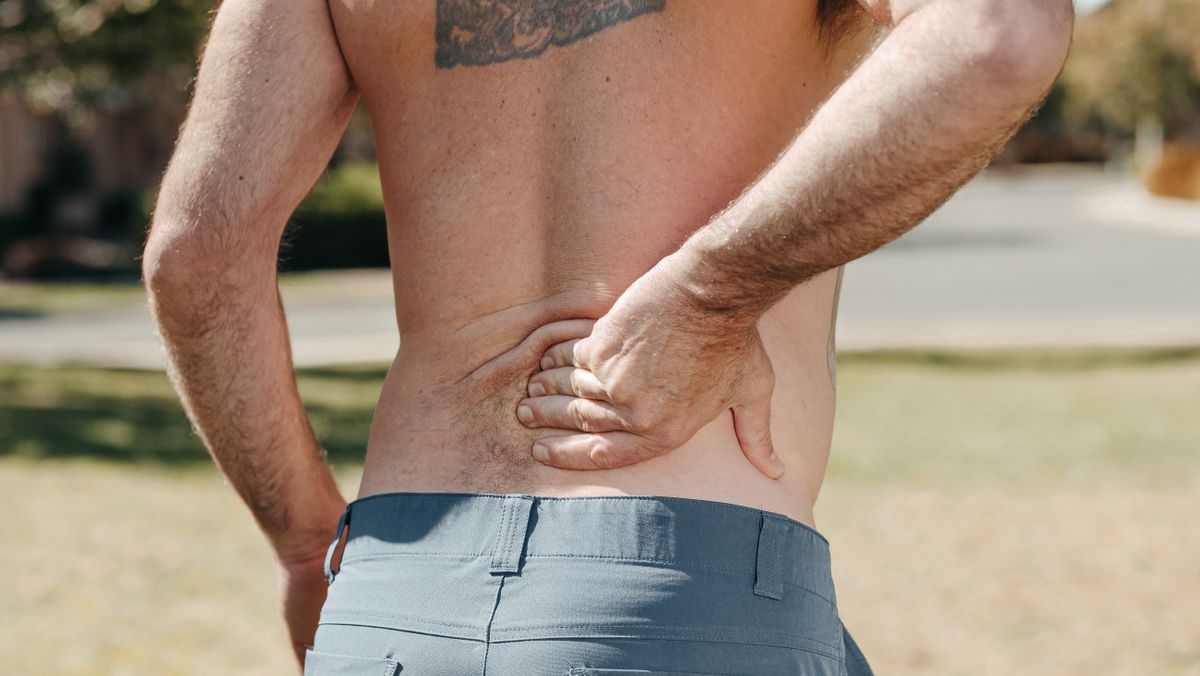
The facet (zygapophysial) joints are the small paired joints at the back of each spinal level. Pain from them is a recognized source of chronic low back and neck pain, but it cannot be identified by history or examination; research confirms it with anesthetic blocks. The standard options are intra-articular steroid injections, medial branch blocks followed by radiofrequency denervation, and exercise. Pulsed electromagnetic field (PEMF) technology is sometimes offered for this kind of back pain. We found no PEMF trial in patients with confirmed facet joint pain. This is an evidence-gap brief: it shows how facet pain is diagnosed, what its treatment trials found, null results included, and the nearest PEMF evidence, each labelled by the condition it actually studied.
How big the problem is
We found no official US figure for facet joint pain from the CDC, NCHS or NIH. The broader category is large: in the National Health Interview Survey, 39.0% of US adults reported back pain in the previous three months (NCHS Data Brief No. 415, 2019 data). That figure covers all back pain. How much of it comes from the facet joints depends heavily on how the diagnosis is made, as the studies below show.
What the trials measured
The search: no PEMF trial in facet joint pain
On 17 November 2026 we searched PubMed for pulsed electromagnetic field, PEMF, magnetotherapy and magnetic field therapy, combined with facet, zygapophysial and zygapophyseal. The search returned 47 records. Most were transcranial magnetic stimulation, MRI and nanoparticle studies picked up by the word "facet". None was a PEMF treatment study in patients whose pain was traced to the facet joints. One was a feasibility study of repeated peripheral magnetic stimulation combined with multifidus injections, a different technology. The nearest PEMF trials are in osteoarthritis of the cervical spine and in low back pain in general; they are labelled below.
How facet joint pain is identified
Narrative review of lumbar facet joint pain (Cohen and Raja, Johns Hopkins, Anesthesiology, 2007). Lumbar facet joint arthropathy affects up to 15% of patients with chronic low back pain. History and examination findings do not support the diagnosis; the most accepted method is low-volume intra-articular or medial branch blocks, both of which have high false-positive rates. The evidence for both standard treatments, steroid injections and radiofrequency denervation, is described as conflicting. (PubMed 17325518)
Prospective cross-sectional study, 176 consecutive patients with chronic low back pain (Schwarzer et al., Spine, 1994). 47% had a definite or greater response to a screening facet block, but only 15% had 50% or greater relief from a confirmatory block. No single clinical feature, or set of features, was associated with a response. The authors question whether a "facet syndrome" exists as a clinical entity. (PubMed 8059268)
Same 176 patients, analysed for false positives (Schwarzer et al., Pain, 1994). Against confirmatory blocks, a single uncontrolled block had a false-positive rate of 38% and a positive predictive value of only 31%. The authors conclude that single blocks are unreliable for diagnosing lumbar facet pain, in research and in any given patient. (PubMed 7816487)
Prospective study with saline controls, 63 patients with chronic low back pain (Schwarzer et al., Annals of the Rheumatic Diseases, 1995). 20 patients (32%) had more than 50% relief after a saline injection into the back muscles. Of 57 who completed the study, 23 (40%; 95% CI 27% to 53%) had no relief from saline but relief from anesthetic in the facet joints. No historical feature or clinical test distinguished them. (PubMed 7702395)
Double-blind controlled blocks, 50 patients with chronic neck pain after whiplash (Barnsley et al., Spine, 1995). Painful cervical facet joints were identified in 54% (95% CI 40% to 68%), the most common source of chronic neck pain after whiplash in this referred group. (PubMed 7709275)
Placebo-controlled blocks, 68 consecutive patients with chronic neck pain after whiplash (Lord et al., Spine, 1996). Using two anesthetics and a saline placebo under double-blind conditions, the overall prevalence of cervical facet joint pain was 60% (95% CI 46% to 73%). (PubMed 8855458)
Injections and radiofrequency: what the standard options showed
Randomized placebo-controlled trial, 97 patients with chronic low back pain who had relief from facet anesthetic injections, steroid vs saline into the same joints (Carette et al., New England Journal of Medicine, 1991). Null at 1 and 3 months. After one month, no measure of pain, function or back flexion differed between the groups: 42% on steroid and 33% on saline reported marked improvement (P = 0.53). Results were similar at three months. At six months the steroid group reported more improvement, but the differences shrank once other treatments were taken into account, and only 22% vs 10% had sustained improvement from month one to month six (P = 0.19). The authors conclude the injections are of little value. (PubMed 1832209)
Randomized double-blind sham-controlled trial, 31 patients with chronic low back pain selected by a positive diagnostic nerve block (van Kleef et al., Spine, 1999). At 8 weeks there were 10 successes out of 15 after radiofrequency denervation and 6 out of 16 after the sham procedure; the unadjusted odds ratio of 3.3 was not significant (P = 0.05), the adjusted odds ratio of 4.8 was (P < 0.05). At 3, 6 and 12 months there were significantly more successes in the radiofrequency group. (PubMed 10515020)
Randomized double-blind sham-controlled trial, 24 patients with cervical facet joint pain after a car accident, confirmed by placebo-controlled blocks (Lord et al., New England Journal of Medicine, 1996). The median time before pain returned to at least half its earlier level was 263 days after radiofrequency neurotomy and 8 days after the sham procedure (P = 0.04). At 27 weeks, 7 treated patients and 1 control were free of pain. Five treated patients had numbness in the treated nerve territory. (PubMed 8929263)
Cochrane systematic review, 23 randomized trials, 1,309 patients with chronic low back pain, 12 trials in suspected facet joint pain (Maas et al., 2015). Moderate-quality evidence showed facet radiofrequency denervation reduced pain more than placebo over the short term (mean difference −1.47 on a 0–10 scale; 95% CI −2.28 to −0.67), and low-quality evidence showed better short- and long-term function. Overall the review found no high-quality evidence that radiofrequency denervation relieves chronic low back pain, rated the evidence very low to moderate, and noted the trials were too small to measure how often complications occur. (PubMed 26495910)
MINT randomized clinical trials, 16 Dutch pain clinics; facet joint trial of 251 patients with chronic low back pain and a positive diagnostic facet block, exercise program with or without radiofrequency denervation (Juch et al., JAMA, 2017). Null for the facet trial. The prespecified minimal important difference was 2 points on a 0–10 pain scale. At 3 months the difference between radiofrequency plus exercise and exercise alone was −0.18 (95% CI −0.76 to 0.40) in the facet joint trial. The sacroiliac and combination trials showed −0.71 and −0.99, below the 2-point threshold. The authors conclude the findings do not support radiofrequency denervation for chronic low back pain from these sources. The trials were not blinded and had no sham arm. (PubMed 28672319)
The nearest PEMF evidence: osteoarthritis of the cervical spine
Randomized double-blind sham-controlled trial, 34 patients with cervical osteoarthritis, whole-body PEMF mat, 30 minutes twice a day for 3 weeks (Sutbeyaz et al., Rheumatology International, 2006). Cervical osteoarthritis, not block-confirmed facet joint pain. Pain, active range of motion, muscle spasm and the Neck Pain and Disability Scale improved after PEMF (p < 0.001), with no change in the sham group. The abstract reports within-group change, not a between-group test. (PubMed 15986086)
Randomized double-blind placebo-controlled trials, 81 patients with osteoarthritis of the cervical spine (and 86 with knee osteoarthritis), 18 half-hour sessions (Trock, Bollet and Markoll, Journal of Rheumatology, 1994). Cervical osteoarthritis, not block-confirmed facet joint pain. In the cervical study, the PEMF group improved more than the placebo group for most variables at the end of treatment and one month later; the differences reached statistical significance at one or more time points for pain, pain on motion and tenderness. The abstract gives no effect sizes. (PubMed 7837158)
The nearest PEMF evidence: low back pain, a broader condition
Systematic review and meta-analysis, 14 randomized trials, 618 participants with low back pain (Sun et al., Clinical Rehabilitation, 2022). Low back pain trials, not facet joint trials. PEMF gave more pain relief than placebo (SMD −1.01; 95% CI −1.42 to −0.60; p < 0.001). In chronic low back pain the difference was SMD −0.60 (95% CI −0.94 to −0.25); in acute low back pain it was not significant (p = 0.09), and neither was physical function (SMD −0.45; 95% CI −0.98 to 0.07; p = 0.09). (PubMed 35077249)
Systematic review, 9 randomized trials, 420 participants with non-specific low back pain (Kull et al., 2023). Low back pain trials, not facet joint trials. 5 of the 9 trials found significantly more improvement in pain and function with PEMF than in the control group; 4 did not. Protocols varied widely (10–30 minutes, 2–7 times a week, 3–50 Hz, 2–150 mT). No serious adverse event was reported. (PubMed 37999784)
Randomized double-blind placebo-controlled trial, 42 adults with chronic low back pain, PEMF plus exercise vs sham PEMF plus exercise (Alzayed and Alsaadi, Asian Spine Journal, 2020). A low back pain trial, not a facet joint trial. Null at weeks 6 and 13. Pain and disability improved earlier with PEMF (week 3) than with sham (week 6), but there was no difference between the groups at weeks 6 and 13. The authors concluded PEMF does not seem to be superior to other treatment options. (PubMed 31575112)
Randomized patient-blinded trial, 50 patients with non-specific low back pain, physical therapy plus PEMF vs physical therapy plus sham, 12 sessions over 4 weeks (Elshiwi et al., Brazilian Journal of Physical Therapy, 2019). A low back pain trial, not a facet joint trial. The authors report between-group differences favouring PEMF in pain (mean difference 1.52), disability (8.14) and lumbar range of motion. The confidence interval printed for pain, −0.34 to 3.35, crosses zero. No adverse events occurred. (PubMed 30177406)
For the full low back pain trial base, see our chronic low back pain evidence brief. For the neighbouring joint at the base of the spine, see the sacroiliac joint pain brief; for the cervical side, the neck pain and whiplash briefs.
Where the evidence stops
- Direct PEMF evidence in block-confirmed facet joint pain is zero: no sham-controlled trial, no comparative trial and no case series turned up in our search.
- The diagnosis itself is hard. Examination cannot identify facet pain, single blocks have a 38% false-positive rate, and placebo responses to saline are common, so a trial that labels patients "facet pain" by examination alone may include many with pain from elsewhere.
- The standard options have mixed records. Steroid injections into the facet joints did no better than saline at one and three months. Radiofrequency denervation helped in small sham-controlled trials, but the largest pragmatic trial, MINT, found no meaningful benefit over exercise alone in facet pain, and Cochrane rated the overall evidence very low to moderate.
- The nearest PEMF trials with a sham are in cervical osteoarthritis, small (34 and 81 patients), short, and in one case reported only as within-group change.
- The low back pain PEMF trials enrolled non-specific or chronic low back pain. The pooled benefit was on pain in chronic cases, not on function; one double-blind trial found no difference from sham at weeks 6 and 13.
- Radiofrequency, pulsed radiofrequency, repeated peripheral magnetic stimulation, TENS and transcranial magnetic stimulation are different technologies. Their facet results are not PEMF results.
What to ask when you evaluate a clinic model
- Does any claim about facet joint pain cite a PEMF trial in block-confirmed facet pain? Ask for it by name. We found none.
- Is a low back pain, cervical osteoarthritis or radiofrequency result being presented as PEMF evidence for the facet joints?
- How will the clinic make sure patients have been assessed by a physician, since facet pain cannot be told apart from disc, sacroiliac or muscle pain by examination?
- Will these patients be seen alongside, never instead of, the exercise and medical care the trials describe?
- How will pain and function be recorded for every patient, not only those who do well?
- Can the seller show you this research, with its gap and its null trials, the way it is written here?
Questions buyers ask
Is there a PEMF trial in facet joint pain?
We found none in PubMed. The closest sham-controlled PEMF trials are in cervical osteoarthritis and in non-specific low back pain.
Does radiofrequency denervation work for facet pain?
The research is split. Small sham-controlled trials were positive; the MINT facet trial of 251 patients found no clinically important benefit over exercise alone at three months.
Do low back pain PEMF trials apply to facet joint pain?
Not directly. None reported results for patients whose pain was confirmed by facet blocks.
The regulatory side
FDA decisions on PEMF devices are specific to one device, one model and one indication, and they do not carry over to other devices. The technology's record runs from bone growth stimulators approved through premarket approval P790002 in 1979 to devices cleared through 510(k) for pain and edema under 21 CFR 890.5290(b). No FDA decision we know of covers PEMF for facet joint pain as such. Before you rely on any device for a clinic, look up its own FDA record. Our guide PEMF and the FDA explains how.
Read the research yourself
Every study above links to its PubMed abstract. More published PEMF studies, each checked against the original paper: pemf-research.com. Compare with our spondylolisthesis and upper and middle back pain briefs.
About the publisher
These guides are written by PainFree. PainFree has run pain-relief clinics in Israel for 25 years, and more than 70 operate today; its Israeli site, in Hebrew, is painfree.org.il. We would want any buyer to read the evidence behind a clinic model this carefully, ours included.
Related research on this site
This article is general information for prospective business owners. It is not legal, financial or medical advice. We do not make earnings claims, and this page is not an offer to sell a franchise or a business opportunity. Study results describe the trials cited, not any particular device or clinic. Equipment supplied to US clinics will meet the applicable US regulatory requirements.