
Evidence brief for clinic investors
PEMF for fracture nonunion and delayed union: what the research shows
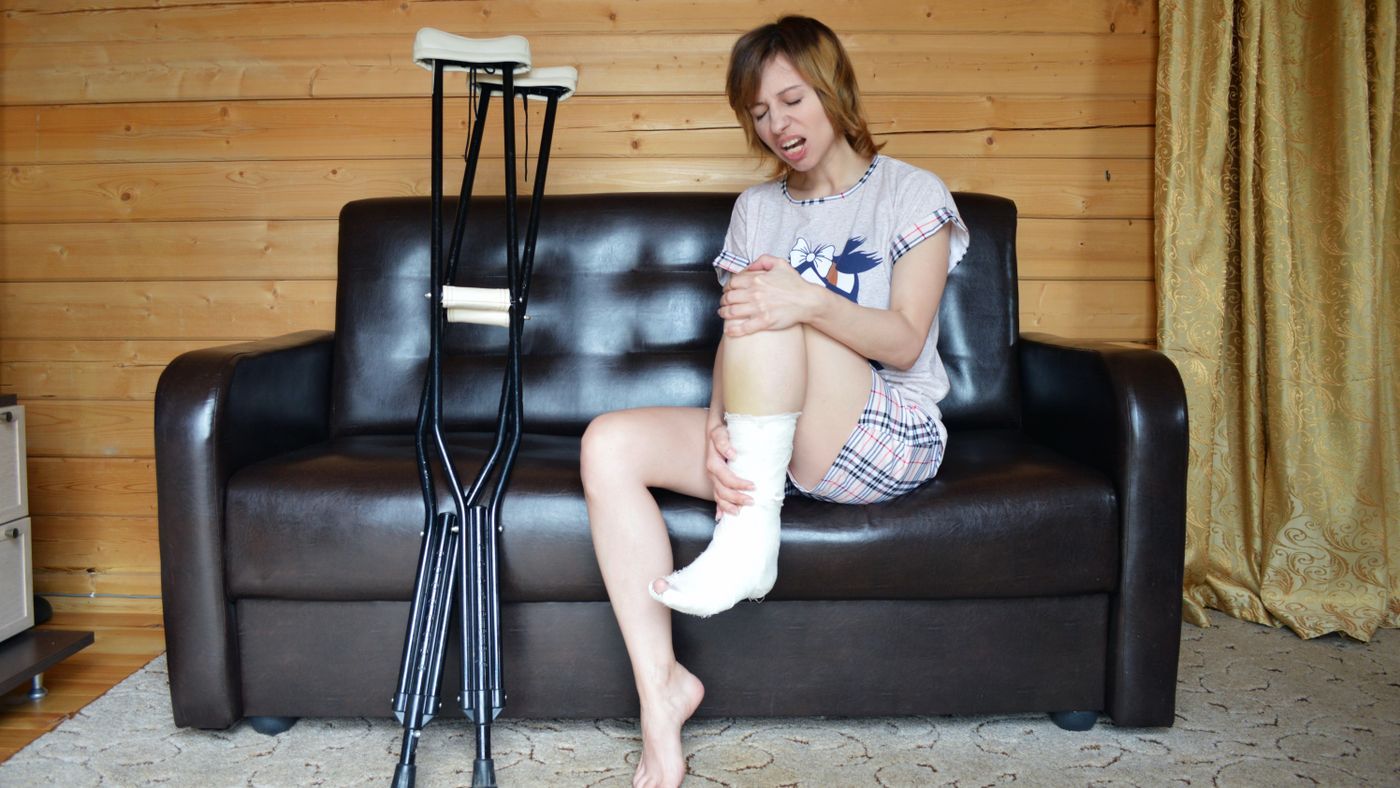
Fractures that are slow to join (delayed union) or stop joining (nonunion) are where pulsed electromagnetic field (PEMF) technology has its longest research history. The record is mixed: one large pooled review of sham-controlled trials is positive, the Cochrane review is inconclusive, and the biggest trials in fresh fractures found no difference. This brief sets out what each review and trial measured, where the results stop, and what that means for a clinic model.
What the trials measured
Delayed union and nonunion
Cochrane systematic review, 4 blinded placebo-controlled trials, 125 adults with delayed union or non-union of long bones, mostly the tibia (Griffin et al., Cochrane Database of Systematic Reviews, 2011). Three trials tested PEMF and one capacitive coupled electric fields. The pooled effect on union was not statistically significant (risk ratio 1.96, 95% CI 0.86 to 4.48), with substantial heterogeneity (I² = 58%); at 24 weeks it was RR 1.61 (0.74 to 3.54, 3 trials). Two trials found no reduction in pain, and no trial measured function. The authors concluded the evidence is "inconclusive and insufficient to inform current practice." (PubMed 21491410)
Randomized sham-controlled trial, 58 patients with postoperative delayed union of long bones, 16 weeks to 6 months after surgery (Shi et al., BMC Musculoskeletal Disorders, 2013). After the first three months the union rate was higher with PEMF, but the difference was not statistically significant. At the end of the study, after an average 4.8 months of treatment, success was 77.4% with PEMF against 48.1% with sham, reported as significantly higher. The abstract gives no p-value or confidence interval for this result. (PubMed 23331333)
Randomized double-blind trial, 34 patients with tibial non-union, active against dummy stimulator, 6 months (Simonis et al., Injury, 2003). Every patient also had a fibular osteotomy and an external fixator. Union was 16 of 18 (89%) with active stimulation against 8 of 16 (50%) with the dummy machine (odds ratio 8, 95% CI 1.5 to 41, P=0.02). By chance, smokers were unevenly split between the groups, and the wide interval reflects the small numbers. (PubMed 12719164)
Randomized double-blind trial, interim results, 16 patients with tibial non-union of at least 52 weeks, active against dummy stimulator (Barker et al., Lancet, 1984). Fractures united in 5 of 9 patients with working devices and 5 of 7 with dummy devices; the 95% confidence limits for the difference ran from +33% to -61%. The authors suggested that the cast and non-weight-bearing regimen itself may explain much of the success attributed to the stimulation. (PubMed 6143970)
All fractures, pooled
Systematic review and meta-analysis of 22 sham-controlled randomized trials, 1,468 patients with fractures (Peng et al., Bioelectromagnetics, 2020). In 14 trials with 1,131 patients, the healing rate was 79.7% (443/556) with PEMF against 64.3% (370/575) with sham (RR 1.22, 95% CI 1.10 to 1.35, I² = 48%), rated moderate-quality evidence. Pain was lower (SMD -0.49, -0.88 to -0.10). Healing time was shorter (SMD -1.01, -2.01 to -0.00, I² = 90%), rated very low quality. Trials in English or Chinese were included, and the pooled patients had different kinds of fractures. (PubMed 32495506)
Network meta-analysis of 30 randomized trials of add-on treatments for nonunion or delayed union (Yang et al., BMC Musculoskeletal Disorders, 2022). For healing rate, the treatments ranked highest were bone marrow aspirate combined with platelet-rich plasma or with bone graft, and bone marrow aspirate alone; electromagnetic field treatment was not among them. Compared with control, electromagnetic field treatment carried a higher risk of adverse events (OR 13.21, 95% CI 1.58 to 110.40). (PubMed 35597937)
The trials that found no difference: fresh fractures
Multicenter double-blind randomized trial, 259 patients with acute tibial shaft fractures, active against inactive device, 10 hours a day for 12 weeks (Adie et al., Journal of Bone and Joint Surgery, 2011). Of the 218 who completed 12 months, 16 in the active group and 15 in the inactive group needed further surgery for delayed union or nonunion (RR 1.02, 95% CI 0.95 to 1.14, p=0.72). There was no difference in surgery for any reason, radiographic union at six months or function. Average use was 6.2 hours a day. (PubMed 21915570)
Randomized double-blind placebo-controlled trial, 53 patients with acute undisplaced scaphoid fractures (Hannemann et al., Journal of Bone and Joint Surgery British, 2012). Time to clinical and radiological union and functional outcome did not differ between the groups. At six weeks, two tenderness tests favored the placebo group (p=0.03 and p=0.008). (PubMed 23015569)
Randomized double-blind placebo-controlled multicenter trial, 102 patients with acute undisplaced scaphoid fractures, healing assessed by CT (Hannemann et al., Bone & Joint Journal, 2014). Overall time to clinical and radiological healing did not differ between PEMF (51 patients) and placebo (51 patients). (PubMed 25086123)
Systematic review and meta-analysis of 13 randomized trials, 737 patients with acute fractures, PEMF or low-intensity pulsed ultrasound against control (Hannemann et al., Archives of Orthopaedic and Trauma Surgery, 2014). The proportion of nonunions did not differ significantly. Time to radiological union was shorter only in fractures treated without surgery or in the upper limb, with heterogeneous results. The review pools PEMF with ultrasound, so it is not a PEMF-only estimate. (PubMed 24895156)
Where the evidence stops
- The Cochrane review did not find a significant effect. Its pooled interval runs from 0.86 to 4.48, so the 4 trials with 125 adults cannot rule out no benefit.
- The positive pooled result comes from a review that mixes fracture types and includes Chinese-language trials. The large Western trials in fresh fractures, which are the best-blinded evidence, found no difference.
- Nonunion trials are small: 16, 34 and 58 patients. The 34-patient trial had a smoking imbalance between groups, and every patient also had surgery.
- In the 1984 trial, the fractures of 5 of 7 patients with dummy devices united. Casting and rest alone lead many nonunions to unite, which is why an uncontrolled before-and-after result says little.
- Preventing nonunion in a fresh fracture is not supported: the tibial shaft trial, both scaphoid trials and the 13-trial review found no difference in nonunion or time to union where it was measured.
- The 2022 network meta-analysis found a higher adverse event risk with electromagnetic treatment, with a very wide interval (1.58 to 110.40). The abstract does not say what the events were.
- The devices in these trials were worn for hours a day, often in a cast, for weeks or months. A result belongs to the protocol that was tested, not to short clinic sessions or to every device sold under the PEMF label.
- No official US figure for delayed union or nonunion was found in CDC, NCHS or NIH sources, so this brief does not estimate the market size.
What to ask when you evaluate a clinic model
- Does a bone union claim rest on the pooled 2020 review alone? Ask how it squares with the Cochrane review and with the fresh-fracture trials that found no difference.
- Is a nonunion result being presented as if it applied to fresh fractures, or to fracture prevention? The trials say those are different questions with different answers.
- The trial devices were worn for hours a day at home. How would clinic sessions compare with the schedules tested?
- Nonunion is managed by an orthopedic surgeon with imaging. How would the clinic work with that surgeon, and who reads the X-rays or CT scans?
- Can the seller show you this research, with its limits, the way it is written here?
Questions buyers ask
What does the Cochrane review conclude?
Griffin et al., 2011 pooled 4 blinded, placebo-controlled trials with 125 adults, mostly with tibial non-union. The pooled union result was not statistically significant (risk ratio 1.96, 95% CI 0.86 to 4.48), and the authors called the evidence inconclusive and insufficient to inform current practice.
Is there a positive pooled result?
Yes. Peng et al., 2020 pooled sham-controlled trials of fractures and reported a union rate of 79.7% with PEMF against 64.3% with sham in 14 trials with 1,131 patients (RR 1.22, 95% CI 1.10 to 1.35), rated moderate-quality evidence. It mixes fracture types and includes Chinese-language trials.
Does PEMF speed up union in fresh fractures?
The large sham-controlled trials say no. In 218 patients with acute tibial shaft fractures, PEMF did not reduce repeat surgery for delayed union or nonunion (RR 1.02, p=0.72), and two trials in acute scaphoid fractures (53 and 102 patients) found no faster union. A 2014 meta-analysis of 13 trials found no difference in the proportion of nonunions.
How were the devices used in these trials?
As devices worn for many hours, usually alongside casting or surgery. In the tibial shaft trial patients were told to wear the device ten hours a day for twelve weeks. That is a different use from short sessions in a clinic, and the results do not transfer to one automatically.
Is the 1979 bone growth stimulator record relevant here?
Yes, this is the indication it concerns: fractures that have not joined. It covers a specific prescription device, model and use, and it does not carry over to other devices or to clinic sessions.
The regulatory side
The FDA record of PEMF starts in 1979, when a PEMF bone growth stimulator received premarket approval (PMA P790002) for non-union fractures: breaks that have not joined. Non-invasive bone growth stimulators were later reclassified. This is technology history, and it is the indication this brief covers. Each FDA decision covers one device, one model and one indication, and it does not carry over to other devices, other uses or clinic sessions. Before you rely on any device for a clinic, look up its own FDA record. Our guide PEMF and the FDA explains how, and what the technology's record since 1979 does and does not cover.
Read the research yourself
Every study above links to its PubMed abstract. More published PEMF studies, each checked against the original paper: pemf-research.com. Compare with our osteoporosis and bone density and pain and swelling after surgery briefs.
About the publisher
These guides are written by PainFree. PainFree has run pain-relief clinics in Israel for 25 years, and more than 70 operate today; its Israeli site, in Hebrew, is painfree.org.il. We would want any buyer to read the evidence behind a clinic model this carefully, ours included.
Related research on this site
This article is general information for prospective business owners. It is not legal, financial or medical advice. We do not make earnings claims, and this page is not an offer to sell a franchise or a business opportunity. Study results describe the trials cited, not any particular device or clinic. Equipment supplied to US clinics will meet the applicable US regulatory requirements.