
Evidence brief for clinic investors
Lower back pain on one side (left or right): what the research shows
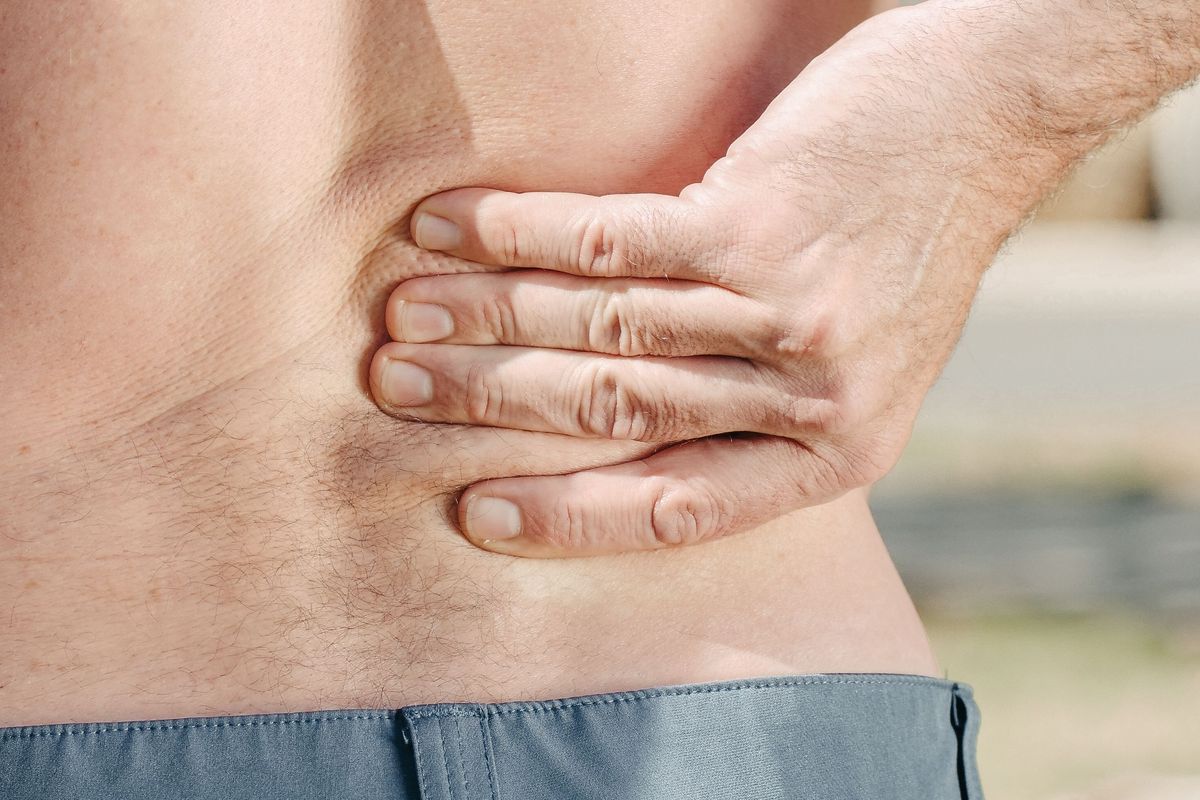
Pain that sits on the left or the right side of the lower back, rather than across the middle, is one of the most common ways people describe back trouble. Researchers have studied it through the paired structures that can produce it, the sacroiliac joints, the facet joints and the nerve roots, and through the organs behind the back that can imitate it. If you are weighing a clinic business built on pulsed electromagnetic field (PEMF) technology, this is what the studies actually measured, which one-sided pain needs a physician or emergency care first, and where the evidence stops. For back pain at particular times or in particular positions, see our sibling briefs on back pain at night, back pain in the morning, back pain when sitting and back pain when standing.
Why does lower back pain occur on one side only?
Because the lower back is built in left and right pairs: a facet joint on each side of every level, a sacroiliac joint on each side of the pelvis, a nerve root leaving on each side, and muscles such as the quadratus lumborum on each flank. Any of them can hurt on one side. What the research adds is that the location of the pain is a weak guide to its source: in patients investigated with diagnostic injections, pain spreading to the hip or leg did not tell the disc, the facet joints and the sacroiliac joint apart.
Retrospective chart review, 170 cases from 156 patients with recalcitrant low back pain at an academic spine center (DePalma, Ketchum and Saullo, Pain Medicine, 2011). Patients underwent diagnostic procedures (discography, dual diagnostic facet joint blocks, intra-articular sacroiliac joint injections and others) based on their clinical presentation until the pain source was identified. The prevalence of internal disc disruption, facet joint pain and sacroiliac joint pain was 42%, 31% and 18%. Disc pain was more likely in younger patients; facet and sacroiliac joint pain became more likely with age, until about age 70. The abstract does not report which side hurt. (PubMed 21266006)
Retrospective chart review, 157 cases from 153 consecutive patients with chronic low back pain who underwent definitive diagnostic injections (Laplante et al., Pain Physician, 2012). Hip or girdle pain and leg pain did not significantly discriminate between disc, facet joint and sacroiliac joint pain. Only thigh pain, in interaction with age (P = 0.021), was related to the source, and younger age predicted disc pain whether or not thigh pain was present. (PubMed 22430655)
Prospective validity study, 81 patients with chronic lumbopelvic pain referred for diagnostic injections (Young, Aprill and Laslett, The Spine Journal, 2003). Physical therapists examined the patients blind to the injection results. Sacroiliac joint pain was related to three or more positive pain provocation tests, pain when rising from sitting, unilateral pain and absence of lumbar pain. Disc pain was related to centralization of pain during repeated movement testing and to pain when rising from sitting; facet (zygapophysial) joint pain was associated with the absence of pain when rising from sitting. (PubMed 14609690)
Muscle sources, such as tender points in the quadratus lumborum or the buttock muscles, are covered in our myofascial pain and trigger points brief, and pain over the outer hip in the lateral hip pain brief.
Is one-sided low back pain a sacroiliac joint problem?
Sometimes, and less often than the pattern suggests. The sacroiliac joint sends pain to one buttock, just below the bony point at the back of the pelvis, and pain on one side without pain over the lumbar spine makes it more likely. But when patients chosen for one-sided pain that looked like sacroiliac pain were tested with double anesthetic blocks, fewer than one in five were confirmed. Examination findings disagree: in one study a cluster of provocation tests did better than single tests; in another, no test, combination or history item helped.
Experimental study in 10 volunteers without back pain (Fortin et al., Spine, 1994, Part I). Contrast medium and then local anesthetic were injected into the right sacroiliac joint. Sensory examination immediately afterwards found an area of buttock hypesthesia extending approximately 10 cm downward and 3 cm outward from the posterior superior iliac spine, which matched the area of maximal pain felt on injection. (PubMed 7939978)
Clinical evaluation of that pain map in 54 consecutive patients (Fortin et al., Spine, 1994, Part II). Two independent examiners, blinded to the patients' examinations, selected the 16 patients whose pain drawings best matched the map, with 100% agreement. All 16 had a provocation-positive sacroiliac joint injection; in the 10 who also had lumbar discography and facet joint injections, only the sacroiliac injection on the symptomatic side was provocation-positive. The authors call for further study of how many patients the map misses. (PubMed 7939979)
Cross-sectional study, 43 consecutive patients with chronic low back pain maximal below L5–S1 (Schwarzer, Aprill and Bogduk, Spine, 1995). Under image intensifier, each received a sacroiliac joint block. Thirteen patients (30%) obtained gratifying relief of their pain. Groin pain was the only pain referral pattern associated with a response to the block. (PubMed 7709277)
Prospective double-block study, 54 patients with unilateral low back pain (Maigne, Aivaliklis and Pfefer, Spine, 1996). Patients were selected for one-sided pain, a pain map compatible with a sacroiliac origin, tenderness over the sacroiliac joint and no obvious lumbar source. Nineteen responded to a first screening block; 10 (18.5%) were temporarily relieved by the confirmatory block. No pain provocation test reached statistical significance. The authors call the sacroiliac joint an uncommon but real source of low back pain. (PubMed 8875721)
Blinded diagnostic validity study, 48 patients examined by physiotherapists and then given a sacroiliac joint injection of local anesthetic (Laslett et al., Manual Therapy, 2005). Every patient who responded to the injection had pain on at least one sacroiliac test. Three or more positive results out of six tests gave a sensitivity of 94% and a specificity of 78%; the best combination of any two of four selected tests had an area under the curve of 0.842. When none of the six tests provoked familiar pain, the joint could be ruled out as the current source. (PubMed 16038856)
Prospective study, 85 patients examined with 12 expert-recommended sacroiliac tests before a joint block (Dreyfuss et al., Spine, 1996). With 90% or more pain reduction as the standard, 45 responses were positive and 40 negative. No historical feature, none of the 12 tests and no combination of them showed worthwhile diagnostic value. (PubMed 8961447)
When is one-sided low back pain sciatica?
When the pain runs from the back or buttock down one leg, especially below the knee and often with numbness or tingling, a lumbar nerve root may be irritated: sciatica, or radicular pain. In UK primary care, three in four patients consulting with back-related leg pain were clinically diagnosed with sciatica, and just over half had improved a year later. Leg weakness that is getting worse, or numbness in the saddle area, needs prompt medical care.
ATLAS cohort, baseline, 609 adults consulting their general practitioner with back and leg pain in the UK (Konstantinou et al., BMC Musculoskeletal Disorders, 2015). 62.6% were women, mean age 50.2. 67.5% reported pain below the knee, and 74.2% were clinically diagnosed with sciatica. Mean pain intensity was 5.6 for the back and 5.2 for the leg on a 0–10 scale. Compared with referred leg pain, the sciatica group had more leg pain, more neuropathic pain, more pain below the knee, more often leg pain worse than back pain, and more positive MRI findings. (PubMed 26537894)
ATLAS cohort, 12-month follow-up of the same 609 patients (Konstantinou et al., The Spine Journal, 2018). 55% improved (a 30% or greater reduction in disability) in the whole sample and in the sciatica group. Longer leg pain duration (odds ratio 0.41), a higher number of other symptoms attributed to the pain (0.70) and the patient's belief that the problem would last a long time (0.27) were the strongest factors against improvement. (PubMed 29174459)
Review of 23 epidemiological studies of sciatica, 1980–2006 (Konstantinou and Dunn, Spine, 2008). Only 2 of the 23 used a clinical assessment, definitions varied widely, and prevalence estimates ranged from 1.2% to 43%. A figure for "how common sciatica is" depends on how each study defined it. (PubMed 18923325)
The disc side of the question is covered in our herniated disc and sciatica brief, and night-time leg pain in sciatica at night.
When is pain on one side of the lower back not from the spine?
When it sits higher, in the flank under the ribs, and comes with other symptoms. Severe pain in waves from the flank toward the groin, with nausea or blood in the urine, suggests a kidney stone; fever, chills, burning or cloudy urine suggest a kidney infection. Both need medical assessment the same day, not a back clinic. Organs in the abdomen and pelvis can also cause one-sided pain felt near the back, including the gallbladder or appendix on the right and gynecological conditions in women. Sudden, severe back or abdominal pain that does not change with movement, especially over age 50 or in smokers, calls for emergency services.
STONE score derivation and validation, adults undergoing non-contrast CT for suspected uncomplicated kidney stone at an urban tertiary and a suburban community emergency department: 1,040 records in the derivation cohort and 491 prospectively enrolled patients in the validation cohort (Moore et al., BMJ, 2014). Five factors predicted a ureteral stone: male sex, short duration of pain, non-Black race, nausea or vomiting, and microscopic blood in the urine, giving a score of 0 to 13. A stone was present in 8.3% and 9.2% of the low-score group (0–5), 51.6% and 51.3% of the moderate group (6–9) and 89.6% and 88.6% of the high group (10–13), in the derivation and validation cohorts. In the high-score group, acutely important alternative findings were present in 0.3% and 1.6%. The score was built for emergency physicians deciding on imaging, not for screening in an outpatient clinic. (PubMed 24671981)
Revised STONE score without race, same data (Moore et al., Journal of the American College of Emergency Physicians Open, 2024). After race was removed, visible ("obvious") blood in the urine was the next strongest variable and replaced it. The revised score had similar accuracy to the original (area under the curve 0.85 versus 0.86) with unchanged misclassification rates (0.23 versus 0.23), and the authors recommend the revised version. (PubMed 39524039)
Which red flags in low back pain need a doctor first?
Serious spinal causes are rare, and most single red flags are weak on their own. In primary care, under 1% of people with acute low back pain had a serious cause, mostly vertebral fracture, while 80% had at least one red flag. The flags with the most weight include older age, long-term steroid use, significant trauma and a history of cancer. Numbness in the saddle area or new bladder or bowel problems point to cauda equina syndrome, which is an emergency.
Inception cohort, 1,172 consecutive patients receiving primary care for acute low back pain in Sydney, Australia (Henschke et al., Arthritis & Rheumatism, 2009). There were 11 cases (0.9%) of serious pathology, 8 of them fractures. Most patients (80.4%) had at least one red flag. Only three of the guideline red flags for fracture were informative: prolonged use of corticosteroids, age over 70 and significant trauma. Clinicians identified 5 of the 11 serious cases at the first consultation. (PubMed 19790051)
Systematic review, 14 diagnostic studies evaluating 53 red flags for fracture or malignancy (Downie et al., BMJ, 2013). Many red flags in current guidelines gave virtually no change in probability or had untested accuracy. The highest post-test probabilities for fracture were with older age (9%), prolonged corticosteroid use (33%), severe trauma (11%) and a contusion or abrasion (62%), and 90% when multiple red flags were present; for spinal malignancy, a history of malignancy (33%). (PubMed 24335669)
Review of 16 low back pain guidelines from 15 countries and one for Europe (Verhagen et al., European Spine Journal, 2016). The guidelines listed 46 discrete red flags in four categories of serious pathology: malignancy, fracture, cauda equina syndrome and infection. They lacked consensus on which flags to endorse, and evidence for the accuracy of the recommended flags was lacking. (PubMed 27376890)
What do clinical guidelines recommend for low back pain?
Non-drug options first, and neither source below separates one-sided from central pain. The American College of Physicians lists heat, massage, acupuncture or spinal manipulation for acute pain, and exercise, rehabilitation and mind-body approaches for chronic pain. PEMF is not on its list, and a 2025 review found high-quality guidelines generally did not support electrotherapy.
Clinical practice guideline, American College of Physicians (Qaseem et al., Annals of Internal Medicine, 2017). Most acute or subacute low back pain improves over time regardless of treatment; first choices are superficial heat (moderate-quality evidence), massage, acupuncture or spinal manipulation (low-quality evidence). For chronic low back pain the first choices are exercise, multidisciplinary rehabilitation, acupuncture, mindfulness-based stress reduction (moderate-quality evidence), and tai chi, yoga, motor control exercise, progressive relaxation, EMG biofeedback, low-level laser therapy, operant therapy, cognitive behavioral therapy or spinal manipulation (low-quality evidence). Medication comes after an inadequate response. PEMF is not named. (PubMed 28192789)
Systematic review of 22 high-quality guidelines, 588 recommendations for 181 treatments (McKenzie et al., The Spine Journal, 2025). Guidelines generally supported patient education, a self-management plan, fear-avoidance work and physical therapy, and did not support invasive treatments, electrotherapy or assistive devices. The abstract does not name PEMF separately. (PubMed 40639620)
Where does PEMF evidence stand for one-sided low back pain?
No PEMF trial we found selected patients by the side of their back pain or reported results for left- or right-sided pain; the trials enrolled non-specific or chronic low back pain, or lumbar radiculopathy, as a whole. Across them the picture is modest and mixed: a 2022 meta-analysis found a larger pain effect than placebo in chronic but not acute low back pain and no gain in physical function, a systematic review found an advantage in 5 of 9 trials, and two controlled trials found no significant difference from sham or usual care on pain by the end of follow-up. Full detail is in our chronic low back pain brief.
Meta-analysis, 14 randomized trials, 618 patients with low back pain (Sun et al., Clinical Rehabilitation, 2022). Pain decreased more with PEMF than with placebo (standardized mean difference −1.01; 95% CI −1.42 to −0.60; p<0.001) and than with other therapy alone (SMD −0.36; 95% CI −0.62 to −0.11). In chronic low back pain the difference was significant (SMD −0.60; 95% CI −0.94 to −0.25; p<0.001; I² = 67%); in acute low back pain it was not (p=0.09), and neither was physical function (p=0.09; I² = 86%). (PubMed 35077249)
Systematic review, 9 randomized trials, 420 patients with non-specific low back pain (Kull et al., Wiener Medizinische Wochenschrift, 2025; online 2023). In 5 of the 9 trials, pain and physical function improved significantly more than in the control group; the other 4 did not show that advantage. No study reported a serious adverse event. Protocols ranged from 10 to 30 minutes, 2 to 7 times a week, 3 to 50 Hz and 2 to 150 mT, and no pooled estimate was calculated. (PubMed 37999784)
Randomized patient-blinded trial, 50 patients with chronic non-specific low back pain (Elshiwi et al., Brazilian Journal of Physical Therapy, 2019). PEMF (50 Hz, 20 gauss) added to conventional physical therapy, against a sham field with the same program, 12 sessions over 4 weeks. Disability scores improved by 8.14 points more (95% CI 6.5 to 9.96). The pain difference (1.52) had a confidence interval crossing zero (−0.34 to 3.35), although the abstract calls it significant. Lumbar side bending was reported for each side, right (mean difference 8.2) and left (10.4), with units not stated in the abstract: these are the only left and right figures in the PEMF trials here, and they describe range of motion, not the side of the pain. (PubMed 30177406)
Pilot double-blind, sham-controlled trial, 42 adults with non-specific low back pain of mixed duration, 25 completed (Lisi et al., Pain and Therapy, 2019). Usual care plus a portable PEMF device or a sham. Oswestry disability scores improved significantly from baseline to week 6 in the PEMF group (p<0.001) and not in the sham group (p=0.135), and the change persisted at week 12. These are within-group comparisons in a pilot with 17 of 42 lost, and the trial was funded by the device maker. (PubMed 30868475)
Trials in one-sided leg pain from a disc enrolled patients with lumbar radiculopathy, again without reporting results by side:
Randomized placebo-controlled trial, 40 patients with lumbar radiculopathy from disc prolapse, 20 per group, 3 weeks (Omar, Awadalla and El-Latif, International Journal of Rheumatic Diseases, 2012). The groups differed significantly after treatment on pain (visual analogue scale, P=0.024) and total Oswestry disability (P<0.001), and on somatosensory evoked potential latency and amplitude in the tested dermatomes on the right (P=0.022 and P=0.001) and on the left (P=0.016 and P=0.002). The abstract gives P values only, no effect sizes, does not describe blinding, and does not say on which side patients had their leg pain. (PubMed 23083041)
Systematic review and meta-analysis, 13 randomized sham-controlled trials, 688 participants with neuropathic pain (Lara-Reyes et al., Neurology International, 2026). The overall pain effect (SMD −1.01; p=0.03) came with extreme heterogeneity (I² = 92.8%) and disappeared after adjustment for missing studies. In the spinal and radicular subgroup the effect was large but imprecise (SMD −2.35; 95% CI −4.42 to −0.29); in peripheral neuropathy it was not significant (SMD −0.38; 95% CI −0.86 to 0.10). The authors call one-size-fits-all estimates invalid and potentially misleading. (PubMed 41745713)
No significant difference from sham: pilot double-blind trial, 36 people with persistent low back and/or radiating leg pain after lumbar surgery, three arms, self-treatment twice daily for 60 days (Sorrell et al., Journal of Pain Research, 2018). Low back pain fell by 40.2% with the 42-μs pulse setting, 18.6% with the 38-μs setting and 25.6% with sham; leg pain by 45.0%, 17.0% and 24.5%. The authors describe trends: comparisons with sham had p-values above 0.05. Two of the five authors listed a biomedical company affiliation; the abstract reports no conflicts of interest. (PubMed 29950893)
And two controlled trials in chronic low back pain that a buyer should read next to the positive ones:
Null result: double-blind, placebo-controlled trial, 42 patients with chronic low back pain (Alzayed and Alsaadi, Asian Spine Journal, 2020). PEMF plus exercise against sham plus exercise. The PEMF group improved in pain and disability sooner (week 3, against week 6 with sham), but there was no between-group difference at weeks 6 and 13. The authors concluded it does not seem to be superior to other options. (PubMed 31575112)
Null result on pain: randomized pilot study, 75 US service members with chronic low back pain (Nayback-Beebe et al., Nursing Outlook, 2017). Usual care against usual care plus PEMF. Physical and mental health-related quality-of-life scores changed significantly, while the improvements in pain and disability were not statistically significant. Anxiety symptom severity was higher in the PEMF group (p=.007), which the authors called surprising. (PubMed 28893387)
Where does the evidence stop?
- No PEMF trial we found selected patients by the side of their back pain or reported results for left- or right-sided pain. The only left and right figures are range-of-motion and nerve-conduction measures. Any statement about one-sided low back pain is an extrapolation from low back pain in general.
- The source studies rely on diagnostic injections in volunteers or selected specialist patients, 10 to 170 people per study, many from the 1990s. They show where pain can come from, not how common each source is among everyone with one-sided pain.
- Examination is imperfect: one study found no history item or test of worthwhile value for the sacroiliac joint, another found that a cluster of tests helped, and a careful selection for one-sided "sacroiliac" pain was confirmed in only 18.5%.
- The positive PEMF trials are small, short and varied in protocol; the meta-analysis result is on pain only, in chronic not acute pain; one pilot was funded by the device maker; and two controlled trials found no significant difference on pain by the end of follow-up.
- The radicular-pain evidence rests on one small trial and a meta-analysis subgroup with a very wide confidence interval; the post-surgery trial showed no significant difference from sham.
- Trials used different devices, frequencies and session lengths. A result belongs to the protocol that was tested, not to every device sold under the PEMF label.
What should you ask when you evaluate a clinic model?
- How are new patients with one-sided back pain screened for causes outside the spine, such as flank pain with fever, urinary symptoms or blood in the urine, and when are they sent to a physician or emergency care?
- How are red flags such as saddle numbness, bladder or bowel changes, worsening leg weakness, a history of cancer or recent trauma picked up and referred?
- Does the protocol sit alongside the exercise and self-management advice that guidelines list first, rather than replace it?
- Which published trials are the clinic's low back protocols based on, and does the seller show you the null results as readily as the positive ones?
- Will pain, function and any leg symptoms be measured for every patient, so the clinic knows what it delivers?
What is the regulatory side?
The FDA record of PEMF starts in 1979, when a PEMF bone growth stimulator received premarket approval (PMA P790002) for non-union fractures. PEMF devices have since been cleared through the 510(k) pathway for postoperative pain and soft-tissue edema under 21 CFR 890.5290(b). Neither indication is low back pain. Each FDA decision covers one device, one model and one indication, and it does not carry over to other devices, other uses or clinic sessions. Before you rely on any device for a clinic, look up its own FDA record. Our guide PEMF and the FDA explains how, and what the technology's record since 1979 does and does not cover.
Where can you read the research yourself?
Every study above links to its PubMed abstract. More published PEMF studies, each checked against the original paper: pemf-research.com. Compare with our chronic low back pain, herniated disc and sciatica and spondylolisthesis briefs, and with neck pain on one side.
Who publishes this?
These guides are written by PainFree. PainFree has run pain-relief clinics in Israel for 25 years, and more than 70 operate today; its Israeli site, in Hebrew, is painfree.org.il. We would want any buyer to read the evidence behind a clinic model this carefully, ours included.
Related research on this site
This article is general information for prospective business owners. It is not legal, financial or medical advice. We do not make earnings claims, and this page is not an offer to sell a franchise or a business opportunity. Study results describe the trials cited, not any particular device or clinic. Equipment supplied to US clinics will meet the applicable US regulatory requirements.