
Evidence brief for clinic investors
PEMF for trochanteric bursitis and lateral hip pain: what the research shows
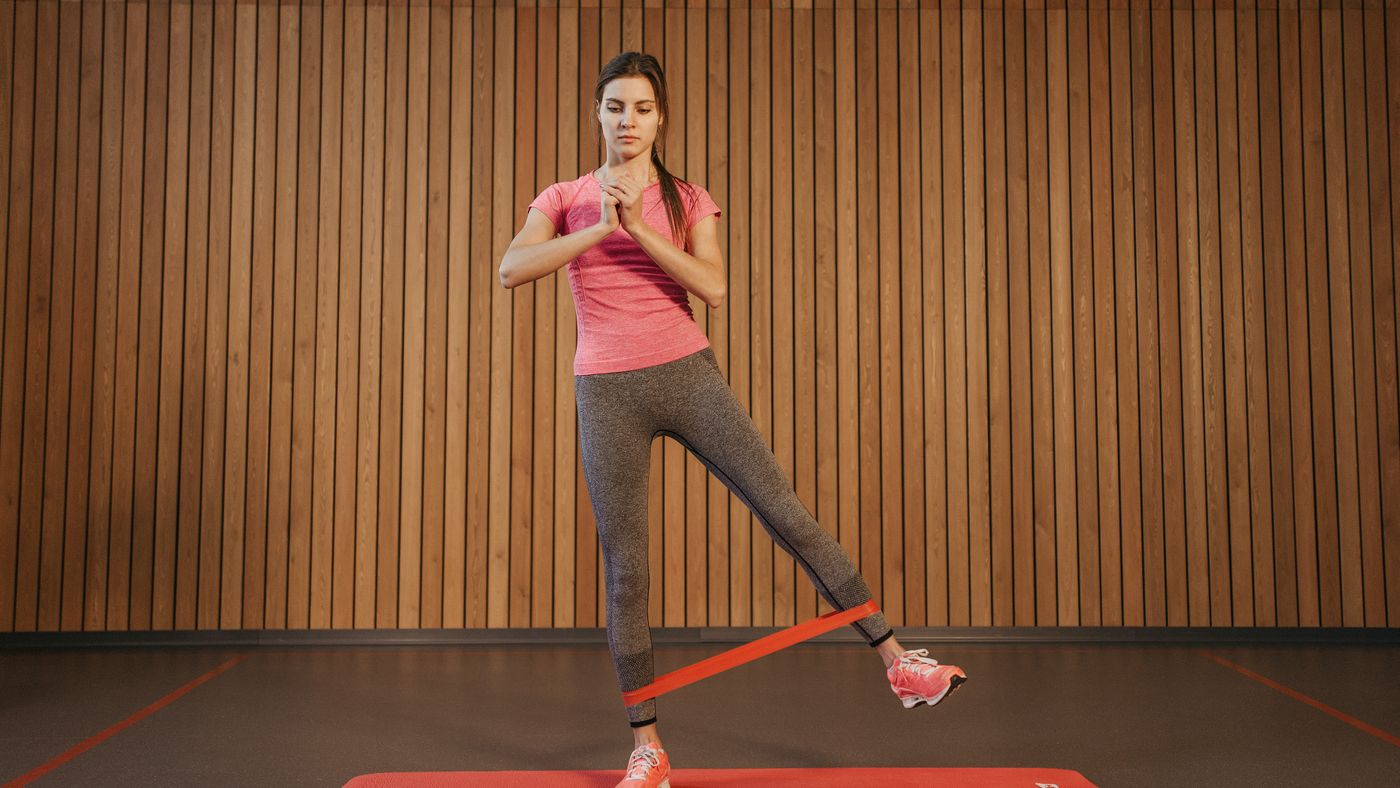
Pain on the outside of the hip, long called trochanteric bursitis, is now usually diagnosed as greater trochanteric pain syndrome (GTPS). In most cases the source is the gluteal tendons rather than the bursa. Pulsed electromagnetic field (PEMF) technology is sometimes offered for it. We found no PEMF trial of any kind in this condition, and the reviews of its treatments contain none. This is an evidence-gap brief: it shows what the lateral hip research does test, and the closest sham-controlled PEMF trial in a tendon, which found no added benefit.
We found no official US figure for lateral hip pain or trochanteric bursitis from the CDC, NCHS or NIH, so this brief gives none. For osteoarthritis inside the hip joint, a different condition, see our hip osteoarthritis evidence brief.
What the trials measured
The search: no PEMF trial in lateral hip pain
On 30 October 2026 we searched PubMed for pulsed electromagnetic field, PEMF, magnetotherapy, magnetic therapy, the MeSH term for magnetic field therapy and electromagnetic field terms, combined with trochanteric, gluteal tendinopathy, lateral hip and bursitis. The broad search returned 4 records, none of them about the hip: a bone-density study in older women, a shoulder physiotherapy review, a fibromyalgia trial and a 1982 study of ununited fractures. The MeSH search for bursitis with magnetic field therapy or electromagnetic fields returned 3 records, all about the shoulder. A search of every randomized trial indexed under greater trochanteric pain syndrome, trochanteric bursitis or gluteal tendinopathy (34 records) found none that tested PEMF. The trials test injections, exercise, shockwave, dry needling, orthotics, taping, hormone therapy and electrical brain stimulation.
What the reviews of lateral hip treatments contain
Systematic review of conservative treatments for GTPS, 8 studies, 696 participants (Barratt et al., British Journal of Sports Medicine, 2017). The eligible studies tested corticosteroid injections (6), shockwave therapy (2), home training (1) and orthotics (1). Based on pain, injections did better for up to 3 months than home training, radial shockwave and usual care, in 4 studies with low or moderate risk of bias. The authors concluded that there is a paucity of high-quality research on conservative treatments for GTPS. No PEMF study was eligible. (PubMed 27834675)
Network meta-analysis of nonoperative treatments for GTPS, 13 randomized trials, 1,034 patients (Gazendam et al., Clinical Journal of Sport Medicine, 2022). The treatments compared were corticosteroid, platelet-rich plasma and hyaluronic acid injections, dry needling, structured exercise and shockwave. At 1 to 3 months, platelet-rich plasma and shockwave gave better pain scores than no treatment, and structured exercise was the only treatment that significantly improved function. At 6 to 12 months, no therapy significantly outperformed no treatment for pain. PEMF was not among the treatments. (PubMed 34009798)
Network meta-analysis of conservative treatments for GTPS, 19 randomized trials, 1,701 participants, 82.5% women (Wang et al., Journal of Orthopaedic Surgery and Research, 2025). The trials tested corticosteroid injection (3), shockwave (7), exercise (5), platelet-rich plasma (4), dry needling, hyaluronic acid and bone marrow aspirate concentrate (1 each). Exercise therapy gave the largest improvement in pain and function. In the full text, the authors write that research on physical modalities in GTPS is notably scarce. No PEMF trial was included. (PubMed 39891188)
Systematic review of gluteal tendinopathy treatments, randomized trials of medium or high quality searched to August 2024 (Bremer et al., Clinical Rehabilitation, 2025). Four interventions from four trials showed efficacy. Exercise and education had moderate-strength evidence of a medium effect on pain (SMD 0.95; 95% CI 0.58 to 1.33) and function (SMD 0.91; 95% CI 0.53 to 1.28) in the short term. Corticosteroid injection had a small short-term effect on pain (SMD 0.51). The authors concluded that exercise and education can be cautiously recommended as the core approach. PEMF is not among the treatments named. (PubMed 40223303)
The benchmark any new treatment is measured against
Randomized, single-blinded trial, 204 adults aged 35 to 70 with gluteal tendinopathy confirmed by MRI, 167 of them women (Mellor et al., BMJ, 2018). Fourteen physiotherapy sessions of education plus exercise over 8 weeks were compared with one corticosteroid injection and with wait and see. At 8 weeks, success on global rating of change was reported by 51 of 66 in the education-and-exercise group, 38 of 65 after injection and 20 of 68 on wait and see; mean pain was 1.5, 2.7 and 3.8 out of 10. At 52 weeks, education plus exercise still led on global improvement, but pain did not differ from the injection group (difference -0.26; 95% CI -1.06 to 0.55). (PubMed 29720374)
The closest sham-controlled PEMF trial: a different tendon, no added benefit
Randomized sham-controlled trial, 65 adults with Achilles tendinopathy, 33 active PEMF and 32 sham (Ko et al., Orthopaedic Journal of Sports Medicine, 2024). Achilles tendon, not the hip. Both groups did 12 weeks of eccentric exercise; one group added 8 weeks of PEMF. VISA-A scores rose from 57.9 to 71.7 with PEMF and from 55.1 to 66.8 with sham, with no difference between groups (P=.527). Pain during sport fell in both groups, again with no difference (P=.346). The authors concluded that PEMF added to exercise did not improve outcome scores or tendon blood-vessel growth compared with exercise alone. One co-author holds a PEMF patent and co-founded a PEMF company. (PubMed 39534390)
For more on that trial and its 26-week follow-up, see our Achilles tendinopathy evidence brief.
Where the evidence stops
- Direct PEMF evidence in greater trochanteric pain syndrome, trochanteric bursitis or gluteal tendinopathy is zero: no sham-controlled trial, no comparative trial and no case series turned up in our search.
- Four reviews of lateral hip treatments, published from 2017 to 2025, include no PEMF study. One calls research on physical modalities in this condition notably scarce.
- The nearest sham-controlled PEMF trial in a tendon, in the Achilles, found that PEMF added nothing to exercise. That is a different tendon, but it is the closest test available, and it was null.
- The lateral hip trials set a high bar: education plus exercise beat both an injection and wait and see in a 204-patient trial. A PEMF claim for this condition would need its own sham-controlled trial against that benchmark.
- The PEMF bursitis records that exist are about the shoulder, not the hip, and none is a sham-controlled trial in lateral hip pain.
- Several lateral hip trials test extracorporeal shockwave therapy (ESWT). Shockwave is a mechanical acoustic-pressure treatment, not PEMF, and its results are not covered here. The same applies to laser, TENS, therapeutic ultrasound and transcranial magnetic or electrical stimulation.
What to ask when you evaluate a clinic model
- Does any claim about hip bursitis or lateral hip pain cite a PEMF trial in that condition? Ask for it by name. We found none.
- Is a shockwave, laser, ultrasound or hip-osteoarthritis result being presented as PEMF evidence for lateral hip pain?
- Will lateral hip pain patients be seen alongside, never instead of, the physicians and physical therapists who diagnose the condition and provide the education-and-exercise care the reviews put first?
- How will pain and function be recorded for every patient, not only those who do well?
- Can the seller show you this research, with its gap, the way it is written here?
Questions buyers ask
Is there a PEMF trial in trochanteric bursitis or greater trochanteric pain syndrome?
We found none in PubMed, and none appears in four systematic reviews of the condition's treatments.
What does the lateral hip pain research test instead?
Injections, education and exercise, shockwave, dry needling and orthotics. The reviews name exercise and education as the core approach.
Do shockwave trials in lateral hip pain count as PEMF evidence?
No. Shockwave is a different technology, and its trials are not PEMF evidence.
The regulatory side
FDA decisions on PEMF devices are specific to one device, one model and one indication, and they do not carry over to other devices. No FDA decision we know of covers PEMF for trochanteric bursitis or lateral hip pain. Before you rely on any device for a clinic, look up its own FDA record. Our guide PEMF and the FDA explains how, and what the technology's record since 1979 does and does not cover.
Read the research yourself
Every study above links to its PubMed abstract. More published PEMF studies, each checked against the original paper: pemf-research.com. Compare with our hip osteoarthritis and Achilles tendinopathy briefs.
About the publisher
These guides are written by PainFree. PainFree has run pain-relief clinics in Israel for 25 years, and more than 70 operate today; its Israeli site, in Hebrew, is painfree.org.il. We would want any buyer to read the evidence behind a clinic model this carefully, ours included.
Related research on this site
This article is general information for prospective business owners. It is not legal, financial or medical advice. We do not make earnings claims, and this page is not an offer to sell a franchise or a business opportunity. Study results describe the trials cited, not any particular device or clinic. Equipment supplied to US clinics will meet the applicable US regulatory requirements.