
Evidence brief for clinic investors
PEMF for groin pain and adductor strain: what the research shows
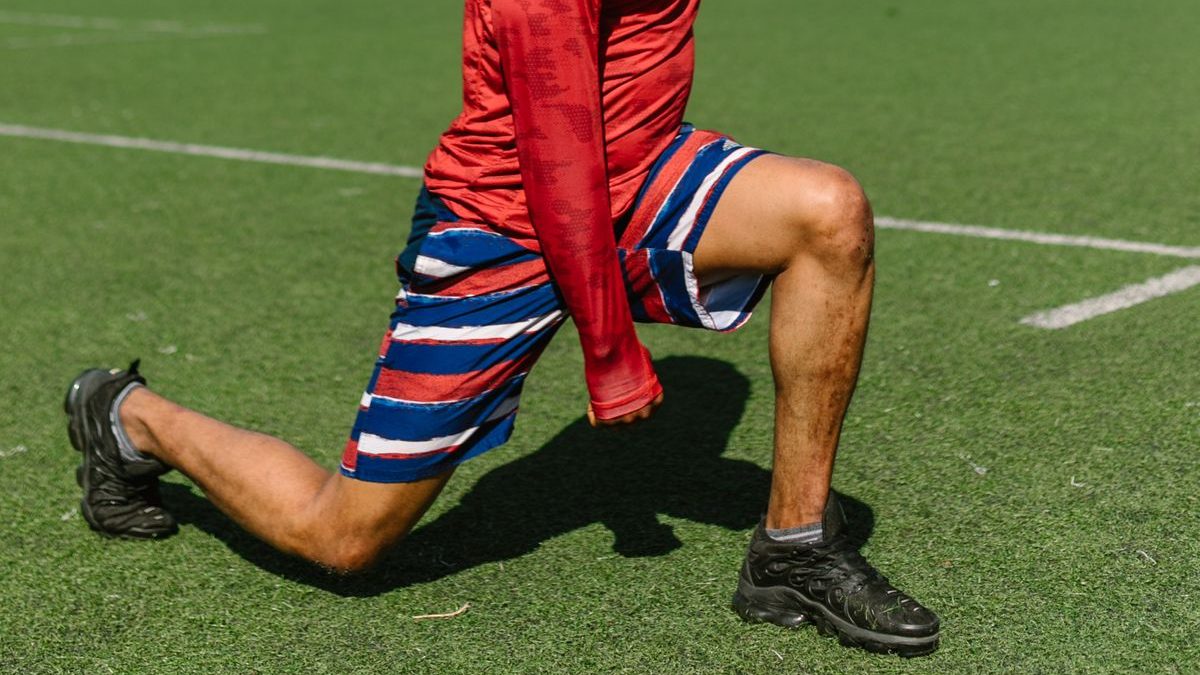
Groin pain is common in sports that involve kicking, sprinting and quick changes of direction, such as soccer and ice hockey. The most frequent type is adductor-related: pain where the inner-thigh muscles attach to the pubic bone, either after an acute strain or building up over months. Pulsed electromagnetic field (PEMF) therapy is sometimes offered for it. We could not find a single PEMF trial in groin pain or adductor strain. This is an evidence-gap brief: it names the searches we ran, sets out what the research does show for these athletes, and lists the trials that found no difference.
What we searched, and what we found
On 2026-11-03 we searched PubMed for PEMF, pulsed electromagnetic, electromagnetic field, magnetotherapy, magnetic field therapy, pulsed magnetic and capacitive coupling terms combined with groin, adductor, osteitis pubis, pubalgia, athletic pubalgia, sports hernia and pubic symphysis. The search returned 46 records. None was a PEMF trial in groin pain: most were transcranial magnetic stimulation studies of the brain and nerves, and the rest were surgical papers, case reports and a 2004 rat flap experiment. A second PubMed search for electrical stimulation with groin pain, adductor strain, osteitis pubis or pubalgia returned 7 records, none of them a PEMF trial. In Europe PMC, PEMF and magnetotherapy terms with groin, adductor, osteitis pubis or pubalgia returned 117 records, and "magnetic field" with groin pain terms returned 55; most matched only magnetic resonance imaging, and none was a PEMF trial in groin pain. We found no official US figure (CDC, NCHS or NIH) for how many people have groin pain or adductor strain, so this brief gives none.
What the trials measured
How groin pain is classified
Consensus statement, 24 international experts from 14 countries (Weir et al., British Journal of Sports Medicine, 2015, the Doha agreement). The meeting agreed unanimously on three categories of groin pain in athletes: defined clinical entities (adductor-related, iliopsoas-related, inguinal-related and pubic-related groin pain), hip-related groin pain, and other causes. The definitions rest on history and physical examination. This matters for anyone evaluating a clinic model: a claim about "groin pain" should say which of these it means. (PubMed 26031643)
The benchmark: active exercise for long-standing adductor-related groin pain
Randomized trial, 68 athletes with long-standing adductor-related groin pain, median 40 weeks (Hölmich et al., Lancet, 1999). An 8 to 12 week active training program aimed at the strength and coordination of the muscles acting on the pelvis, in particular the adductors, was compared with physiotherapy without active training. The examining physician did not know the allocation. Four months after treatment, 23 athletes in the active training group and 4 in the physiotherapy group had returned to sport at the same level without groin pain (odds ratio 12.7, 95% CI 3.4 to 47.2). The subjective global assessment also favored active training (p = 0.006). (PubMed 9989713)
Long-term follow-up of the same trial, 47 of the 59 original participants (80%), 8 to 12 years later (Hölmich et al., American Journal of Sports Medicine, 2011). A significant effect of active training still existed for the whole group (P = .047) and for the 39 soccer players (P = .012). The assessing physician was not involved in the original trial and did not know the allocation. (PubMed 21813441)
Randomized single-blinded trial, athletes with adductor-related groin pain for at least two months (Weir et al., Manual Therapy, 2011). A multi-modal program (heat, manual therapy, stretching and a return-to-running program) was compared with home exercise therapy plus a return-to-running program. The multi-modal group returned to sport sooner (12.8 weeks, SD 6.0, against 17.3 weeks, SD 4.4, p = 0.043). There was no difference in the objective outcome score (p = 0.72) or in pain during sport (p = 0.12), and only 50 to 55% of athletes in both groups made a full return to sport. The authors concluded that neither treatment was very effective. (PubMed 20952244)
What the reviews say
Systematic review, 72 studies of treatment for groin pain in athletes (Serner et al., British Journal of Sports Medicine, 2015). Only four studies were high quality (6% of publications). For adductor-related groin pain there was moderate evidence that active exercises improve success compared with passive treatments, that multimodal treatment with a manual therapy technique shortens return to sport compared with active exercises, and that adductor tenotomy improves success over time. Lower-quality studies reported significantly higher treatment success (r = -0.41, p < 0.001), and study quality had not improved since 1985. (PubMed 25633830)
Systematic review and meta-analysis, 5 randomized trials, 3 pooled (Lahuerta-Martín et al., BMC Sports Science, Medicine and Rehabilitation, 2023). Exercise therapy was compared with passive physical therapy plus exercise therapy in athletes with groin pain. Exercise therapy alone gave a statistically significant short-term improvement in pain intensity over the combination (MD 2.45, 95% CI 1.11 to 3.79, I² 65%), with very low certainty of evidence, and there was no significant difference in hip range of motion. Adding passive treatments to exercise did not add a measurable benefit in this analysis. (PubMed 37430335)
Systematic review, 7 randomized trials of nonsurgical treatment for long-standing groin pain in athletes (Brito et al., Cureus, 2023). Data could not be pooled. The included trials reported positive effects on pain, function and return to sport, but the certainty of evidence was low, and the authors call for higher-quality trials before firm recommendations. No PEMF trial is named in the abstract. (PubMed 37425562)
Acute adductor strains
Systematic review, 30 studies, 594 male athletes, mean age 26.2 (Farrell et al., American Journal of Sports Medicine, 2023). Partial acute adductor tears were treated nonoperatively with physical therapy in every study, and athletes returned to play after 1 to 6.9 weeks depending on the grade. On MRI, 21% to 25% of the acute adductor injuries were complete tears; return to play averaged 8.9 weeks with nonoperative treatment and 14.2 weeks with surgery. Risk factors included a previous groin injury and adductor weakness. (PubMed 36661128)
Prevention
Cluster-randomized trial, 35 semiprofessional Norwegian soccer teams, 652 players (Harøy et al., British Journal of Sports Medicine, 2019). An Adductor Strengthening Programme built on one exercise, the Copenhagen Adduction exercise, was done three times a week in preseason and once a week in season. The average in-season prevalence of groin problems was 13.5% (95% CI 12.3% to 14.7%) against 21.3% (95% CI 20.0% to 22.6%) in the control teams, a 41% lower risk (OR 0.59, 95% CI 0.40 to 0.86, p = 0.008). Groin problems were self-reported. (PubMed 29891614)
The trials that found no difference
Cluster-randomized trial, 55 soccer clubs, 1,211 players, 977 analysed (Hölmich et al., Scandinavian Journal of Medicine & Science in Sports, 2010). A six-exercise program to prevent groin injuries had no significant effect (HR 0.69, 95% CI 0.40 to 1.19). The 31% risk reduction was not significant. A previous groin injury almost doubled the risk of a new one. (PubMed 19883386)
Systematic review, 28 studies, 1,060 participants, of PEMF and extracorporeal magnetotransduction therapy (EMTT) in musculoskeletal disorders (Leyva Martínez et al., Biomedicines, 2026). Low-intensity protocols (for example below 5 mT) often gave results indistinguishable from placebo or active controls, particularly in nociplastic pain conditions; high-intensity protocols were associated with improvements in structural conditions. The review included randomized trials, quasi-experimental studies and case reports, combination therapies limit the findings to exploratory trends, and the abstract names no groin or adductor study. (PubMed 42652114)
Where the evidence stops
Single case report, one 15-year-old soccer player with an avulsion fracture of the anterior inferior iliac spine, a pelvic injury near the groin (Knobloch, Wiener Medizinische Wochenschrift, 2026). Six combined sessions of radial pressure waves, focused shockwave therapy and EMTT were followed by a 50% reduction in inflammation on Doppler ultrasound at 1 week, and a return to soccer at 6 weeks. One patient, three treatments at once, no control, and the author reports travel support from the shockwave maker. EMTT is a high-intensity electromagnetic treatment, not low-intensity PEMF, and this is not adductor-related groin pain. (PubMed 42461519)
- We found no PEMF trial of any design, randomized or not, in adductor strain, adductor-related groin pain, osteitis pubis or athletic pubalgia in PubMed or Europe PMC. Any claim that PEMF helps groin pain is not supported by a published trial in that condition.
- What the evidence does support for these athletes is active exercise: one 68-athlete randomized trial with a long-term follow-up, backed by reviews that rate the evidence moderate at best. Only 6% of groin treatment studies were high quality, and low-quality studies reported more success.
- Adding passive treatments to exercise did not add a measurable short-term benefit in the 2023 meta-analysis, at very low certainty. A passive modality would need its own controlled trial to show otherwise.
- Our muscle soreness and strain brief found only small trials in healthy volunteers with laboratory-induced soreness, two of them null, and no trial in real muscle strains. Our hip osteoarthritis brief found no sham-controlled PEMF trial in the hip. Neither fills the gap for groin pain.
- Shockwave therapy has its own groin trials, including a randomized trial in amateur soccer players with pubic overload (PubMed 28093636) and an uncontrolled 2026 series (PubMed 41901027). Shockwave is a mechanical acoustic-pressure treatment, not a pulsed electromagnetic field, and its results are not PEMF evidence. Transcranial and repetitive peripheral magnetic stimulation, TENS, pulsed radiofrequency and laser are not PEMF either.
- Groin pain has many causes, including hip joint problems, hernias, nerve entrapment and referred pain from the spine. The Doha agreement classifies them by examination. A session cannot substitute for that diagnosis.
What to ask when you evaluate a clinic model
- Does any claim about groin pain or adductor strain cite a PEMF trial in that condition? Ask for it by name. We found none.
- Is a shockwave, transcranial magnetic stimulation or general muscle-soreness result being presented as PEMF evidence for groin pain?
- How are patients with groin pain examined and referred, so hip-related, hernia-related or spinal causes are found before any session?
- Will patients be seen alongside, never instead of, the sports physicians and physical therapists who run the adductor strengthening and return-to-sport program?
- How will pain, return to sport and recurrence be recorded for every patient, not only those who do well?
- Can the seller show you this research, with its gaps and null results, the way it is written here?
Questions buyers ask
Is there a clinical trial of PEMF for groin pain or adductor strain?
Not that we could find. Our PubMed search returned 46 records and none was a PEMF trial in groin pain; Europe PMC searches found none either.
What does the research support for long-standing adductor-related groin pain?
Active exercise aimed at the adductor and pelvic muscles, based on a 68-athlete randomized trial with an 8 to 12 year follow-up and reviews that rate the evidence moderate.
Do shockwave or transcranial magnetic stimulation studies count as PEMF evidence?
No. They are different technologies, and their results are not PEMF evidence.
The regulatory side
The FDA record of PEMF starts in 1979, when a PEMF bone growth stimulator received premarket approval (PMA P790002) for non-union fractures: breaks that have not joined. Pain and swelling after surgery have their own FDA classification regulation, 21 CFR 890.5290(b), nonthermal shortwave therapy: a prescription device that applies pulsed electromagnetic energy and is used adjunctively for postoperative pain and soft-tissue edema, reviewed through 510(k). Neither indication is groin pain or adductor strain. Each FDA decision covers one device, one model and one indication, and it does not carry over to other devices, other uses or clinic sessions. Before you rely on any device for a clinic, look up its own FDA record. Our guide PEMF and the FDA explains how, and what the technology's record since 1979 does and does not cover.
Read the research yourself
Every study above links to its PubMed abstract. More published PEMF studies, each checked against the original paper: pemf-research.com. Compare with our muscle soreness and strain, hip osteoarthritis, trochanteric bursitis and lateral hip pain and musculoskeletal pain briefs.
About the publisher
These guides are written by PainFree. PainFree has run pain-relief clinics in Israel for 25 years, and more than 70 operate today; its Israeli site, in Hebrew, is painfree.org.il. We would want any buyer to read the evidence behind a clinic model this carefully, ours included.
Related research on this site
This article is general information for prospective business owners. It is not legal, financial or medical advice. We do not make earnings claims, and this page is not an offer to sell a franchise or a business opportunity. Study results describe the trials cited, not any particular device or clinic. Equipment supplied to US clinics will meet the applicable US regulatory requirements.