
Evidence brief for clinic investors
PEMF for tarsal tunnel syndrome: what the research shows
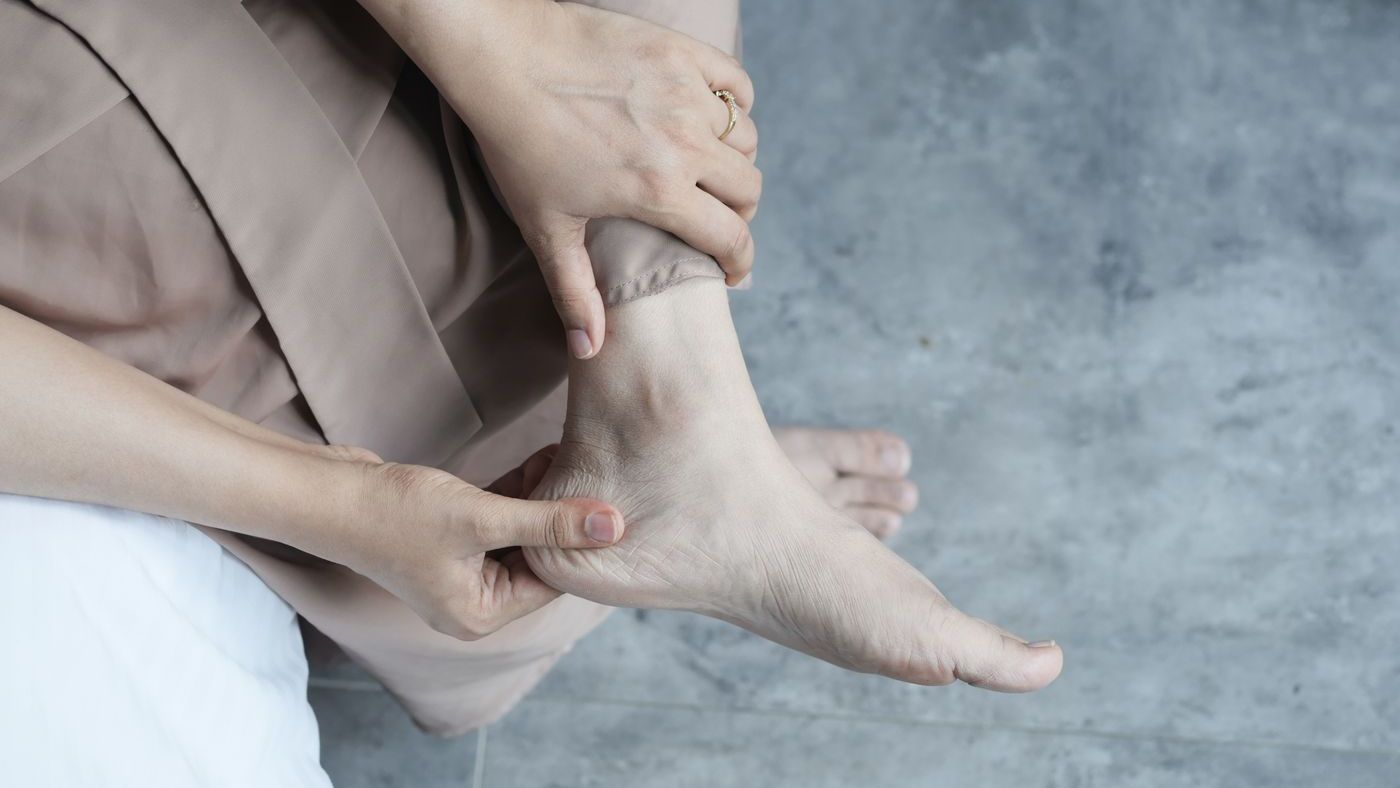
Tarsal tunnel syndrome is compression of the tibial nerve, or one of its branches, where it passes behind the inner ankle bone under a band of tissue called the flexor retinaculum. People describe burning, tingling or numbness along the inner ankle, heel and sole. Pulsed electromagnetic field (PEMF) therapy is sometimes offered for nerve pain in the foot. This is an evidence-gap brief: we found no clinical trial of PEMF in tarsal tunnel syndrome in PubMed. It sets out the searches we ran, the nearest PEMF data, the sham-controlled trial in foot nerve pain that found no difference in pain, and the evidence behind standard care.
What the trials measured
The searches
On 3 November 2026 we searched PubMed through NCBI E-utilities. PEMF, "pulsed electromagnetic", "electromagnetic field*", magnetotherapy, "magnetic field therapy", "pulsed magnetic" or "magnetic stimulation", combined with "tarsal tunnel": 1 record (PMID 15035963, below). "Tarsal tunnel syndrome" with randomized, randomised or trial: 18 records, two of them randomized trials of physical therapy (below) and one a published protocol for a botulinum toxin trial. "Tarsal tunnel" in the title, limited to systematic reviews and meta-analyses: 6 records, none on PEMF. "Tarsal tunnel", "tibial neuropathy" or "posterior tibial nerve entrapment" with electromagnet*, magnet*, "electrical stimulation", physiotherapy, "physical therapy" or conservative: 339 records, almost all imaging, anatomy or surgery, and no PEMF trial. Europe PMC, "tarsal tunnel" with PEMF, "pulsed electromagnetic", "magnetic field", magnetotherapy or "pulsed magnetic": 26 records, mostly MRI studies; the only PEMF study is the same 2004 pilot.
The only PEMF study that included tarsal tunnel patients had no placebo
Open pilot study, 24 consecutive patients with refractory painful peripheral neuropathy of mixed causes, including tarsal tunnel (Weintraub and Cole, Neurorehabilitation and Neural Repair, 2004). The causes were diabetes, chronic inflammatory demyelinating polyneuropathy, pernicious anemia, mercury poisoning, paraneoplastic syndrome, tarsal tunnel and idiopathic sensory neuropathy. The most symptomatic foot received nine 1-hour sessions of a pulsed signal of about 20 gauss at about 30 Hz to the sole. In the intent-to-treat analysis of all 24 feet, pain scores fell 19% by the end of treatment (P=0.10) and 37% by the end of 30 days of follow-up (P<0.01). Only 15 of 24 completed follow-up, the clinical examination did not change, and the number of tarsal tunnel patients and their results are not reported in the abstract. The authors write that the role of placebo is not known and was not tested. (PubMed 15035963)
The sham-controlled PEMF trial in foot nerve pain found no difference in pain
Randomized, double-blind, placebo-controlled trial, 225 people with painful diabetic peripheral neuropathy, 16 sites in 13 US states (Weintraub et al., Archives of Physical Medicine and Rehabilitation, 2009). Participants used identical PEMF or sham devices on their feet 2 hours a day for 3 months; the dropout rate was 13.8%. There were no significant differences between the PEMF and sham groups in nerve pain intensity on the Neuropathy Pain Scale or the visual analog scale. More PEMF users reported overall improvement on the Patient's Global Impression of Change (44% vs 31%; P=.04). Of 27 people who completed serial skin biopsies, 29% of PEMF users and none of the sham group had an increase in nerve fiber density of at least 0.5 standard deviations. The authors concluded that PEMF at this dosimetry was not effective in reducing neuropathic pain. This is diabetic neuropathy, not a compressed tibial nerve, and it is shown here as the nearest controlled evidence. (PubMed 19577022)
Systematic review and meta-analysis, 13 randomized PEMF trials in neuropathic pain; the main analysis pooled the 9 sham-controlled trials, 688 people (Lara-Reyes et al., Neurology International, 2026). The overall pooled result favoured PEMF (SMD -1.01; p = 0.03), but heterogeneity was extreme (I² = 92.8%) and the overall result was no longer significant after adjusting for missing studies. By cause, spinal and radicular pain showed a reduction (SMD -2.35; 95% CI -4.42 to -0.29), while peripheral neuropathy showed no significant reduction (SMD -0.38; 95% CI -0.86 to 0.10). Tarsal tunnel syndrome is a peripheral nerve problem; the review does not report it as a separate group. (PubMed 41745713)
The benchmark: what the rest of the research shows
Randomized trial, 28 patients with tarsal tunnel syndrome, 6 weeks (Kavlak and Uygur, Journal of Manipulative and Physiological Therapeutics, 2011). Both groups had physiotherapy and supportive inserts; 14 also did nerve mobilization exercises. Range of motion, muscle strength and pain improved significantly in both groups (P < .05), with no difference between the groups. The exercise group alone improved significantly on two-point discrimination, light touch and the Tinel sign (P < .05). (PubMed 21875518)
Randomized single-blinded trial, 54 people with tarsal tunnel syndrome, 4 weeks (El-Nassag et al., Journal of Back and Musculoskeletal Rehabilitation, 2025). Both groups received conventional therapy three days a week, which in this trial included TENS, therapeutic ultrasound, calf stretching and arch supports; the study group added tibial nerve flossing. Both groups improved on all measures, and after treatment the flossing group scored higher on foot pain, ankle range of motion and tibial nerve conduction (p < 0.05), but not on the dorsiflexion-eversion test (p > 0.05). There was no sham arm, and outcomes were measured only at the end of treatment. TENS and ultrasound are not PEMF. (PubMed 40368127)
Systematic review of conservative, minimally invasive and surgical treatment (Vij et al., Orthopedic Reviews, 2022). Three articles described outcomes after conservative treatment, with acceptable results as first-line care; two described minimally invasive treatment; fourteen described surgical outcomes. The authors conclude that conservative management can resolve symptoms for many patients, that surgery is reserved for a select group who do not respond, and that the evidence for surgery is stronger than for minimally invasive options. PEMF is not among the treatments reviewed. (PubMed 36072502)
Narrative review of posterior tarsal tunnel syndrome (Fortier et al., Orthopedic Reviews, 2022). Patients are first treated conservatively unless there is muscle wasting or motor nerve involvement. Conservative care listed includes activity modification, heat, cryotherapy, anti-inflammatory drugs, corticosteroid injections, nerve pain medicines, vitamin B-complex, physical therapy and custom orthotics; open surgical decompression is indicated when symptoms do not respond. Studies of newer minimally invasive options have small samples or were done on cadavers. PEMF is not on the list. (PubMed 35769658)
Narrative review, 88 articles (McSweeney and Cichero, The Foot, 2015). The authors describe the condition as rare and regularly under-diagnosed, and found limited high-level evidence to guide clinical management. They call for small randomized trials in groups with a single cause to test specific treatments. (PubMed 26546070)
Retrospective case series, 15 patients who had failed conservative care and had open surgical release, 12-month follow-up (Casares Tamayo et al., Revista Brasileira de Ortopedia, 2026). The AOFAS ankle-hindfoot score rose from 36.6 to 78.1 (p < 0.001) and pain on the visual analog scale fell from 7.0 to 3.4 (p < 0.001); two minor complications (13.3%) occurred. There was no control group. (PubMed 42003951)
Systematic review of endoscopic tarsal tunnel release, 3 studies, 37 feet, weighted mean follow-up 27 months (Gkotsoulias et al., Foot & Ankle Specialist, 2014). No permanent nerve injury, deep infection or prolonged wound problems were reported; two patients (5.6%) had a recurrence more than 2 years after surgery and one (2.7%) did not improve. (PubMed 24334368)
Diagnosis is not standardized either
Evidence-based review for the American Association of Neuromuscular and Electrodiagnostic Medicine (Patel et al., Muscle & Nerve, 2005). Of 317 articles, four met the criteria, all Class III. Nerve conduction studies may be useful to confirm the diagnosis (recommendation Level C), but their sensitivity and specificity could not be determined. (PubMed 16003732)
Systematic review, 82 studies, 4,213 patients (Boers et al., JBJS Reviews, 2026). There is no gold standard for diagnosis. The Tinel sign was the most common test (used in 89% of studies), and the sensitivities reported for provocative tests, nerve conduction and ultrasound varied widely. (PubMed 41662474)
Where the evidence stops
- We found no PEMF trial in tarsal tunnel syndrome in PubMed or Europe PMC: no randomized trial, no sham-controlled trial, and no case series limited to this condition.
- The one PEMF study that included tarsal tunnel patients was a 24-patient pilot with mixed causes of neuropathy, no placebo group, and no separate result for those patients; 9 of 24 did not complete follow-up.
- The large sham-controlled PEMF trial in foot nerve pain, 225 people with diabetic neuropathy, found no difference from sham in pain intensity. Its positive findings were on a global impression scale and in a 27-person biopsy subgroup (Weintraub et al., 2009). (PubMed 19577022)
- The 2026 meta-analysis found no significant pain reduction with PEMF in peripheral neuropathy; its positive subgroup, spinal and radicular pain (only 3 trials), is a different problem from a compressed nerve at the ankle (Lara-Reyes et al., 2026). (PubMed 41745713)
- The standard-care evidence is thin as well: two small physical therapy trials (28 and 54 people), reviews that describe limited high-level evidence, and surgical series without control groups.
- Diagnosis varies from study to study, so a "tarsal tunnel" patient group in one clinic may not match another. Tumors, cysts and accessory muscles can compress the nerve and need imaging and surgical referral, not a session.
- TENS, therapeutic ultrasound, pulsed radiofrequency, repetitive peripheral magnetic stimulation and shockwave are not PEMF, and their results are not PEMF evidence.
What to ask when you evaluate a clinic model
- Does any claim about tarsal tunnel syndrome cite a PEMF trial in that condition? Ask for it by name. We found none.
- Is a diabetic neuropathy, back pain or sciatica result being presented as evidence for a nerve compressed at the ankle?
- How are patients with ankle and sole numbness screened and referred, so a tumor, cyst or diabetic neuropathy is identified by a physician first?
- Will patients be seen alongside, never instead of, the physicians, podiatrists and physical therapists who manage orthotics, exercises, injections and surgical referral?
- How will pain, numbness and function be recorded for every patient, not only those who do well?
- Can the seller show you this research, with its gaps and its null trial, the way it is written here?
Questions buyers ask
Is there a clinical trial of PEMF for tarsal tunnel syndrome?
Not one that we could find. The only PEMF study that included tarsal tunnel patients was a 24-patient pilot with mixed causes of nerve pain and no placebo group.
What did the sham-controlled PEMF trial in foot nerve pain find?
In 225 people with diabetic neuropathy, PEMF and sham devices showed no significant difference in nerve pain intensity after 3 months.
What is the usual care for tarsal tunnel syndrome?
Reviews describe conservative care first, with surgical release for cases that do not respond, and note that high-level evidence for any approach is limited.
The regulatory side
The FDA record of PEMF starts in 1979, when a PEMF bone growth stimulator received premarket approval (PMA P790002) for non-union fractures: breaks that have not joined. PEMF devices have since been cleared through the 510(k) pathway for postoperative pain and soft-tissue edema under 21 CFR 890.5290(b). Neither indication is tarsal tunnel syndrome or nerve compression. Each FDA decision covers one device, one model and one indication, and it does not carry over to other devices, other uses or clinic sessions. Before you rely on any device for a clinic, look up its own FDA record. Our guide PEMF and the FDA explains how, and what the technology's record since 1979 does and does not cover.
Read the research yourself
Every study above links to its PubMed abstract. More published PEMF studies, each checked against the original paper: pemf-research.com. Compare with our neuropathic pain, carpal tunnel syndrome, plantar fasciitis and heel pain and foot and ankle soft-tissue injury briefs.
About the publisher
These guides are written by PainFree. PainFree has run pain-relief clinics in Israel for 25 years, and more than 70 operate today; its Israeli site, in Hebrew, is painfree.org.il. We would want any buyer to read the evidence behind a clinic model this carefully, ours included.
Related research on this site
This article is general information for prospective business owners. It is not legal, financial or medical advice. We do not make earnings claims, and this page is not an offer to sell a franchise or a business opportunity. Study results describe the trials cited, not any particular device or clinic. Equipment supplied to US clinics will meet the applicable US regulatory requirements.