
Evidence brief for clinic investors
PEMF for Morton's neuroma (forefoot nerve pain): what the research shows
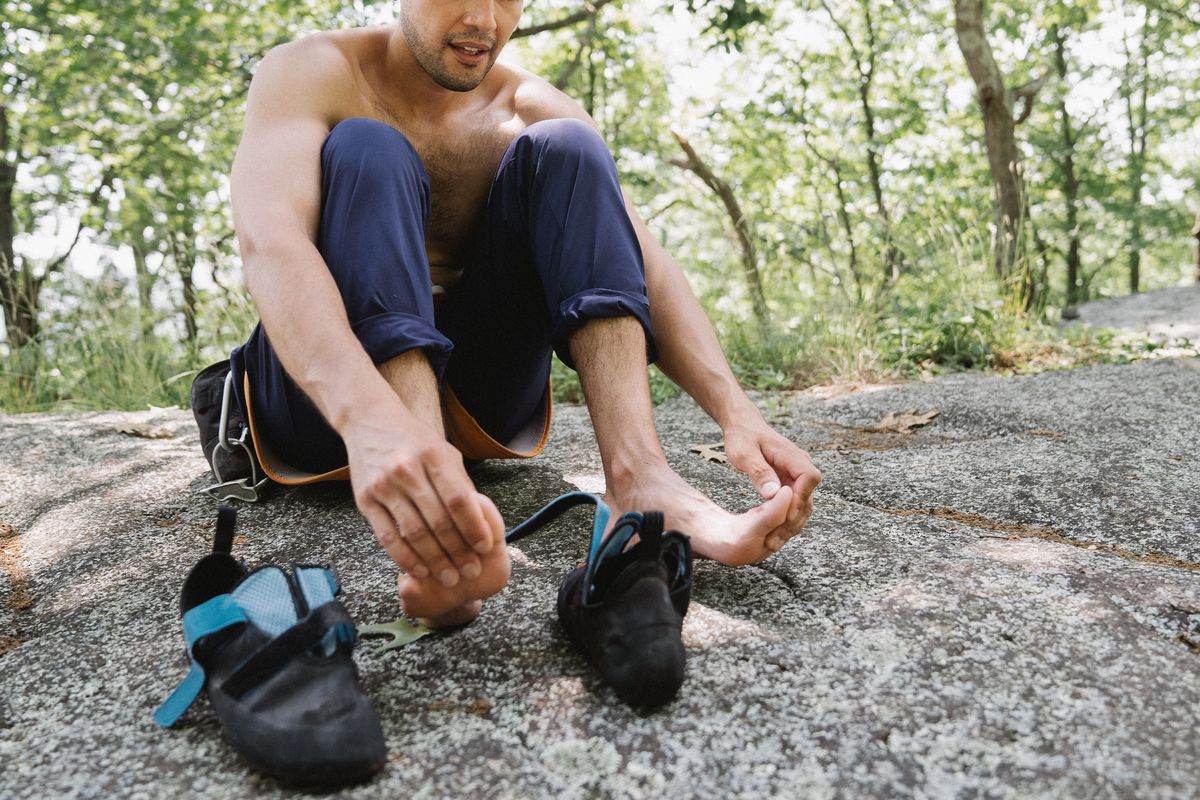
Morton's neuroma is a thickened nerve between two of the long bones at the front of the foot, usually between the third and fourth toes. It causes burning or shooting pain into those toes, often worse in tight or high-heeled shoes. Pulsed electromagnetic field (PEMF) technology is sometimes offered for it. We found no PEMF trial of any kind in this condition. This is an evidence-gap brief: it shows what the Morton's neuroma research does test, and the nearest PEMF trials, each labelled by the condition it actually studied.
We found no official US figure for Morton's neuroma or forefoot pain from the CDC, NCHS or NIH, so this brief gives none.
What the trials measured
The search: no PEMF trial in Morton's neuroma
On 16 November 2026 we searched PubMed for pulsed electromagnetic field, PEMF, electromagnetic field, magnetotherapy, magnetic therapy, magnetic stimulation and magnetic field therapy, combined with Morton's neuroma, interdigital neuroma, intermetatarsal, interdigital neuritis, metatarsalgia and forefoot pain. The search returned 1 record, and it was not about a neuroma (see below). We then read the titles of all 43 randomized trials and systematic reviews indexed under Morton's neuroma. None tested PEMF. The device trials among them used shockwave or radiofrequency, which are different technologies.
Case report, one 52-year-old amateur runner with stress fractures of both first metatarsals (Previ et al., Journal of Orthopaedic Case Reports, 2023). A bone stress fracture, not Morton's neuroma. She was treated with rest, rocker-sole shoes for 6 weeks, cold, painkillers as needed and PEMF for 8 hours a day for 40 days, and her symptoms and X-ray findings resolved. With several treatments at once and no comparison, the report cannot show what PEMF contributed. (PubMed 37144074)
How the condition is diagnosed
Systematic review of diagnostic accuracy, 9 studies (Pitcher et al., Foot & Ankle Orthopaedics, 2024). A patient's own report of a clicking feeling was highly specific (0.96), and a squeeze test of the web space between the toes was highly sensitive (0.96), so a negative test makes the neuroma unlikely. The classic complaints were weak markers: a feeling of walking on a pebble had a sensitivity of 43% to 53% and burning pain 54% to 57%, each with a specificity of about 50%. Only 1 study had a low risk of bias. (PubMed 39564390)
What the reviews of treatments contain
Cochrane systematic review, 6 randomized trials, 373 participants (Matthews et al., Cochrane Database of Systematic Reviews, 2024). No included trial had a low risk of bias in every domain. Adding a corticosteroid to a local anesthetic injection may make little to no difference in function at 3 to 6 months (SMD -0.30; 95% CI -0.61 to 0.02; low certainty) and probably little to no difference in quality of life (moderate certainty). The steroid group had mild skin thinning (3.9%), loss of skin color (3.9%) and fat pad thinning under the foot (2.6%). The review found no PEMF trial. (PubMed 38334217)
Systematic review and meta-analysis of non-surgical treatments, 25 studies: 7 randomized trials and 18 before-and-after case series (Matthews et al., Journal of Foot and Ankle Research, 2019). Two pooled trials found that a corticosteroid injection lowered pain more than control (weighted mean difference -5.3 on a 100-point scale; 95% CI -7.5 to -3.2). Manipulation and mobilisation also lowered pain against control (MD -15.3; 95% CI -29.6 to -1.0), while shockwave did not separate from control (MD -5.9; 95% CI -21.9 to 10.1). The authors found no high-quality evidence for a gold-standard treatment. No PEMF study was included. (PubMed 30809275)
Systematic review of non-surgical treatments, 22 studies, 9 treatment types (Thomson et al., Foot and Ankle Surgery, 2020). The treatments were corticosteroid, alcohol and capsaicin injections, botulinum toxin, shockwave, radiofrequency ablation, cryoablation, orthoses and YAG laser. Corticosteroid injection reduced pain across its studies (p < 0.01), with 50% success at 12 months; alcohol injection helped only in the short term. The authors call for better randomized trials of radiofrequency ablation and cryoablation. PEMF was not among the treatments found. (PubMed 31718949)
The benchmark: what blinded trials in Morton's neuroma look like
Patient-blinded randomized trial, 131 people with Morton's neuroma, 85% women, mean age 53 (Thomson et al., Journal of Bone and Joint Surgery, 2013). An ultrasound-guided injection of corticosteroid plus anesthetic was compared with anesthetic alone as the placebo control. At 3 months, patients' global rating of foot health was better with the steroid (mean difference 14.1 points on a 100-point scale; 95% CI 5.5 to 22.8; p = 0.002), and the difference was also significant at 1 month. Some pain and function measures improved significantly and others did not. (PubMed 23636185)
Double-blind randomized trial, 72 people with Morton's neuroma (de Oliveira et al., Clinical Rehabilitation, 2019). A custom insole with metatarsal and arch support (n = 36) was compared with a flat insole of the same material, color and density (n = 36). The custom insole reduced walking pain more (P = 0.048) and improved the Foot Function Index (P = 0.012) and the SF-36 physical capacity score (P = 0.046). Pain at rest, pain on pressure, tingling and the other measures did not differ between groups. (PubMed 31505943)
The nearest PEMF evidence: different conditions, labelled as such
Randomized, double-blind, placebo-controlled trial, 225 people with painful diabetic peripheral neuropathy, 16 sites in 13 US states (Weintraub et al., Archives of Physical Medicine and Rehabilitation, 2009). Diabetic nerve damage in both feet, not Morton's neuroma. PEMF or sham devices were worn on the feet 2 hours a day for 3 months. Nerve pain intensity did not differ between PEMF and sham. More PEMF users rated themselves improved overall (44% vs 31%; P = .04), and in 27 people with skin biopsies, nerve fiber density rose by at least 0.5 standard deviations in 29% of PEMF users and none on sham. The authors concluded that PEMF at this dose did not reduce neuropathic pain. (PubMed 19577022)
Systematic review and meta-analysis of sham-controlled PEMF trials in neuropathic pain, 688 people in the main analysis (Lara-Reyes et al., Neurology International, 2026). Mixed nerve conditions; Morton's neuroma is not among them. In peripheral neuropathy the pooled reduction in pain was not significant (SMD -0.38; 95% CI -0.86 to 0.10). The positive subgroup, spinal and radicular pain (SMD -2.35; 95% CI -4.42 to -0.29), concerns nerve roots at the spine, and the overall result was no longer significant after adjusting for missing studies. (PubMed 41745713)
Open pilot study, 24 people with painful peripheral neuropathy of mixed causes treated on the sole of the foot (Weintraub and Cole, Neurorehabilitation and Neural Repair, 2004). Mixed neuropathies, not Morton's neuroma; no placebo group. In all 24 feet, pain scores fell 19% by the end of treatment (P = 0.10) and 37% by the end of follow-up (P < 0.01). Only 15 of 24 completed follow-up, and the clinical examination did not change. (PubMed 15035963)
Systematic review of PEMF in foot and ankle soft-tissue conditions, 4 randomized trials, 243 participants (Chia et al., Frontiers in Sports and Active Living, 2026). Heel, Achilles and ankle conditions, not Morton's neuroma. In three trials PEMF was added to another treatment, such as shockwave, heel pads or eccentric exercise, and only one compared PEMF alone with sham. Three trials reported lower pain than control (p < 0.05), but only one of three found better physical function, and treatment protocols varied widely. (PubMed 41716305)
Randomized multicenter trial, 120 patients with joint or soft tissue pain, 22% of them at the foot (Hackel et al., Pain and Therapy, 2025). General joint and soft tissue pain at orthopedic clinics, not Morton's neuroma; compared with standard care, with no sham group. Over 14 days, pain fell 36% with PEMF and 10% with standard care (p < 0.0001). The trial was not blinded, used a 27.12 MHz signal, and had a manufacturer-employed author and a shareholder author. (PubMed 39928254)
For how forefoot pain differs from heel, arch and ankle pain, see our foot pain by location guide. For the PEMF trial base in nerve pain and its limits, see the neuropathic pain evidence brief.
Where the evidence stops
- Direct PEMF evidence in Morton's neuroma is zero: no sham-controlled trial, no comparative trial and no case series turned up in our search.
- The one PEMF record that mentions the forefoot is a single case report about a bone stress fracture, with several therapies given together and no comparison group.
- The large sham-controlled PEMF trial in foot nerve pain studied diabetic neuropathy and found no difference from sham in pain intensity. A pooled analysis also found no significant effect in peripheral neuropathy.
- The foot and ankle PEMF trials studied heel, Achilles and ankle conditions, mostly with PEMF added to another treatment; the 2025 joint and soft tissue trial had no sham.
- The Morton's neuroma research itself is small: the Cochrane review found only six randomized trials, none at low risk of bias in every domain.
- Shockwave, radiofrequency, cryoablation, laser, TENS and transcranial magnetic stimulation are not PEMF; their results are not covered here.
What to ask when you evaluate a clinic model
- Does any claim about Morton's neuroma or forefoot nerve pain cite a PEMF trial in that condition? Ask for it by name. We found none.
- Is a diabetic neuropathy, heel pain or general joint pain result being presented as Morton's neuroma evidence?
- How are patients screened so that forefoot pain from a stress fracture, joint inflammation or diabetic neuropathy is referred to the physician who diagnoses it?
- How will walking pain and footwear tolerance be recorded for every patient, not only those who do well?
- Can the seller show you this research, with its gap, the way it is written here?
Questions buyers ask
Is there a PEMF trial in Morton's neuroma?
We found none in PubMed, and none appears in the systematic reviews of the condition's treatments.
What does the Morton's neuroma research test instead?
Injections, footwear and insoles, manipulation, shockwave, radiofrequency, cryoablation and surgery. The reviews describe a small evidence base with no clear gold standard.
Is the diabetic neuropathy PEMF trial evidence for Morton's neuroma?
No. It studied diabetic nerve damage across both feet, a different condition, and it found no difference from sham in pain.
The regulatory side
FDA decisions on PEMF devices are specific to one device, one model and one indication, and they do not carry over to other devices. No FDA decision we know of covers PEMF for Morton's neuroma. Before you rely on any device for a clinic, look up its own FDA record. Our guide PEMF and the FDA explains how, and what the technology's record since 1979 does and does not cover.
Read the research yourself
Every study above links to its PubMed abstract. More published PEMF studies, each checked against the original paper: pemf-research.com. Compare with our tarsal tunnel syndrome, plantar fasciitis and foot and ankle soft tissue injury briefs.
About the publisher
These guides are written by PainFree. PainFree has run pain-relief clinics in Israel for 25 years, and more than 70 operate today; its Israeli site, in Hebrew, is painfree.org.il. We would want any buyer to read the evidence behind a clinic model this carefully, ours included.
Related research on this site
This article is general information for prospective business owners. It is not legal, financial or medical advice. We do not make earnings claims, and this page is not an offer to sell a franchise or a business opportunity. Study results describe the trials cited, not any particular device or clinic. Equipment supplied to US clinics will meet the applicable US regulatory requirements.