
Evidence brief for clinic investors
Back pain at night: what the research shows
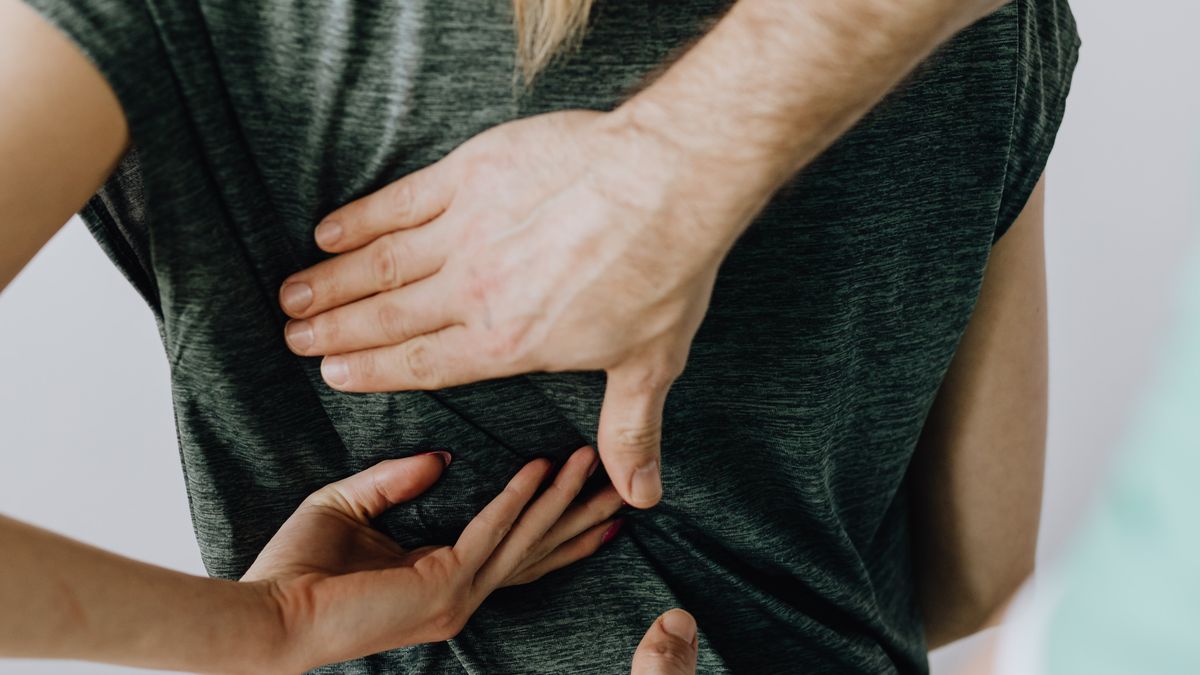
Back pain that is worse lying down, or that wakes people in the small hours, is one of the most common complaints a back pain service hears. If you are evaluating a clinic business built on pulsed electromagnetic field (PEMF) technology, this is what the research says about night pain: when it is a warning sign, how it ties to sleep, what the guidelines list, and where the PEMF evidence stops, null results included.
Is back pain at night a red flag?
Not by itself. In a large back pain triage clinic, night pain was common and was not linked to serious disease. Red-flag screening still matters, but the evidence for any single sign is weak, so clinicians judge the whole clinical picture.
Prospective study, 482 consecutive patients in a back pain triage clinic (Harding et al., Spine, 2005). 213 had night pain and 90 had it every night. No serious pathology was identified. People with night pain had 4.95 hours of continuous sleep (range 2 to 7) and were woken 2.5 times a night (range 0 to 6), and those with pain every night had higher Oswestry, pain and anxiety-depression scores. The authors note that 1994 US guidelines suggested night pain be used as a red flag, and conclude that their results challenge night pain per se as a useful indicator of serious spinal pathology in this setting. (PubMed 16135990)
International framework for red flags, IFOMPT (Finucane et al., Journal of Orthopaedic & Sports Physical Therapy, 2020). Serious spinal pathology is rare but can have devastating consequences and must be identified early. The framework states there is an absence of high-quality evidence for the diagnostic accuracy of most red flags, and offers a clinical-reasoning pathway to clarify their role. (PubMed 32438853)
What does waking with back pain in the second half of the night mean?
It is one feature of inflammatory back pain, the pattern seen in axial spondyloarthritis, but never a diagnosis on its own. Clinicians read it together with long morning stiffness, pain that eases with exercise but not rest, and the age the pain began.
Clinical history study, 213 patients under 50 with chronic back pain: 101 with ankylosing spondylitis, 112 with mechanical low back pain (Rudwaleit et al., Arthritis & Rheumatism, 2006). Waking because of back pain during the second half of the night only was one of six independent contributors, alongside morning stiffness of more than 30 minutes, age at onset, no improvement with rest, alternating buttock pain and the period of onset. None of the single features sufficiently separated the two groups. A set of four (morning stiffness >30 minutes, improvement with exercise but not rest, waking in the second half of the night, alternating buttock pain) gave a sensitivity of 70.3% and a specificity of 81.2% with at least 2 present (positive likelihood ratio 3.7), and a likelihood ratio of 12.4 with at least 3. (PubMed 16447233)
Real-patient exercise, 13 ASAS experts and 20 patients, validated in 648 patients (Sieper et al., Annals of the Rheumatic Diseases, 2009). Five parameters best explained the experts' judgement: improvement with exercise (odds ratio 23.1), pain at night (20.4), insidious onset (12.7), age at onset under 40 (9.9) and no improvement with rest (7.7). With at least four of five, sensitivity was 79.6% and specificity 72.4% in the validation cohort. (PubMed 19147614)
For a clinic the practical point is referral. These criteria flag people who should see a physician; they do not diagnose, and they both miss some cases and flag some people who turn out not to have inflammatory disease. The daytime side of the same pattern is covered in back pain in the morning: what the research shows.
How is back pain linked to sleep?
Closely and consistently. Reviews find that people with chronic low back pain sleep less, sleep worse and take longer to fall asleep, and in one orthopedic department about four in ten chronic neck or back pain patients were sleep-deprived even on analgesics. The direction of cause is not settled.
Systematic review, 17 studies (14 quantitative, 3 qualitative) (Kelly et al., Clinical Journal of Pain, 2011). Consistent evidence linked chronic low back pain with greater sleep disturbance, reduced sleep duration and sleep quality, longer time to fall asleep, poorer daytime function and greater sleep dissatisfaction and distress. Evidence on sleep efficiency and activity during sleep was inconsistent. (PubMed 20842008)
Retrospective evaluation, 1,016 patients with chronic neck or low back pain (Artner et al., Journal of Pain Research, 2013). 42.22% had sleep deprivation even when analgesics had been taken, and 19.88% reported serious impairment (under 4 hours of sleep a night). Sleep deprivation was significantly related to pain intensity and failed back surgery syndrome, not to age or gender, and had no relationship with spinal stenosis. Neck and back patients were analysed together. (PubMed 23300350)
For what PEMF trials measured in sleep itself, see our insomnia evidence brief.
Does the mattress matter for back pain in bed?
One large double-blind trial says firmness matters, in the opposite direction to the common advice. In chronic non-specific low back pain with pain in bed and on rising, a medium-firm mattress did better than a firm one at 90 days for pain in bed and disability.
Randomized, double-blind, multicentre trial, 313 adults with chronic non-specific low back pain who had backache while lying in bed and on rising (Kovacs et al., The Lancet, 2003). Firm (Hs=2.3) against medium-firm (Hs=5.6) mattresses. At 90 days the medium-firm group had better outcomes for pain in bed (odds ratio 2.36; 95% CI 1.13 to 4.93) and disability (2.10; 1.24 to 3.56). For pain on rising the odds ratio was 1.93 with a confidence interval crossing 1 (0.97 to 3.86). Across the study period, pain while lying in bed was lower with medium-firm (p=0.064, not significant) and pain on rising was lower (p=0.008). (PubMed 14630439)
Sleep position has far less trial evidence for the lower back than for the neck; we found no randomized trial of sleeping posture for night-time low back pain to cite here.
What do clinical guidelines recommend for low back pain?
Non-drug options first. The American College of Physicians lists heat, massage, acupuncture or spinal manipulation for acute pain, and exercise, rehabilitation and mind-body approaches for chronic pain. PEMF is not on its list, and a 2025 review found high-quality guidelines generally did not support electrotherapy.
Clinical practice guideline, American College of Physicians (Qaseem et al., Annals of Internal Medicine, 2017). Most acute or subacute low back pain improves over time regardless of the approach; first choices are superficial heat (moderate-quality evidence), massage, acupuncture or spinal manipulation (low-quality evidence). For chronic low back pain the first choices are exercise, multidisciplinary rehabilitation, acupuncture, mindfulness-based stress reduction (moderate-quality evidence), and tai chi, yoga, motor control exercise, progressive relaxation, EMG biofeedback, low-level laser therapy, operant therapy, cognitive behavioral therapy or spinal manipulation (low-quality evidence). Medication comes after an inadequate response. PEMF is not named. (PubMed 28192789)
Systematic review of 22 high-quality guidelines, 588 recommendations for 181 approaches (McKenzie et al., The Spine Journal, 2025). Guidelines generally supported patient education, a self-management plan, fear-avoidance work and physical therapy, and did not support invasive approaches, electrotherapy or assistive devices. The abstract does not name PEMF separately. (PubMed 40639620)
What does PEMF research show for chronic low back pain?
A modest, mixed picture, and none of it about night pain specifically. A 2022 meta-analysis (PubMed 35077249) found a larger pain reduction with PEMF than with placebo in chronic low back pain, but not in acute pain or physical function, and several individual trials found no difference from sham. Full detail is in our chronic low back pain brief.
Meta-analysis, 14 randomized trials, 618 patients (Sun et al., Clinical Rehabilitation, 2022). Pain decreased more with PEMF than with placebo (standardized mean difference −1.01; 95% CI −1.42 to −0.60; p<0.001). In chronic low back pain the difference was also significant (SMD −0.60; 95% CI −0.94 to −0.25; p<0.001; I² = 67%). In acute low back pain it was not (p=0.09), and neither was physical function (p=0.09; I² = 86%). (PubMed 35077249)
Systematic review, 9 randomized trials, 420 patients with non-specific low back pain (Kull et al., Medical University of Vienna, 2023). In 5 of the 9 trials, pain and function improved significantly more with PEMF than in the control group; 4 did not show that advantage. No study reported a serious adverse event. Protocols ranged from 10 to 30 minutes, 2 to 7 times a week, 3 to 50 Hz and 2 to 150 mT, and no pooled estimate was calculated. (PubMed 37999784)
Randomized trial, 50 patients with chronic non-specific low back pain (Elshiwi et al., Brazilian Journal of Physical Therapy, 2019). PEMF added to physiotherapy, against a sham device with the same program, 12 sessions over 4 weeks: disability scores improved by 8.14 points more (95% CI 6.5 to 9.96) and lumbar range of motion improved more. The pain difference had a confidence interval crossing zero (−0.34 to 3.35). (PubMed 30177406)
Pilot double-blind, sham-controlled trial, 42 adults with non-specific low back pain of mixed duration, 25 completed (Lisi et al., Pain and Therapy, 2019). Usual care plus a portable PEMF device or a sham. Oswestry disability scores improved significantly from baseline to week 6 in the PEMF group (p<0.001) and not in the sham group (p=0.135), and the change persisted at week 12. These are within-group comparisons in a pilot with 17 of 42 lost, and the trial was funded by the device maker. (PubMed 30868475)
Where does the PEMF evidence stop?
At several points a buyer should know before reading any marketing. Double-blind trials found no lasting difference from sham, one trial found more anxiety symptoms with PEMF, and none of the trials here selected patients by night pain or measured sleep.
Double-blind, placebo-controlled trial, 42 patients with chronic low back pain (Alzayed and Alsaadi, Asian Spine Journal, 2020). PEMF plus exercise against sham plus exercise. The PEMF group improved in pain and disability sooner (week 3, against week 6 with sham), but there was no between-group difference at weeks 6 and 13. The authors concluded it does not seem to be superior to other options. (PubMed 31575112)
Randomized pilot study, 75 US service members with chronic low back pain (Nayback-Beebe et al., Nursing Outlook, 2017). Usual care against usual care plus PEMF. Physical and mental health-related quality-of-life scores changed significantly, while the improvements in pain and disability were not statistically significant. Anxiety symptom severity was higher in the PEMF group (p=.007), which the authors called surprising. (PubMed 28893387)
- No trial cited here selected patients by night pain or measured sleep or night waking, so the PEMF results cannot be read as a result for night pain.
- The meta-analysis benefit is on pain, not on physical function, and not in acute pain; heterogeneity in the chronic subgroup was moderate to high.
- Trials were small, protocols varied widely, and one positive pilot was funded by the device maker.
- Inflammatory back pain is a different condition with its own specialist care; the PEMF trials above enrolled non-specific or mechanical low back pain.
- The night-pain and sleep studies are observational or retrospective: they show associations, not causes.
- A result belongs to the protocol that was tested, not to every device sold under the PEMF label.
What should a buyer ask when evaluating a clinic model?
- How are people with night pain screened for inflammatory back pain and other red flags, and to whom are they referred?
- Does the protocol sit alongside the exercise-based care that guidelines recommend, rather than replace it?
- Which published trials are the clinic's back protocols based on, and are the null trials shown as readily as the positive ones?
- Will pain in bed, night waking and sleep be measured for every client, so the clinic knows what it delivers?
What has the FDA decided about PEMF technology?
The FDA record of PEMF starts in 1979, when a PEMF bone growth stimulator received premarket approval (PMA P790002) for non-union fractures. Pain and swelling after surgery have their own FDA classification regulation, 21 CFR 890.5290(b), nonthermal shortwave therapy: a prescription device that applies pulsed electromagnetic energy and is used adjunctively for postoperative pain and soft-tissue edema, reviewed through 510(k). Neither indication is night-time or chronic low back pain. Each FDA decision covers one device, one model and one indication, and it does not carry over to other devices or uses. Our guide PEMF and the FDA explains how to look up a device's own record.
Where can I read the research myself?
Every study above links to its PubMed abstract. More published PEMF studies, each checked against the original paper: pemf-research.com. Compare with our chronic low back pain and insomnia briefs, and with back pain in the morning.
Who publishes these guides?
These guides are written by PainFree. PainFree has run pain-relief clinics in Israel for 25 years, and more than 70 operate today; its Israeli site, in Hebrew, is painfree.org.il. We would want any buyer to read the evidence behind a clinic model this carefully, ours included.
Related research on this site
This article is general information for prospective business owners. It is not legal, financial or medical advice. We do not make earnings claims, and this page is not an offer to sell a franchise or a business opportunity. Study results describe the trials cited, not any particular device or clinic. Equipment supplied to US clinics will meet the applicable US regulatory requirements.