
Evidence brief for clinic investors
Sudden lower back pain (lumbago): what the research shows
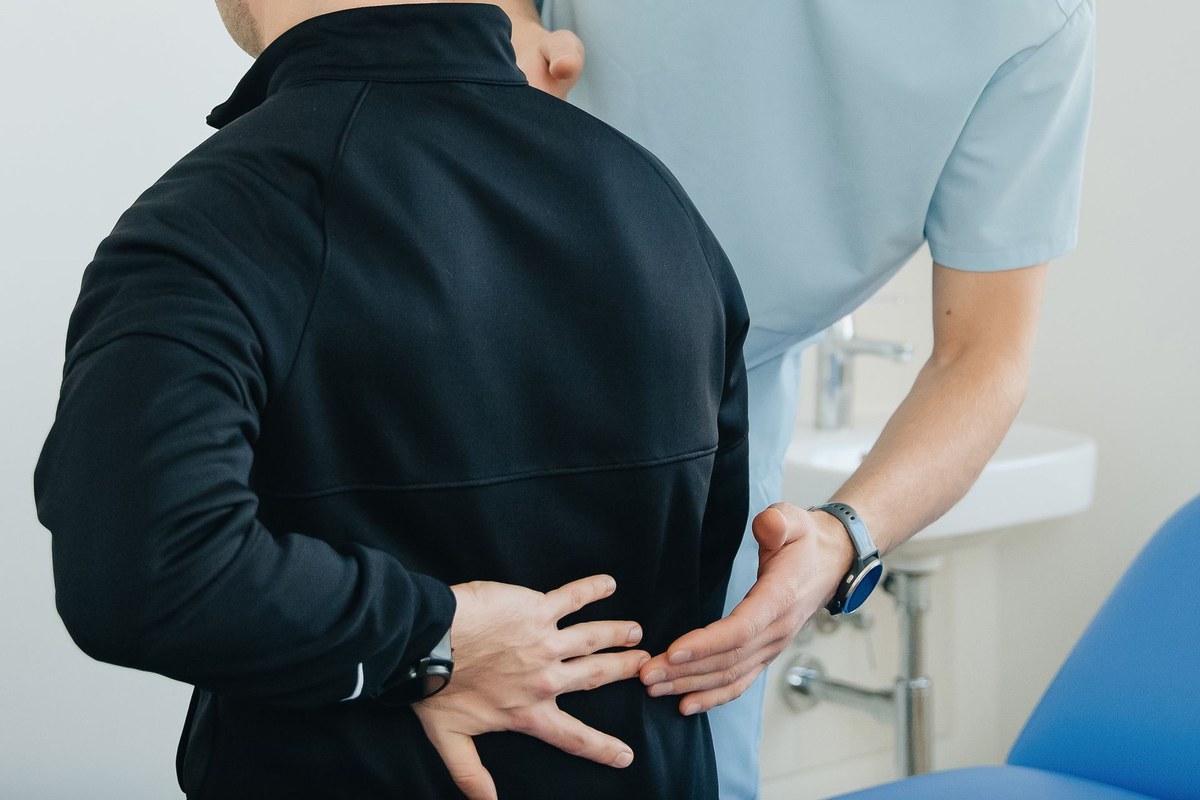
A back that "goes" suddenly, while lifting, bending or simply getting out of bed, is one of the most common reasons adults see a doctor. Researchers call it acute low back pain; people call it lumbago or a back spasm. It has been studied more thoroughly than almost any other pain: how long it lasts, whether rest helps, what heat and medicines add, and which rare cases are serious. If you are weighing a clinic business built on pulsed electromagnetic field (PEMF) technology, this is what those studies measured, where acute pain differs from the chronic pain most PEMF trials enrolled, and where the evidence stops. For longer-lasting pain see our chronic low back pain brief, and for particular patterns our sibling pages on back pain in the morning and lower back pain on one side.
What is sudden lower back pain (lumbago)?
Lumbago, or a back spasm, is the everyday name for acute low back pain: pain between the lower ribs and the buttocks that began recently. Research usually defines acute as less than six weeks, subacute as six to twelve weeks and persistent or chronic as longer. Most episodes are non-specific, which means no single structure can be named as the cause, and a serious cause is rare: under 1% of people seen in primary care.
Inception cohort, 1,172 consecutive patients receiving primary care for acute low back pain in Sydney, Australia (Henschke et al., Arthritis & Rheumatism, 2009). There were 11 cases (0.9%) of serious pathology, 8 of them fractures. Most patients (80.4%) had at least one red flag (median 2). Only three of the guideline red flags for fracture were informative: prolonged use of corticosteroids, age over 70 and significant trauma. Clinicians identified 5 of the 11 serious cases at the first consultation and made 6 false-positive diagnoses. (PubMed 19790051)
How long does acute low back pain last?
Most of the improvement comes in the first six weeks, and then it slows. Pooled across cohort studies, average pain in people with acute low back pain fell by roughly half or more by week six. The two meta-analyses below disagree on the one-year picture: the 2012 analysis found pain close to zero at a year, while the larger 2024 update found low but persisting levels of pain on average. People whose pain was already persistent at study entry improved far less.
Meta-analysis of 33 inception cohorts, 11,166 participants with acute or persistent low back pain (da C. Menezes Costa et al., CMAJ, 2012). In acute cohorts, mean pain (out of 100) was 52 at baseline, 23 at 6 weeks, 12 at 26 weeks and 6 at 52 weeks after onset. In persistent pain cohorts it was 51, 33, 26 and 23. Disability followed a similar course. The authors conclude that patients improved markedly in the first six weeks, after which improvement slowed, and that low to moderate pain and disability were still present at one year, especially with persistent pain. (PubMed 22586331)
Updated systematic review and meta-analysis, 95 studies, 60 cohorts (n = 17,974) in the review and 47 cohorts (n = 9,224) in the meta-analysis (Wallwork et al., CMAJ, 2024). Acute was defined as under 6 weeks, subacute 6 to under 12 weeks, persistent 12 to under 52 weeks. For acute pain, mean pain was 56 at baseline, 26 at 6 weeks, 22 at 26 weeks and 21 at 52 weeks (moderate-certainty evidence). For subacute pain: 63, 29, 29 and 31. For persistent pain: 56, 48, 43 and 40 (very low certainty). Risk of bias varied, with poor follow-up and few studies using consecutive cases. The authors suggest that people with subacute pain who are recovering slowly could be the focus for preventing persistent pain. (PubMed 38253366)
Is it better to rest in bed or stay active with acute low back pain?
Staying active did slightly better than bed rest for acute low back pain, with small differences in pain and function; for sciatica the two approaches came out about the same. Low-quality evidence found little or no difference between advice to stay active, exercises and physiotherapy in the acute phase.
Cochrane systematic review, 10 randomized trials of advice to rest in bed or stay active (Dahm et al., Cochrane Database of Systematic Reviews, 2010). For acute low back pain, two trials (N = 401) showed small improvements in pain relief (SMD 0.22; 95% CI 0.02 to 0.41) and functional status (SMD 0.29; 95% CI 0.09 to 0.49) in favour of staying active. For sciatica there was little or no difference in pain (SMD −0.03; 95% CI −0.24 to 0.18) or function. Low-quality evidence from 3 trials (N = 931) suggested little or no difference between exercises, bed rest and staying active for acute low back pain. The authors expect further research to change the estimates. (PubMed 20556780)
Does heat help acute low back pain?
Modestly and in the short term. In people with acute or sub-acute low back pain, pain scores after five days were somewhat lower with heat wraps than with a placebo pill, and adding exercise to heat helped further. The evidence on cold is too thin to say anything, and studies comparing heat with cold conflict. Heat is the first option the American College of Physicians lists for acute low back pain.
Cochrane systematic review, 9 trials, 1,117 participants (French et al., Cochrane Database of Systematic Reviews, 2006). In two trials of 258 people with acute and sub-acute low back pain, heat wrap therapy reduced pain after five days compared with oral placebo (weighted mean difference 1.06 on a 0–5 scale; 95% CI 0.68 to 1.45). In one trial of 90 people with acute pain, a heated blanket reduced pain immediately after application. One trial of 100 people found adding exercise to a heat wrap reduced pain after seven days. Only three poor-quality studies examined cold, and no conclusions could be drawn. (PubMed 16437495)
Clinical practice guideline, American College of Physicians (Qaseem et al., Annals of Internal Medicine, 2017). Because most patients with acute or subacute low back pain improve over time regardless of treatment, clinicians and patients should choose superficial heat (moderate-quality evidence), massage, acupuncture or spinal manipulation (low-quality evidence). If a medicine is wanted, non-steroidal anti-inflammatory drugs or skeletal muscle relaxants (moderate-quality evidence). Strong recommendation. PEMF is not named. (PubMed 28192789)
What does the research show on medicines for acute low back pain?
Less than most people expect. In the largest placebo-controlled trial, paracetamol did not speed recovery at all. With muscle relaxants, pain scores in the first two weeks were slightly lower than with control, by an amount the reviewers did not consider clinically important, with more side effects. A network meta-analysis of 98 trials called the comparative effectiveness and safety of analgesic medicines for acute low back pain uncertain.
Null result: PACE, double-blind, double-dummy randomized placebo-controlled trial, 1,652 people with acute low back pain at 235 primary care centres in Sydney (Williams et al., The Lancet, 2014). Up to 4 weeks of regular paracetamol, as-needed paracetamol or placebo, all with best-evidence advice. Median time to recovery was 17 days with regular dosing, 17 days as needed and 16 days with placebo (regular vs placebo hazard ratio 0.99; 95% CI 0.87 to 1.14); adjusted p = 0.79. Adverse events were similar (about 18.5% in each group). The authors question the universal endorsement of paracetamol for this group. Co-funded by GlaxoSmithKline Australia. (PubMed 25064594)
Systematic review and meta-analysis of muscle relaxants, 49 trials, 31 analysed (6,505 participants) (Cashin et al., BMJ, 2021). For acute low back pain, very low certainty evidence showed non-benzodiazepine antispasmodics reduced pain at two weeks or less (mean difference −7.7 on a 0–100 scale; 95% CI −12.1 to −3.3) but not disability (−3.3; −7.3 to 0.7), and low certainty evidence that they might increase adverse events (relative risk 1.6; 1.2 to 2.0). The authors call the reductions small and not clinically important, and say considerable uncertainty exists. (PubMed 34233900)
Systematic review and network meta-analysis, 98 randomized trials, 15,134 participants with acute non-specific low back pain, 69 medicines or combinations (Wewege et al., BMJ, 2023). Confidence was low or very low for the pain reductions seen with several medicines against placebo, and for differences between them. Tramadol (risk ratio 2.6), paracetamol plus sustained-release tramadol (2.4), baclofen (2.3) and paracetamol plus tramadol (2.1) increased adverse events compared with placebo. The authors recommend a cautious approach to analgesic medicines until better head-to-head trials are published. (PubMed 36948512)
Which red flags in sudden lower back pain need a doctor first?
Serious causes are rare, and most single red flags are weak on their own: in primary care, 80% of people with acute low back pain had at least one. The flags with the most weight for fracture are older age, long-term steroid use and significant trauma, and for cancer a history of malignancy. Numbness in the saddle area, new bladder or bowel problems, or leg weakness that is getting worse point to cauda equina syndrome, which is an emergency. Intravenous drug use, an indwelling vascular catheter or an infection elsewhere raise the question of a spinal infection, and pain that started with significant trauma, especially in older people, belongs with a physician first.
Systematic review, 14 diagnostic studies evaluating 53 red flags for fracture or malignancy (Downie et al., BMJ, 2013). Many red flags in current guidelines gave virtually no change in probability or had untested accuracy. The highest post-test probabilities for fracture were with older age (9%), prolonged corticosteroid use (33%), severe trauma (11%) and a contusion or abrasion (62%), and 90% when multiple red flags were present; for spinal malignancy, a history of malignancy (33%). (PubMed 24335669)
Systematic review, 7 studies, 569 participants, red flags for cauda equina syndrome against MRI (Dionne et al., Musculoskeletal Science and Practice, 2019). Pooled data covered reduced anal tone, leg pain, back pain, saddle anaesthesia, urinary retention, urinary incontinence and bowel incontinence. Pooled sensitivity ranged from 0.19 to 0.43 and specificity from 0.62 to 0.88. The authors conclude the signs are more specific than sensitive, and that when present they justify prompt diagnostic workup. Their absence does not rule the syndrome out. (PubMed 31132655)
Systematic review, 22 studies, 41,320 patients presenting with low back pain to the emergency department (Galliker et al., American Journal of Medicine, 2020). A condition needing immediate or urgent treatment was found in 2.5% to 5.1% in prospective studies and 0.7% to 7.4% in retrospective ones, including 0.1% to 1.9% with spinal cord or cauda equina compression. Prevalence was higher than in primary care. Red flags that raised the likelihood included suspicion or history of cancer for spinal cancer, and intravenous drug use, an indwelling vascular catheter or another infection site for epidural abscess. (PubMed 31278933)
Review of 16 low back pain guidelines from 15 countries and one for Europe (Verhagen et al., European Spine Journal, 2016). The guidelines listed 46 discrete red flags in four categories of serious pathology: malignancy, fracture, cauda equina syndrome and infection. They lacked consensus on which flags to endorse, and data on diagnostic accuracy was rarely provided. (PubMed 27376890)
Where does PEMF evidence stand for acute lumbago?
No PEMF trial we found was designed for acute lumbago or a back spasm alone. The only acute data we found is a subgroup in a 2022 meta-analysis, where the pain effect in acute low back pain was not statistically significant, while the effect in chronic low back pain was. One sham-controlled trial in non-specific back pain, which does not state how long its patients had had pain, found a larger pain drop after three short sessions with a high-intensity device. Everything else in the controlled PEMF evidence for the lower back comes from chronic pain, and because most acute pain improves by itself within six weeks, an uncontrolled before-and-after result in acute pain says very little.
Meta-analysis, 14 randomized trials, 618 patients with low back pain (Sun et al., Clinical Rehabilitation, 2022). Pain decreased more with PEMF than with placebo (standardized mean difference −1.01; 95% CI −1.42 to −0.60; p<0.001) and than with other therapy alone (SMD −0.36; 95% CI −0.62 to −0.11). In chronic low back pain the difference was significant (SMD −0.60; 95% CI −0.94 to −0.25; p<0.001; I² = 67%). In acute low back pain it was not (SMD −0.46; 95% CI −0.99 to 0.07; p = 0.09). PEMF did not improve physical function (p = 0.09; I² = 86%). The abstract does not say how many trials or patients formed the acute subgroup. (PubMed 35077249)
Randomized sham-controlled trial, 61 patients aged 18 to 80 with non-specific back pain (Hartard et al., Journal of Rehabilitation Medicine, 2023). High-energy electromagnetic induction (50 mT, 1–2 pulses per second) for 10 minutes on 3 consecutive weekdays, against a comparable sham. From before the first session to after the third, pain on a 0–10 visual analogue scale fell by 5.15 points in the treatment group and 2.58 points with sham (p = 0.001). The abstract does not state how long patients had had pain, so it cannot be read as an acute-pain trial; pain was measured only around the sessions, with no later follow-up; the device is a high-intensity system that differs from low-frequency PEMF; and a comment on the trial was published in the same journal. (PubMed 37115201)
Pilot double-blind, sham-controlled trial, 42 adults with non-specific low back pain of mixed duration, 25 completed (Lisi et al., Pain and Therapy, 2019). Usual care plus a portable PEMF device or a sham. Oswestry disability scores improved significantly from baseline to week 6 in the PEMF group (p<0.001) and not in the sham group (p=0.135), and the change persisted at week 12. These are within-group comparisons in a pilot with 17 of 42 lost; results are not reported separately for acute pain; and the trial was funded by the device maker. (PubMed 30868475)
The rest of the controlled evidence enrolled chronic or non-specific low back pain:
Systematic review, 9 randomized trials, 420 patients with non-specific low back pain (Kull et al., Wiener Medizinische Wochenschrift, 2025; online 2023). In 5 of the 9 trials, pain and physical function improved significantly more than in the control group; the other 4 did not show that advantage. No study reported a serious adverse event. Protocols ranged from 10 to 30 minutes, 2 to 7 times a week, 3 to 50 Hz and 2 to 150 mT, and no pooled estimate was calculated. (PubMed 37999784)
Randomized patient-blinded trial, 50 patients with chronic non-specific low back pain (Elshiwi et al., Brazilian Journal of Physical Therapy, 2019). PEMF (50 Hz, 20 gauss) added to conventional physical therapy, against a sham field with the same program, 12 sessions over 4 weeks. Disability scores improved by 8.14 points more (95% CI 6.5 to 9.96). The pain difference (1.52) had a confidence interval crossing zero (−0.34 to 3.35), although the abstract calls it significant. No adverse events. (PubMed 30177406)
Null result: double-blind, placebo-controlled trial, 42 patients with chronic low back pain (Alzayed and Alsaadi, Asian Spine Journal, 2020). PEMF plus exercise against sham plus exercise. The PEMF group improved in pain and disability sooner (week 3, against week 6 with sham), but there was no between-group difference at weeks 6 and 13. The authors concluded it does not seem to be superior to other options. (PubMed 31575112)
Full detail on the chronic trials is in our chronic low back pain brief.
Where does the evidence stop?
- No PEMF trial we found was designed for acute lumbago or a back spasm. The only acute result is a meta-analysis subgroup of unstated size, and it was not statistically significant. Any statement about PEMF in sudden low back pain is an extrapolation from chronic or mixed-duration trials.
- Acute low back pain improves substantially on its own in the first six weeks. Without a sham or control group, improvement after a few sessions cannot be told apart from natural recovery.
- The one sham-controlled trial with a fast pain drop did not report pain duration, measured pain only around three sessions, and used a high-intensity device that differs from low-frequency PEMF.
- Common first steps also rest on modest evidence: staying active beats bed rest by a small margin, heat helps briefly, paracetamol did no better than placebo, and muscle relaxants gave small reductions with more side effects.
- Red flags are imperfect: most people with acute back pain have at least one, few have a serious cause, and the cauda equina signs miss many true cases.
- Trials used different devices, frequencies and session lengths. A result belongs to the protocol that was tested, not to every device sold under the PEMF label.
What should you ask when you evaluate a clinic model?
- How are people with sudden back pain screened for red flags, such as saddle numbness, bladder or bowel changes, worsening leg weakness, fever, a history of cancer or recent trauma, and when are they sent to a physician or emergency care?
- Does the protocol keep people active and sit alongside the heat, movement and self-management advice that guidelines list first, rather than replace it?
- Since most acute pain improves within six weeks anyway, how will the clinic tell its own effect apart from natural recovery?
- Which published trials are the clinic's acute back protocols based on, and does the seller say plainly that the acute evidence for PEMF is a non-significant subgroup?
- Will pain and function be measured for every patient at the start and at fixed follow-up points, so the clinic knows what it delivers?
What is the regulatory side?
The FDA record of PEMF starts in 1979, when a PEMF bone growth stimulator received premarket approval (PMA P790002) for non-union fractures. PEMF devices have since been cleared through the 510(k) pathway for postoperative pain and soft-tissue edema under 21 CFR 890.5290(b). Neither indication is acute low back pain. Each FDA decision covers one device, one model and one indication, and it does not carry over to other devices, other uses or clinic sessions. Before you rely on any device for a clinic, look up its own FDA record. Our guide PEMF and the FDA explains how, and what the technology's record since 1979 does and does not cover.
Where can you read the research yourself?
Every study above links to its PubMed abstract. More published PEMF studies, each checked against the original paper: pemf-research.com. Compare with our chronic low back pain and herniated disc and sciatica briefs, and with back pain in the morning and lower back pain on one side.
Who publishes this?
These guides are written by PainFree. PainFree has run pain-relief clinics in Israel for 25 years, and more than 70 operate today; its Israeli site, in Hebrew, is painfree.org.il. We would want any buyer to read the evidence behind a clinic model this carefully, ours included.
Related research on this site
This article is general information for prospective business owners. It is not legal, financial or medical advice. We do not make earnings claims, and this page is not an offer to sell a franchise or a business opportunity. Study results describe the trials cited, not any particular device or clinic. Equipment supplied to US clinics will meet the applicable US regulatory requirements.