
Evidence brief for clinic investors
PEMF for degenerative disc disease: what the research shows
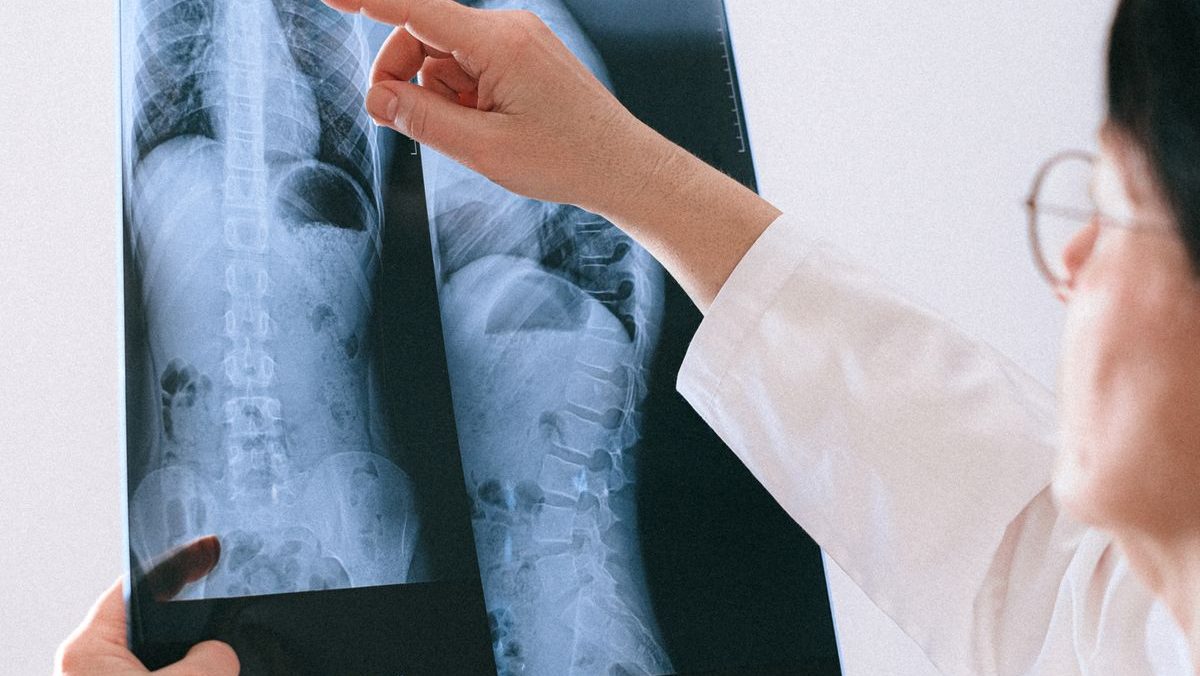
Degenerative disc disease is the label given when the cushions between the vertebrae lose water and height and back pain is attributed to that wear. It is one of the most common reasons people with chronic low back pain are told their spine is the problem. Pulsed electromagnetic field (PEMF) technology is often offered for it. We found one small pilot trial that tested an electromagnetic field device in degenerative disc disease specifically, plus one trial in disc-related low back pain. The rest of the evidence comes from nearby conditions and from the laboratory. This brief labels each study by what it actually studied, sets it beside the standard options, and shows where the evidence stops.
Start with the imaging
Systematic review, 33 studies, 3,110 people without back pain who had CT or MRI of the spine (Brinjikji et al., American Journal of Neuroradiology, 2015). Disc degeneration was present in 37% of 20-year-olds and rose to 96% of 80-year-olds. Disc bulges rose from 30% to 84% over the same ages, and annular fissures from 19% to 29%. The authors conclude that many of these findings are likely part of normal aging and unrelated to pain, and must be read in the context of the patient's clinical condition. (PubMed 25430861)
For anyone evaluating a clinic model, this matters before any treatment question: a disc that looks worn on a scan is common in people with no pain at all, so a scan alone does not identify who will respond to anything.
What the trials measured
The search
On 17 November 2026 we searched PubMed for pulsed electromagnetic field, PEMF, magnetotherapy and magnetic field therapy combined with disc degeneration, degenerative disc and disc disease. The search returned 32 records. Most were laboratory and animal studies of disc cells, MRI methods, surgical case series and veterinary trials. Two human trials enrolled patients whose back pain was attributed to the disc itself, and both are below.
The only trials in disc-related low back pain
Double-blind randomized placebo-controlled pilot, 21 patients with chronic low back pain for more than 6 months, MRI-confirmed disc degeneration and no herniation (Arneja et al., Future Science OA, 2016). The one trial we found in degenerative disc disease itself. Fourteen patients received a low-amplitude, low-frequency electromagnetic field device and 7 had the same procedure with the device switched off. The full text reports that the Roland disability questionnaire showed no significant difference between the groups. Within the treated group, the SF-36 bodily pain score improved from baseline to the end of the study (p = 0.045); the control group's did not (p = 0.173). Pain relief ratings and left side-bending were graphed rather than tested statistically, because the authors had too few patients for that analysis. The authors also report that physical functioning was rated worse in the treated group at the end. No adverse events were reported. One author is listed with BioResonance Technology Inc., and the authors call for a larger study. (PubMed 28031951)
Prospective randomized single-blinded placebo-controlled trial, 106 patients with discopathy-related low back pain in five groups (Taradaj et al., Advances in Clinical and Experimental Medicine, 2018). The abstract does not separate disc degeneration from disc herniation. Two magnetic therapy doses (10 mT and 5 mT at 50 Hz), a low-intensity magnetic stimulation arm and two placebo arms were compared. Positive changes on all clinical outcomes, including pain, range of motion and spinal function, are reported for the 10 mT group (p < 0.05). The abstract reports no such result for the 5 mT or the magnetic stimulation group, and notes that most of the effects were short-term (p > 0.05 at follow-up). (PubMed 29616749)
The review that pulls the disc evidence together
Systematic review, 16 studies of PEMF and intervertebral disc degeneration: 7 cell studies, 4 animal studies, 1 combined and 4 clinical trials (Veronesi et al., Frontiers in Aging, 2026). In the laboratory, PEMF reduced inflammatory signals and enzymes that break down disc tissue; in animals it improved disc structure. Clinically, PEMF was safe and showed potential benefits in pain, function and mobility, especially alongside physiotherapy, but results were inconsistent and methodological limitations were common. The authors conclude that the evidence remains insufficient for clinical recommendations. In the full text, the four clinical trials are in chronic non-specific low back pain, cervical disc herniation, cervical fusion surgery and lumbar disc prolapse with leg pain; none is a trial in degenerative disc disease, and the Arneja pilot above is not among them. (PubMed 42238537)
The nearest PEMF trials: low back pain and disc herniation
Meta-analysis, 14 randomized trials, 618 patients with low back pain (Sun et al., Clinical Rehabilitation, 2022). Low back pain in general, not selected for disc degeneration. Pain decreased more with PEMF than with placebo (standardized mean difference −1.01; 95% CI −1.42 to −0.60; p < 0.001). In chronic low back pain the difference was significant (SMD −0.60; p < 0.001); in acute low back pain it was not (p = 0.09). PEMF did not improve physical function compared with control treatment (SMD −0.45; 95% CI −0.98 to 0.07; p = 0.09). (PubMed 35077249)
Randomized double-blind placebo-controlled trial, 42 patients with chronic low back pain, PEMF plus exercise vs sham plus exercise (Alzayed and Alsaadi, Asian Spine Journal, 2020). Chronic low back pain, not selected for disc degeneration. The PEMF group improved in pain and disability sooner, at week 3, while the sham group improved by week 6. There was no difference between the groups at weeks 6 and 13. The authors conclude that PEMF does not seem to be superior to other treatment options. (PubMed 31575112)
Randomized trial, 40 patients with lumbar radiculopathy from disc prolapse, PEMF vs placebo treatment for 3 weeks (Omar et al., International Journal of Rheumatic Diseases, 2012). Disc herniation with leg pain, not degeneration without herniation. Pain on the visual analogue scale (P = 0.024), total Oswestry disability (P < 0.001) and nerve conduction measures (somatosensory evoked potentials) differed between the groups in favour of PEMF. Single centre, three weeks, effect sizes not given in the abstract. (PubMed 23083041)
Randomized controlled multicentre trial, 323 patients after anterior cervical discectomy and fusion, PEMF stimulation vs no stimulation (Foley et al., The Spine Journal, 2008). Bone fusion after neck surgery, not back pain from disc degeneration. At 6 months the fusion rate was higher with PEMF (83.6% vs 68.6%, p = .0065). At 12 months the difference was not significant (92.8% vs 86.7%, p = .1129), and there were no significant differences in pain, neck disability or SF-12 scores at 6 or 12 months. (PubMed 17983841)
For the full low back and disc herniation evidence, with their limits, see our chronic low back pain and herniated disc and sciatica evidence briefs.
The laboratory evidence
Laboratory study, human annulus fibrosus and nucleus pulposus disc cells exposed to an inflammatory signal (interleukin-1α), with or without PEMF 4 hours a day for up to 7 days (Miller et al., The Spine Journal, 2016). Cells in a dish, not patients. PEMF lessened, but did not fully block, the rise in genes associated with disc degeneration: IL-17A expression fell by 33% (p = .01) and MMP2 by 24% (p = .006) in nucleus cells, and NFκB by 11% (p = .04) in annulus cells. The reductions in IL-6 (25%, p = .07) and MMP13 (26%, p = .10) were not significant. Two authors are listed with Orthofix, Inc. The authors present the results as a reason for future patient studies. (PubMed 26780754)
The standard options, for comparison
Long-term follow-up of three randomized trials, 473 patients with chronic low back pain who were candidates for spinal fusion, fusion vs multidisciplinary cognitive-behavioral and exercise rehabilitation (Mannion, Brox and Fairbank, The Spine Journal, 2013). At an average of 11.4 years, 261 patients (55%) completed follow-up. There was no statistically or clinically significant difference in disability: the adjusted treatment effect of fusion was −0.7 points on the 0 to 100 Oswestry scale (95% CI −5.5 to 4.2). The authors conclude that fusion should not be favoured where such rehabilitation programmes are available. (PubMed 24200413)
Cochrane systematic review and meta-analysis, 41 trials, 6,858 people with chronic low back pain, multidisciplinary biopsychosocial rehabilitation (Kamper et al., BMJ, 2015). Compared with usual care, rehabilitation reduced pain (SMD 0.21; 95% CI 0.04 to 0.37; about 0.5 points on a 10-point scale) and disability (SMD 0.23; about 1.5 points on the 24-point Roland-Morris index), moderate quality evidence. Two trials that compared it with surgery found little difference in outcomes and more adverse events with surgery. (PubMed 25694111)
Cochrane systematic review, 7 randomized trials of total disc replacement for chronic back pain with lumbar disc degeneration (Jacobs et al., Cochrane Database of Systematic Reviews, 2012). Against fusion, back pain improved 5.2 mm more on a 100 mm scale (95% CI 0.18 to 10.26; 2 studies, 676 patients) and the Oswestry score 4.27 points more at 24 months (95% CI 1.85 to 6.68; 5 studies, 1,207 patients), both low quality evidence and both below the predefined threshold for clinical relevance. Leg pain did not differ. The authors urge the spine surgery community to be prudent about adopting the technology on a large scale. (PubMed 22972118)
Where the evidence stops
- Direct evidence in degenerative disc disease is one pilot trial of 21 patients, with 7 controls. Its disability questionnaire showed no significant difference between the groups, its pain result is a within-group change, and the authors themselves describe it as preliminary.
- The 106-patient discopathy trial found a short-lived benefit at one dose only, and its abstract does not say how many patients had degeneration rather than herniation.
- The 2026 systematic review of PEMF and disc degeneration concludes the evidence is insufficient for clinical recommendations, and none of its four clinical trials was in degenerative disc disease.
- The low back pain meta-analysis found less pain but no gain in physical function, and one double-blind trial found PEMF faster but not better than sham by week 6.
- Cell and animal studies of the disc were not done in patients. Fusion-rate studies after surgery measured whether the bone joined, not back pain.
- Disc degeneration on MRI is common in people without pain, so trials that enrol by scan alone may be measuring something other than the disc.
- Trials used different devices, field strengths and session lengths. A result belongs to the protocol that was tested, not to every device sold under the PEMF label.
What to ask when you evaluate a clinic model
- Does any claim about degenerative disc disease cite a trial in that condition? Ask for it by name. The one we found had 21 patients.
- Is a general low back pain, disc herniation, laboratory or fusion-rate result being presented as evidence for disc degeneration?
- How will the clinic make sure patients have been assessed by a physician, including for leg weakness, numbness or other warning signs, before the first session?
- Will these patients be seen alongside, never instead of, the exercise and rehabilitation programmes the long-term trials support?
- How will pain and function be recorded for every patient, not only those who do well?
- Can the seller show you this research, with its gaps, the way it is written here?
Questions buyers ask
Is there a PEMF trial in degenerative disc disease?
One pilot of 21 patients, described above. It found within-group pain improvement and no significant difference in disability between the groups.
Do the low back pain PEMF trials apply to disc degeneration?
Partly at most. They enrolled people with low back pain in general, and none reported a separate result for patients with disc degeneration.
Does PEMF regenerate a degenerated disc?
No human trial we found measured that. The disc changes come from cell and animal studies.
The regulatory side
The FDA record of PEMF starts in 1979, when a PEMF bone growth stimulator received premarket approval (PMA P790002) for non-union fractures: breaks that have not joined. Pain and swelling after surgery have their own FDA classification regulation, 21 CFR 890.5290(b), nonthermal shortwave therapy: a prescription device that applies pulsed electromagnetic energy and is used adjunctively for postoperative pain and soft-tissue edema, reviewed through 510(k). Neither indication is degenerative disc disease or its back pain. Each FDA decision covers one device, one model and one indication, and it does not carry over to other devices, other uses or clinic sessions. Before you rely on any device for a clinic, look up its own FDA record. Our guide PEMF and the FDA explains how, and what the technology's record since 1979 does and does not cover.
Read the research yourself
Every study above links to its PubMed abstract. More published PEMF studies, each checked against the original paper: pemf-research.com. Compare with our spondylolisthesis, cervical radiculopathy and upper and middle back pain briefs.
About the publisher
These guides are written by PainFree. PainFree has run pain-relief clinics in Israel for 25 years, and more than 70 operate today; its Israeli site, in Hebrew, is painfree.org.il. We would want any buyer to read the evidence behind a clinic model this carefully, ours included.
Related research on this site
This article is general information for prospective business owners. It is not legal, financial or medical advice. We do not make earnings claims, and this page is not an offer to sell a franchise or a business opportunity. Study results describe the trials cited, not any particular device or clinic. Equipment supplied to US clinics will meet the applicable US regulatory requirements.