
Evidence brief for clinic investors
Meniscus tear without surgery: what the research shows
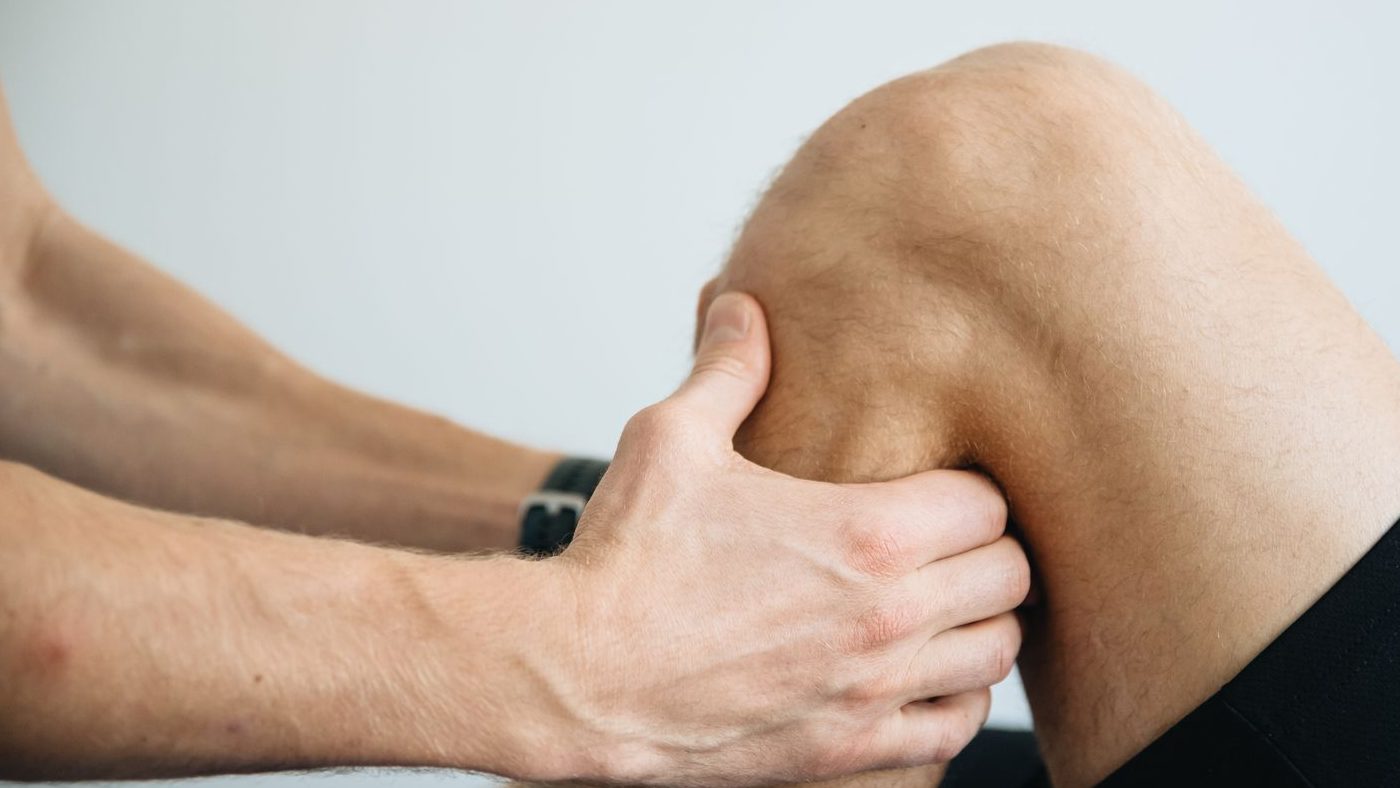
A torn meniscus is one of the most common findings on a knee MRI, and for years the usual answer was an arthroscopy to trim the torn piece away. Over the last decade a run of randomized trials, one of them against sham surgery, has asked whether that operation does better than exercise therapy for most tears. This brief, written for people evaluating a clinic business, sets out what those trials found for degenerative tears in middle-aged and older adults and for tears after an injury in younger adults, and what pulsed electromagnetic field (PEMF) research does and does not cover. Research on PEMF after knee surgery has its own page: PEMF after knee ligament and meniscus surgery.
How common are meniscus tears, and do they always hurt?
Very common after 50, and often silent. In a population sample, most people whose MRI showed a tear had no knee symptoms in the previous month, so a tear on a scan does not by itself explain a painful knee.
Population-based MRI study, 991 adults aged 50 to 90 from Framingham, Massachusetts, chosen without regard to knee problems (Englund et al., New England Journal of Medicine, 2008). A tear or destruction of the meniscus in the right knee ranged from 19% (95% CI 15 to 24) of women aged 50 to 59 to 56% (95% CI 46 to 66) of men aged 70 to 90, and the figures barely changed when people with earlier knee surgery were left out. Among those with radiographic osteoarthritis, a tear was present in 63% of people with knee pain on most days and 60% of people without it. 61% of the people with a tear had had no pain, aching or stiffness in the past month. (PubMed 18784100)
Does surgery beat exercise therapy for a degenerative tear?
Not in the randomized trials. Four trials in Norway, the United States, the Netherlands and Finland, one of them against sham surgery, found no meaningful difference in pain or function between arthroscopic partial meniscectomy and either exercise-based physical therapy or a placebo operation.
Randomized superiority trial, 140 adults with a mean age of 49.5 and an MRI-verified degenerative medial meniscus tear, 96% without definite radiographic osteoarthritis (Kise et al., BMJ, 2016). Twelve weeks of supervised exercise therapy alone or arthroscopic partial meniscectomy alone. At two years the difference in change in the KOOS4 knee score was 0.9 points (95% CI −4.3 to 6.1; P = 0.72), which the authors judge small enough to rule out a clinically relevant difference. Thigh muscle strength was higher in the exercise group at three months (P ≤ 0.004). 19% of the exercise group crossed over to surgery during follow-up, with no additional benefit, and neither group had a serious adverse event. (PubMed 27440192)
Ten-year follow-up of the same Norwegian trial (Berg et al., British Journal of Sports Medicine, 2025). The adjusted difference in radiographic osteoarthritis progression on the OARSI sum score was 0.39 (95% CI −0.19 to 0.97), with more progression after surgery. New radiographic knee osteoarthritis appeared in 23% of the surgery group and 20% of the exercise group (risk difference 3%; 95% CI −13% to 19%). There were no clinically relevant differences in patient-reported outcomes or knee muscle strength, and both groups had improved pain and knee function. (PubMed 39326908)
Multicenter randomized trial (METEOR), 351 patients aged 45 or older with a meniscal tear and mild-to-moderate osteoarthritis, funded by the US National Institute of Arthritis and Musculoskeletal and Skin Diseases (Katz et al., New England Journal of Medicine, 2013). Surgery plus postoperative physical therapy against a standardized physical therapy regimen. At 6 months the WOMAC physical function score had improved by 20.9 points (95% CI 17.9 to 23.9) with surgery and 18.5 (95% CI 15.6 to 21.5) with physical therapy, a difference of 2.4 points (95% CI −1.8 to 6.5); 12-month results were similar. Within 6 months, 30% of those assigned to physical therapy alone had crossed over to surgery. (PubMed 23506518)
Five-year follow-up of METEOR (Katz et al., Arthritis & Rheumatology, 2020). KOOS pain started near 46 on a 0 to 100 scale (higher is worse) in both groups, improved sharply in the first 3 months, reached about 18 in each group by 24 months and stayed there to 60 months. Twenty-five participants (7.1%) had a total knee replacement within 5 years. By assigned group the hazard ratio for knee replacement after partial meniscectomy was 2.0 (95% CI 0.8 to 4.9), which is not significant; by treatment actually received it was 4.9 (95% CI 1.1 to 20.9), which the authors say merits further study. (PubMed 31429198)
Noninferiority randomized trial (ESCAPE), 321 adults aged 45 to 70 with a meniscal tear that did not lock the knee, 9 Dutch hospitals (van de Graaf et al., JAMA, 2018). The physical therapy arm was 16 sessions over 8 weeks of coordination and closed-chain strength exercise. Over 24 months the IKDC knee function score rose by 26.2 points after partial meniscectomy and by 20.4 with physical therapy; the between-group difference of 3.6 points stayed inside the 8-point noninferiority margin (P = .001). 29% of the physical therapy group had surgery during follow-up. Repeat surgery (3 against 1) and extra visits for knee pain (6 against 2) were the most frequent adverse events, more of them after surgery. (PubMed 30285177)
Randomized, double-blind, sham-controlled trial (FIDELITY), 146 adults aged 35 to 65 with symptoms of a degenerative medial meniscus tear and no knee osteoarthritis (Sihvonen et al., New England Journal of Medicine, 2013). Partial meniscectomy against a sham procedure. At 12 months there was no significant difference on any primary outcome: Lysholm score −1.6 points (95% CI −7.2 to 4.0), WOMET score −2.5 (95% CI −9.2 to 4.1) and knee pain after exercise −0.1 (95% CI −0.9 to 0.7). Later knee surgery (2 against 5) and serious adverse events (1 against 0) did not differ significantly. (PubMed 24369076)
Five-year follow-up of FIDELITY (Sihvonen et al., British Journal of Sports Medicine, 2020). Patient-reported outcomes still showed no relevant difference (WOMET −1.7, 95% CI −7.7 to 4.3; Lysholm −2.1, 95% CI −6.8 to 2.6; pain after exercise −0.04, 95% CI −0.81 to 0.72). Radiographic osteoarthritis progressed slightly more after partial meniscectomy (OARSI sum score difference 0.7; 95% CI 0.1 to 1.3), and mechanical symptoms were reported more often in the surgery group (risk difference 18%; 95% CI 5% to 31%). (PubMed 32855201)
Systematic review and meta-analysis, 9 randomized trials of arthroscopic partial meniscectomy, debridement or both in middle-aged and older patients with degenerative knee disease (Thorlund et al., BMJ, 2015). Pooled across 3 to 24 months, surgery gave a pain difference of 2.4 mm on a 100 mm scale (95% CI 0.4 to 4.3), present at 3 and 6 months but not later. Physical function showed no significant benefit (effect size 0.09; 95% CI −0.05 to 0.24). Harms included symptomatic deep vein thrombosis at 4.13 per 1,000 procedures, pulmonary embolism, infection and death. The authors conclude the findings do not support arthroscopic surgery for these patients. (PubMed 26080045)
What about catching or locking?
A sensation of catching is often taken as a reason to operate. In the sham-controlled trial it was not: catching and occasional locking were reported about as often after partial meniscectomy as after sham surgery.
Secondary analysis of the FIDELITY sham-controlled trial, 70 patients assigned to partial meniscectomy and 76 to sham surgery (Sihvonen et al., Annals of Internal Medicine, 2016). Before surgery, 46% and 49% reported catching or locking; at any follow-up the figures were 49% and 43% (risk difference 0.03; 95% CI −0.06 to 0.12). In the 69 patients who had catching or locking before surgery, the risk difference was 0.07 (95% CI −0.08 to 0.22). The analysis was post hoc, and few patients had mechanical symptoms other than catching and occasional locking, so a knee that is truly locked is outside what it tested. (PubMed 26856620)
Is a tear after an injury in a young adult different?
Less is known. The one trial in young adults found no clear advantage for early surgery over exercise and education at 12 months, for tears after an injury or without one, but the comparison by type of onset was exploratory and the confidence intervals were wide.
Exploratory analysis of a randomized trial (DREAM), 121 patients aged 18 to 40 with an MRI-verified meniscal tear (Damsted et al., Journal of Orthopaedic & Sports Physical Therapy, 2024). Early surgery against 12 weeks of supervised exercise and patient education, with the option of later surgery. 69% of the exercise group and 78% of the surgery group had a tear after an injury. KOOS4 change at 12 months was 18.8 with surgery and 16.0 with exercise for traumatic tears (adjusted difference 4.8; 95% CI −1.7 to 11.2), and 20.6 against 17.3 for tears without an injury (7.0; 95% CI −3.7 to 17.7). The authors say further research is needed to confirm how far this applies in practice. (PubMed 38385220)
None of these trials enrolled knees that were locked, unstable or unable to bear weight, and the ESCAPE trial excluded knee instability outright. A knee that locks and cannot straighten, gives way, or swells quickly after a twist belongs with an orthopedic physician before any conservative program starts.
Is there a PEMF trial in meniscus tears managed without surgery?
No. PubMed searches we ran in November 2026 for pulsed electromagnetic field, electromagnetic field or magnetic field studies combined with meniscus or meniscal tear returned 23 unique records. None was a study of people with a meniscus tear who did not have an operation. Most were laboratory or animal osteoarthritis studies, imaging papers, or unrelated uses of the word "pulsed". The PEMF studies that include meniscus patients were all run after arthroscopic surgery, and the one study of a meniscal tear itself was in rats (PubMed 35834942); both are covered in our knee surgery recovery brief.
Randomized placebo-controlled trial, 68 patients after partial medial meniscectomy combined with microfractures for a grade III to IV cartilage lesion (Osti et al., International Orthopaedics, 2015). A post-surgery study, not a conservative one. 34 patients used a PEMF device and 34 a placebo, with the same rehabilitation; 60 were assessed at two and at least five years. At two years IKDC, Lysholm and Constant scores had improved from baseline in both groups with no significant difference between them. At five years scores had declined in both groups, less so with PEMF. The share still active at their pre-operative level was 82% against 68%, a difference that was not significant (P = 0.28), and degenerative X-ray changes were seen in 21.4% against 28.1% (P = 0.55). (PubMed 25876224)
Prospective randomized double-blind placebo-controlled trial after ACL reconstruction, with a meniscectomy subgroup of 15 against 14 patients (Benazzo et al., Knee Surgery, Sports Traumatology, Arthroscopy, 2008). Again a post-surgery population. Within that subgroup the SF-36 gap between the arms was wider than in the trial overall (p < 0.05), but by the two-year visit the trial as a whole showed no statistically significant difference between the arms. (PubMed 18385980)
Randomized, double-blind, placebo-controlled trial of low-level laser therapy, not PEMF, in symptomatic patients with small intrasubstance meniscal lesions on MRI (Malliaropoulos et al., Lasers in Medical Science, 2013). Included only because it is the nearest sham-controlled test of an energy-based physical modality in an unoperated meniscus. Pain improved more with laser than placebo (p < 0.0001), and the Lysholm score was 82.5 ± 4.6 with laser and 79.0 ± 1.9 with placebo at four weeks, from 77 at baseline in both. Four laser patients (12.5%) did not respond. The abstract does not state the total number enrolled, and no arthroscopy or repeat MRI was done. (PubMed 23093133)
What do knee osteoarthritis trials of PEMF add?
Context only. Many older adults with a degenerative tear also have osteoarthritis, and PEMF has been tested in knee osteoarthritis, but none of those trials selected patients for a meniscus tear or reported results by tear. The full set, nulls included, is in our knee osteoarthritis brief.
Cochrane review, 9 randomized trials with 636 participants, electromagnetic field therapy against placebo or sham in adults with osteoarthritis, mostly of the knee (Li et al., 2013). At 4 to 26 weeks, pain was 15.10 points lower than with sham on a 0 to 100 scale (95% CI 9.08 to 21.13). Function differed by 4.55 points (95% CI −2.23 to 11.32), which is not significant, and quality of life did not differ either; any adverse event was no more common than with sham (RR 1.17; 95% CI 0.72 to 1.92), and none was serious. (PubMed 24338431)
Randomized double-blind placebo-controlled trial, 83 adults with knee osteoarthritis (Thamsborg et al., Osteoarthritis and Cartilage, 2005). Six weeks of daily two-hour sessions on five days a week. Between groups, WOMAC scores showed no significant improvement over the 12 weeks of follow-up, apart from stiffness at 2 weeks in patients under 65. (PubMed 15979009)
Where does the evidence stop?
- No PEMF study we found enrolled people with a meniscus tear managed without surgery, degenerative or traumatic.
- The PEMF results that involve meniscus patients come from post-surgery trials: a subgroup of 29 in an ACL trial, and 68 patients who also had cartilage microfractures. In the second, the five-year activity figure the authors highlight was not statistically significant.
- The only PEMF study of the tear itself was done in rats, and animal results cannot stand in for results in people.
- The knee osteoarthritis trials did not select for tears and include sham-controlled nulls; they cannot be read as meniscus evidence.
- The strong evidence on this topic is about what surgery does not add: exercise-based physical therapy held up against partial meniscectomy in four trials and one meta-analysis. That is a benchmark any added modality would have to beat, not evidence for one.
- Cross-over was common in the surgery trials (19% to 30% of the conservative groups had surgery), so results analysed by assigned group describe a strategy that starts with exercise, not a promise that no one will need an operation.
- Evidence for young adults rests on one trial of 121 people, and the split by injury and non-injury tears was exploratory.
What should a buyer ask when evaluating a clinic model?
- How will a locked, unstable or acutely swollen knee be identified and referred to an orthopedic physician before anything else is done?
- Is supervised exercise therapy, the approach tested in the trials above, the core of the knee program, with any other modality added to it rather than replacing it?
- Does any meniscus claim in the seller's material rest on post-surgery trials or an animal study, and is that stated?
- Will outcomes be measured with a validated knee score such as KOOS, IKDC or Lysholm, and followed for long enough to compare with the trial benchmarks?
- Are the trials that found no difference from sham presented next to the ones that did?
What has the FDA decided about PEMF technology?
PEMF first reached the FDA record in 1979, when premarket approval (PMA P790002) was granted to a PEMF bone growth stimulator for fractures that had not united. A separate classification regulation, 21 CFR 890.5290(b), nonthermal shortwave therapy, covers prescription devices that apply pulsed electromagnetic energy as an adjunct for postoperative pain and soft-tissue edema, reviewed through the 510(k) pathway. Neither of these indications is a meniscus tear managed without surgery. Each FDA decision belongs to one device, model and indication and does not extend to other devices or uses. Our guide PEMF and the FDA explains how to look up a particular device's record.
Where can I read the research myself?
Every study box links to its PubMed abstract. A wider library of published PEMF studies, each checked against the original paper, is at pemf-research.com. For related evidence see our briefs on PEMF after knee ligament and meniscus surgery, knee osteoarthritis and ACL and MCL sprains, and the questions on knee pain when walking and knee pain on stairs.
Who publishes these guides?
PainFree writes these guides. It has operated pain-relief clinics in Israel for 25 years, with more than 70 open today, and its Hebrew-language site is painfree.org.il. We think any buyer should read the evidence behind a clinic model this closely, including the evidence behind ours.
Related research on this site
This article is general information for prospective business owners. It is not legal, financial or medical advice. We do not make earnings claims, and this page is not an offer to sell a franchise or a business opportunity. Study results describe the trials cited, not any particular device or clinic. Equipment supplied to US clinics will meet the applicable US regulatory requirements.