
Evidence brief for clinic investors
PEMF for ACL and MCL knee ligament sprains: what the research shows
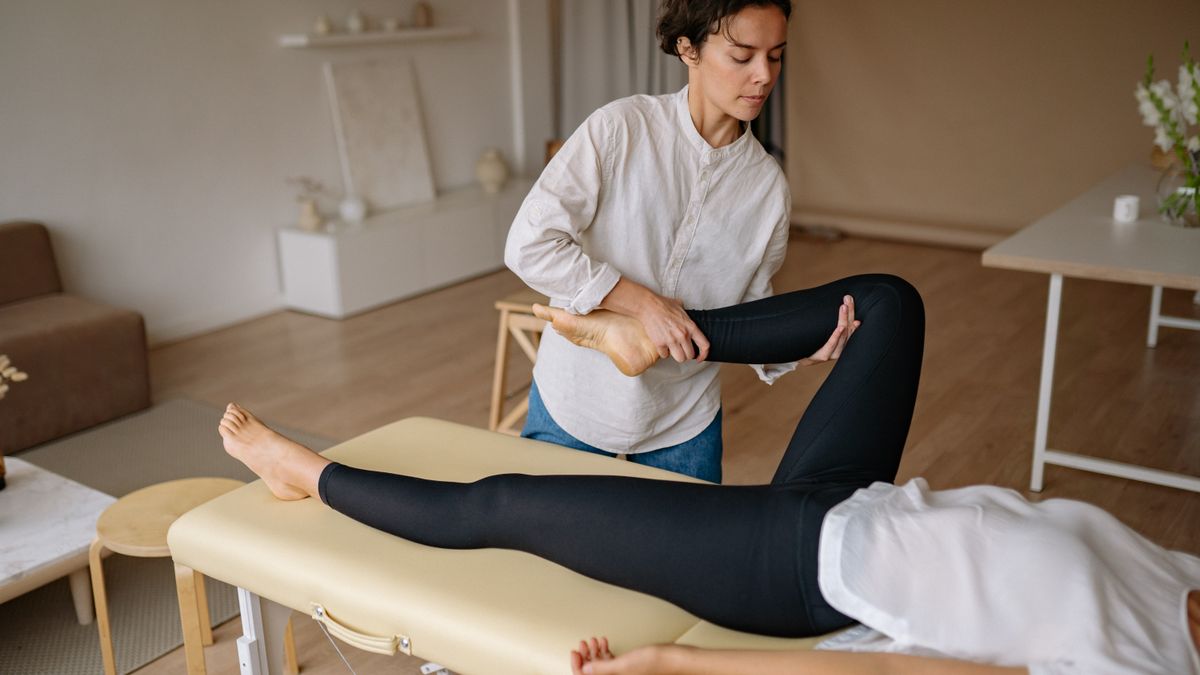
A knee ligament sprain is a stretch or tear of one of the ligaments that hold the knee together, most often the anterior cruciate ligament (ACL) inside the joint or the medial collateral ligament (MCL) on its inner side. Sprains are graded I (stretched), II (partly torn) and III (fully torn), and many are managed without surgery, with a brace and a rehabilitation program. Pulsed electromagnetic field (PEMF) therapy is sometimes offered for them. We could not find a single PEMF trial in people with a non-surgical ACL or MCL sprain. This is an evidence-gap brief: it names the searches we ran, reports the nearest trials, including two that found no difference, and sets out what the rehabilitation trials do show. PEMF after ACL reconstruction surgery is a separate question, covered in our knee ligament and meniscus surgery recovery brief.
What we searched, and what we found
On 2026-11-05 we searched PubMed for pulsed electromagnetic, PEMF and magnetotherapy terms combined with anterior cruciate ligament, ACL, collateral ligament, knee sprain and ligament repair terms. The search returned 73 records. A second PubMed search for pulsed electromagnetic, PEMF, magnetotherapy and magnetic field therapy combined with sprain, ligament injury and collateral ligament returned 52. Most records were transcranial magnetic stimulation studies of the brain after ACL injury, MRI studies, and horse and wrist ligament papers. The PEMF studies in the knee ligament were trials after ACL reconstruction surgery and two rabbit experiments. A 1988 Polish paper on knee injuries and a high-frequency impulse magnetic field has no abstract in PubMed, so we could not check what it measured and do not cite its results. We found no official US figure (CDC, NCHS or NIH) that we could open for how many people sprain a knee ligament, so this brief gives none.
What the trials measured
The nearest trials: after ACL reconstruction surgery, not sprains
Randomized, double-blind, placebo-controlled trial, 40 enrolled, 38 analysed, after ACL reconstruction (Ogrodzka-Ciechanowicz et al., Medicine, 2021). Both groups used a magnetic field apparatus for 30 minutes a day for 11 days after surgery, at 3 mT and 10 Hz, but only the experimental group's device emitted a field. There were no statistically significant differences between the groups in the reduction of postoperative joint effusion (swelling measured by knee circumference) or in knee range of motion. The authors report no conflicts of interest. (PubMed 34232202)
Randomized comparison, 54 patients rehabilitated after ACL reconstruction with a patellar tendon graft (Klimczak et al., Polski Merkuriusz Lekarski, 2000). Both groups followed the same rehabilitation scheme, and one group also received impulse magnetic field therapy. Both groups improved satisfactorily, and there was no significant advantage of the additional magnetic field therapy. The abstract does not describe a sham or blinding. (PubMed 11204324)
Randomized, sham-controlled pilot trial, 20 patients after ACL reconstruction (Stephenson et al., Journal of Orthopaedic Translation, 2022). The operated thigh was exposed to PEMF at 1 mT for 10 minutes once a week for 16 weeks, or to sham exposure. Markers of muscle energy metabolism on MR spectroscopy and some blood biomarkers differed between the groups at 16 weeks, but differences in force, muscle volume and fat volume did not reach statistical significance. Several authors are inventors on a PEMF patent or are linked to a company that makes PEMF devices. (PubMed 36262374)
A 69-patient double-blind trial after ACL reconstruction, with a faster early recovery and no difference at two years, is set out in our surgery recovery brief and is not repeated here. None of these trials enrolled people with a sprain managed without surgery.
The nearest sprain trial: the ankle, not the knee
Randomized, prospective, double-blind study, 50 grade I and II ankle sprains in military trainees (Pennington et al., Military Medicine, 1993). Pulsed, non-thermal, high-frequency electromagnetic energy was used to reduce swelling in acutely sprained ankles, and a statistically significant decrease in edema (p < 0.01) was reported after one treatment. The abstract reports swelling only, not pain, function or return to training, and it is an ankle trial with high-frequency pulsed energy. (PubMed 8441490)
Systematic review, 4 randomized trials, 243 participants with foot and ankle soft-tissue conditions (Chia et al., Frontiers in Sports and Active Living, 2026). In three of the four trials PEMF was added to another treatment, such as shockwave, heel pads or eccentric exercise, and only one compared PEMF alone with sham. Three trials reported a significant pain reduction against controls (p < 0.05), but only one of three found a significant improvement in physical function. Protocols varied widely, and only minor skin redness was reported as a side effect. No knee trial was included. (PubMed 41716305)
Animal research only
Laboratory study in 80 rabbits with a surgical defect in the patellar ligament (Lin et al., Journal of Veterinary Medical Science, 1992). Animal research, not evidence in people. Groups received PEMF at 0, 2, 10 or 50 gauss for 6 hours a day. Tissue in the PEMF groups showed earlier capillary and fibroblast growth, and tensile strength was significantly higher at 1 and 2 weeks, but at 3 and 4 weeks there were no significant differences between the groups. (PubMed 1420550)
Laboratory study in 80 rabbits, same model and settings (Lin et al., Journal of Veterinary Medical Science, 1993). Animal research, not evidence in people. Collagen content in the ligament defect was significantly higher in the PEMF groups than in controls, rising with field strength, and blood flow at the defect was higher in the 50 gauss group from week 2 to week 4. (PubMed 8399728)
The benchmark: what works in conservative ACL and MCL care
Randomized trial, 121 young, active adults with an acute ACL tear (Frobell et al., New England Journal of Medicine, 2010, the KANON trial). Structured rehabilitation plus early ACL reconstruction was compared with structured rehabilitation and the option of later reconstruction. The two-year change in the KOOS4 knee score was 39.2 points against 39.4 points (difference 0.2, 95% CI −6.5 to 6.8, P = 0.96). In the rehabilitation-first group, 23 of 59 had a delayed reconstruction and 36 had rehabilitation alone. (PubMed 20660401)
Cochrane systematic review of surgical against conservative care for ACL injury, one trial, 121 participants analysed (Monk et al., Cochrane Database of Systematic Reviews, 2016). Low-quality evidence found no difference in the KOOS4 knee score at two or five years between reconstruction and structured rehabilitation. But 39% (23/59) of the conservative group had a reconstruction for knee instability by two years and 51% (30/59) by five years. (PubMed 27039329)
Pragmatic randomized trial, 316 patients with a non-acute ACL injury and persistent instability, 29 UK hospitals (Beard et al., Lancet, 2022, ACL SNNAP). At 18 months the mean KOOS4 was 73.0 with surgical reconstruction and 64.6 with rehabilitation, an adjusted difference of 7.9 points (95% CI 2.5 to 13.2, p = 0.0053) in favour of surgery, and 41% (65/160) of the rehabilitation group had surgery within 18 months. This is the case where conservative care did less well: a knee that keeps giving way. (PubMed 35988569)
International consensus, 66 experts from 18 countries (Diermeier et al., British Journal of Sports Medicine, 2021, Panther Symposium). For patients who seek to return to straight-plane activities, non-operative treatment with structured, progressive rehabilitation is an acceptable option; for jumping, cutting and pivoting sports, early reconstruction is recommended; with persistent instability or giving way, reconstruction is indicated. The panel noted that the guidelines rest largely on low-level evidence. (PubMed 32661128)
Clinical review of medial knee injuries (LaPrade and Wijdicks, Journal of Orthopaedic & Sports Physical Therapy, 2012). Medial-side injuries are described as the most common knee ligament injuries, and the majority of acute grade III medial knee injuries are reported to recover after a non-operative rehabilitation program. Rehabilitation aims to control swelling, regain range of motion and avoid significant stress on the injured ligament; some severe or chronic injuries need repair or reconstruction. (PubMed 22382986)
Systematic review and meta-analysis, 18 studies, 1,534 cases of combined ACL and MCL injury, 997 in the meta-analysis (Shultz et al., American Journal of Sports Medicine, 2024). With the ACL reconstructed, there was no statistical difference between non-operative and surgical management of the MCL in patient-reported outcomes, final range of motion or quadriceps strength. The evidence was rated level 4. (PubMed 36960920)
Where the evidence stops
- We found no PEMF trial of any design in people with a non-surgical ACL or MCL sprain. Any claim that PEMF helps a knee ligament sprain is not supported by a published trial in that condition.
- The closest human trials are after ACL reconstruction surgery, a different condition. Of the three summarised here, the double-blind 38-patient trial and the 54-patient trial found no significant difference, and the 20-patient sham pilot found no difference in strength or muscle volume.
- The only sprain trial with pulsed electromagnetic energy is in the ankle, used high-frequency pulsed energy, and reported swelling after one session. It cannot be carried over to the knee.
- The ligament experiments are in rabbits and in the patellar ligament, not the ACL or MCL, and the strength difference was gone by week three. A tissue result in one animal ligament does not transfer to a different ligament in people.
- What the evidence supports for conservative care is structured, progressive rehabilitation, with surgery when the knee stays unstable. Even that rests on few trials, rated low quality by Cochrane.
- Transcranial magnetic stimulation, which appears in many ACL search results, is a brain-stimulation research tool, not PEMF on the knee. Neuromuscular electrical stimulation, TENS, laser and shockwave are not PEMF either.
What to ask when you evaluate a clinic model
- Does any claim about knee ligament sprains cite a PEMF trial in that condition? Ask for it by name. We found none.
- Is a post-surgery ACL trial, an ankle sprain trial or a rabbit study being presented as evidence for a knee sprain?
- How are patients with a suspected ACL or MCL injury examined and referred, so a full tear, an unstable knee or a meniscus injury reaches an orthopedic surgeon before any session?
- Will patients be seen alongside, never instead of, the physicians and physical therapists who run the brace and rehabilitation program?
- How will pain, swelling, knee stability, return to activity and later surgery be recorded for every patient, not only those who do well?
- Can the seller show you this research, with its gaps and null results, the way it is written here?
Questions buyers ask
Is there a clinical trial of PEMF for a non-surgical ACL or MCL knee sprain?
Not that we could find. Our PubMed searches on 2026-11-05 returned 73 and 52 records, and none was a PEMF trial in people with a knee ligament sprain managed without surgery.
What about PEMF after ACL surgery?
That is a different situation, covered in our surgery recovery brief. Two randomized trials after ACL reconstruction, one of them double-blind with 38 patients and one with 54 patients, found no significant difference with magnetic field therapy.
Do the rabbit ligament studies count as evidence in people?
No. The two 1992 and 1993 studies cut a defect in the rabbit patellar ligament, not the ACL or MCL, and the tensile-strength difference was gone by week three. They are laboratory findings only.
What does the research support for conservative ACL and MCL care?
Structured, progressive rehabilitation, with reconstruction when the knee keeps giving way. The trials and reviews are listed above.
The regulatory side
The FDA record of PEMF starts in 1979, when a PEMF bone growth stimulator received premarket approval (PMA P790002) for non-union fractures: breaks that have not joined. Pain and swelling after surgery have their own FDA classification regulation, 21 CFR 890.5290(b), nonthermal shortwave therapy: a prescription device that applies pulsed electromagnetic energy and is used adjunctively for postoperative pain and soft-tissue edema, reviewed through 510(k). Neither indication is a knee ligament sprain. Each FDA decision covers one device, one model and one indication, and it does not carry over to other devices, other uses or clinic sessions. Before you rely on any device for a clinic, look up its own FDA record. Our guide PEMF and the FDA explains how, and what the technology's record since 1979 does and does not cover.
Read the research yourself
Every study above links to its PubMed abstract. More published PEMF studies, each checked against the original paper: pemf-research.com. Compare with our knee ligament and meniscus surgery recovery, ankle sprain, knee osteoarthritis and musculoskeletal pain briefs.
About the publisher
These guides are written by PainFree. PainFree has run pain-relief clinics in Israel for 25 years, and more than 70 operate today; its Israeli site, in Hebrew, is painfree.org.il. We would want any buyer to read the evidence behind a clinic model this carefully, ours included.
Related research on this site
This article is general information for prospective business owners. It is not legal, financial or medical advice. We do not make earnings claims, and this page is not an offer to sell a franchise or a business opportunity. Study results describe the trials cited, not any particular device or clinic. Equipment supplied to US clinics will meet the applicable US regulatory requirements.