
Evidence brief for clinic investors
Knee pain in the morning: what the research shows
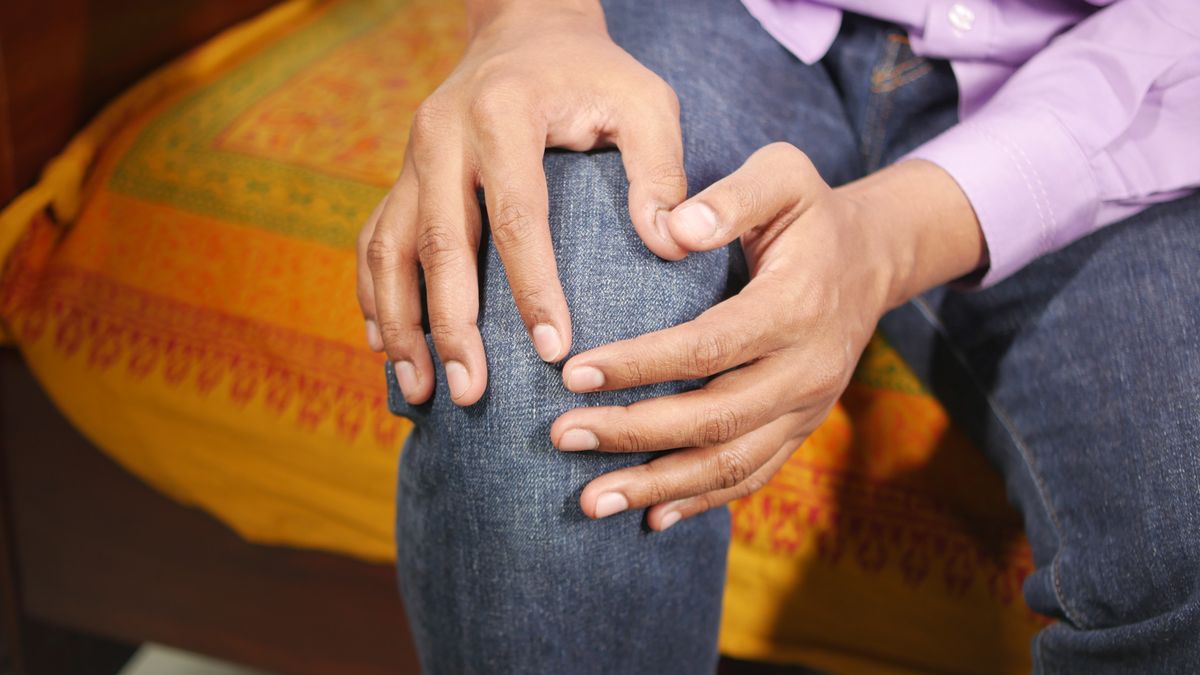
A stiff, sore knee on getting out of bed is one of the most common ways people describe a knee problem, and how long that stiffness lasts is one of the first things a clinician asks about. If you are evaluating a clinic business built on pulsed electromagnetic field (PEMF) technology, this is what the diagnostic criteria, the guidelines and the PEMF trials actually say about morning stiffness, including the null results and where the evidence stops. For pain on stairs, see our sibling brief, Knee pain on stairs: what the research shows.
What does short morning stiffness in the knee point to?
Usually osteoarthritis. In the diagnostic criteria, knee osteoarthritis typically brings stiffness that eases within half an hour, with pain that is tied to activity. Stiffness that lasts much longer points somewhere else.
Clinical review, evaluation and treatment of knee pain (Duong, Oo, Ding, Culvenor and Hunter, JAMA, 2023). About 5% of adult primary care visits relate to knee pain. Knee osteoarthritis is the most likely diagnosis in people aged 45 or older who present with activity-related knee pain and no morning stiffness or stiffness of less than 30 minutes, a combination with 95% sensitivity and 69% specificity. Radiographs of every patient with possible knee osteoarthritis are not recommended; first-line management is exercise therapy, weight loss if overweight, education and self-management. (PubMed 37874571)
EULAR evidence-based recommendations for the diagnosis of knee osteoarthritis (Zhang et al., Annals of the Rheumatic Diseases, 2010). A group from 12 European countries produced 10 recommendations. Three symptoms (persistent knee pain, limited morning stiffness and reduced function) and three signs (crepitus, restricted movement and bony enlargement) were the most useful. Assuming a 12.5% background prevalence in adults aged 45 or older, the estimated probability of radiographic knee osteoarthritis rose to 99% when all six were present. The authors conclude that a thorough clinical assessment alone can give a confident rule-in diagnosis. (PubMed 19762361)
Review of non-operative management of primary osteoarthritis, drawing on the NICE guideline (Furey et al., British Journal of Hospital Medicine, 2022). Osteoarthritis can be diagnosed clinically when activity-related joint pain is present alongside morning joint stiffness lasting less than 30 minutes; a radiological diagnosis can also be made. (PubMed 35653315)
When does long morning stiffness point to inflammatory arthritis?
When it lasts an hour or more and comes with swollen joints. Prolonged morning stiffness is one of the classic criteria for rheumatoid arthritis, and it calls for a physician's assessment, not a general pain program.
American Rheumatism Association 1987 revised criteria for the classification of rheumatoid arthritis (Arnett et al., Arthritis & Rheumatism, 1988). Built from 262 consecutive patients with rheumatoid arthritis and 262 controls with other rheumatic diseases. The first of seven criteria is morning stiffness in and around joints lasting at least 1 hour before maximal improvement; the others include soft-tissue swelling of 3 or more joint areas, symmetric swelling, rheumatoid nodules, rheumatoid factor and radiographic erosions. Criteria 1 to 4 must be present for at least 6 weeks, and 4 of 7 classify rheumatoid arthritis, with 91–94% sensitivity and 89% specificity against other rheumatic diseases. (PubMed 3358796)
These are classification criteria, built to group patients for research. Other warning signs with morning knee pain, such as a hot, red or newly swollen knee, fever, a knee that locks or gives way, or pain after an injury, also need a physician's assessment before any general program.
What do guidelines recommend first for knee osteoarthritis?
Education and exercise come first in both major guidelines, with weight management, tai chi, a cane and bracing also listed. PEMF is not named in either guideline's summary.
OARSI guidelines for knee, hip and polyarticular osteoarthritis (Bannuru et al., Osteoarthritis and Cartilage, 2019). Evidence was sought for 60 interventions. Core treatments for knee osteoarthritis were arthritis education and structured land-based exercise programs, with or without dietary weight management. Topical NSAIDs were strongly recommended for knee osteoarthritis; acetaminophen was conditionally not recommended and opioids were strongly not recommended. The abstract does not name PEMF. (PubMed 31278997)
American College of Rheumatology / Arthritis Foundation guideline for osteoarthritis of the hand, hip and knee (Kolasinski et al., Arthritis Care & Research, 2020; the 2019 guideline). Strong recommendations included exercise, weight loss for people with knee or hip osteoarthritis who are overweight or obese, self-efficacy and self-management programs, tai chi, cane use, tibiofemoral bracing and topical NSAIDs for knee osteoarthritis. Balance exercises, yoga, acupuncture and thermal modalities received conditional recommendations. The abstract does not name PEMF. (PubMed 31908149)
How much does exercise help?
A modest, real amount on pain and function, of uncertain clinical importance against the review's own thresholds. The review did not report morning stiffness as a separate outcome.
Cochrane review, 139 randomized trials, 12,468 participants with knee osteoarthritis (Lawford et al., 2024). Against attention control or placebo, exercise improved pain by 8.70 points on a 0 to 100 scale (95% CI 5.70 to 11.70; low certainty) and physical function by 11.27 points (95% CI 7.64 to 15.09; moderate certainty). Against no treatment or usual care, pain improved by 13.14 points. No type of exercise did better than another. Confidence intervals either did not reach the minimal important differences used (12 points for pain, 13 for function) or included both important and unimportant effects, and most participants were not blinded. The outcomes listed were pain, function, quality of life, treatment success, adverse events and withdrawals; stiffness was not among them. (PubMed 39625083)
Did PEMF trials measure morning stiffness?
Not as morning stiffness. No PEMF trial we found used morning stiffness, or its duration, as an outcome. Several knee trials and meta-analyses report the WOMAC stiffness subscale, a questionnaire score that covers stiffness after first waking and later in the day, and the results point in different directions.
Meta-analysis, 11 randomized trials, 614 patients, 10 of the trials in knee osteoarthritis (Tong et al., Pain Research and Management, 2022). Trials since 2009, PEMF against control groups. Stiffness: standardized mean difference 1.34 (95% CI 0.45 to 2.23; p=0.003). Pain: 0.71 (95% CI 0.08 to 1.34; p=0.03). Physical function: 1.52 (95% CI 0.49 to 2.55; p=0.004). The intervals are wide, and the comparison groups were other conservative treatments, not only sham. (PubMed 35586276)
Meta-analysis of randomized placebo-controlled trials in osteoarthritis, 16 studies, 15 pooled (Yang et al., Physical Therapy, 2020). Standardized mean differences against placebo: stiffness 0.37 (95% CI 0.07 to 0.67), pain 1.06 (95% CI 0.61 to 1.51), function 0.46 (95% CI 0.14 to 0.78); quality of life 1.49 (95% CI −0.06 to 3.04) was not significant. PEMF parameters did not influence symptoms. The authors state the evidence was limited to short-term effects, and the pool mixed joints. (PubMed 32251502)
Meta-analysis, 9 randomized trials, 457 patients with knee osteoarthritis (Chang, Lin and Huang, Medicina, 2026). Trials from 2015 to 2025. No significant improvement in VAS pain or total WOMAC at one month. WOMAC stiffness improved at one month (mean difference −1.11; 95% CI −1.386 to −0.85; I²=0%), and WOMAC pain at 18 to 21 days but not at one month. Objective function measures did not improve, overall risk of bias was high, and the authors state the changes may not reach thresholds for clinical meaningfulness. (PubMed 42075549)
Null result for stiffness: meta-analysis, 8 randomized trials, 421 patients with knee osteoarthritis (Chen et al., Journal of Rehabilitation Medicine, 2019). Classical PEMF against placebo. No significant difference in WOMAC stiffness (weighted mean difference −0.50; 95% CI −1.09 to 0.09; p=0.1), WOMAC pain (p=0.09), VAS pain (p=0.15) or WOMAC total (p=0.06). Physical function did differ (−5.28; 95% CI −9.45 to −1.11; p=0.01). (PubMed 31583420)
Randomized, double-blind, placebo-controlled trial, 83 patients with knee osteoarthritis (Thamsborg et al., Osteoarthritis and Cartilage, 2005). Two hours a day, 5 days a week for 6 weeks; WOMAC pain, stiffness and daily activities measured at 2 and 6 weeks and 6 weeks after treatment. The PEMF group improved within itself at every visit and the sham group improved on pain and, from 6 weeks, on stiffness; between-group analysis did not show significant improvements over time. In patients under 65, the between-group analysis found a significant improvement in stiffness of the treated knee after 2 weeks, but not in pain or daily activities. (PubMed 15979009)
Null result: randomized sham-controlled trial, 40 patients with knee osteoarthritis (Ozgüçlü et al., Clinical Rheumatology, 2010). PEMF or sham added to hot pack, ultrasound and exercise, 10 sessions over 2 weeks. Both groups improved (p<0.001), with no between-group difference in WOMAC stiffness (p=0.855), pain (p=0.906), function (p=0.809) or acetaminophen use (p=0.289). (PubMed 20473540)
What does PEMF research show for knee osteoarthritis overall?
A modest effect on pain in pooled sham-controlled analyses, less on function, wide variation between trials, and a recent trial with no change in symptom scores. Full detail is in our knee osteoarthritis brief.
Cochrane review, 9 randomized trials, 636 participants with osteoarthritis, against placebo or sham (Li et al., 2013). Pain relief was rated 15.10 points more on a 0 to 100 scale (95% CI 9.08 to 21.13) after 4 to 26 weeks. Physical function (mean difference 4.55; 95% CI −2.23 to 11.32) and quality of life did not differ significantly, there was no difference in adverse events, and no serious adverse events were reported. The abstract does not report stiffness. (PubMed 24338431)
Meta-analysis, 12 sham-controlled trials, 10 of them in the knee (Wu et al., BMJ Open, 2018). Knee pain: standardized mean difference −0.54 (95% CI −1.04 to −0.04; p=0.03). Knee function: −0.34 (95% CI −0.53 to −0.14; p=0.0006). Sessions of 30 minutes or less did better than longer ones in sensitivity analyses, and adverse events did not differ from sham in the 3 trials that reported them. The abstract does not report stiffness. (PubMed 30552258)
Randomized, double-blind, sham-controlled trial, 60 patients aged 50 or older with mild-to-moderate knee osteoarthritis (Lau et al., Journal of Cachexia, Sarcopenia and Muscle, 2026). 30 minutes, 3 times a week for 8 weeks, followed to 12 months. Knee extensor strength rose 72% against 25% with sham at 6 months (p=0.003). There was no difference in lean muscle mass, cartilage thickness, joint space width, 6-meter walk time, 30-second chair stands or WOMAC through 12 months. (PubMed 41588476)
Where does the evidence stop?
- No PEMF trial we found measured morning stiffness or how long it lasts. The closest measure is the WOMAC stiffness subscale, which mixes waking stiffness with stiffness later in the day.
- On that subscale, three meta-analyses report a benefit and one meta-analysis and one sham-controlled trial found none; the largest sham-controlled knee trial found a stiffness difference only in patients under 65, at 2 weeks.
- Some pooled analyses mix sham with other control treatments, or mix knee with hand and neck osteoarthritis.
- Trials were mostly small and short, and devices, field strengths and session lengths varied widely. A result belongs to the protocol that was tested, not to every device sold under the PEMF label.
- No trial cited here showed cartilage rebuilding.
What should a buyer ask when evaluating a clinic model?
- How are people with morning knee pain screened for inflammatory arthritis, such as stiffness lasting an hour or more or several swollen joints, and to whom are they referred?
- How does the model fit with exercise, education and weight management, which the guidelines list first?
- Which protocols will the clinic use, and which published trials are they based on?
- Will morning stiffness, and how long it lasts, be measured and recorded for every client, so the clinic knows what it delivers?
- Can the seller show you the null trials, like the ones above, as readily as the positive ones?
What has the FDA decided about PEMF technology?
The FDA record of PEMF starts in 1979, when a PEMF bone growth stimulator received premarket approval (PMA P790002) for non-union fractures. Pain and swelling after surgery have their own FDA classification regulation, 21 CFR 890.5290(b), nonthermal shortwave therapy: a prescription device that applies pulsed electromagnetic energy and is used adjunctively for postoperative pain and soft-tissue edema, reviewed through 510(k). Neither indication is knee osteoarthritis or morning stiffness. Each FDA decision covers one device, one model and one indication, and it does not carry over to other devices or uses. Our guide PEMF and the FDA explains how to look up a device's own record.
Where can I read the research myself?
Every study above links to its PubMed abstract. More published PEMF studies, each checked against the original paper: pemf-research.com. Compare with our knee osteoarthritis, anterior knee pain and patellar tendinopathy and knee pain on stairs briefs.
Who publishes these guides?
These guides are written by PainFree. PainFree has run pain-relief clinics in Israel for 25 years, and more than 70 operate today; its Israeli site, in Hebrew, is painfree.org.il. We would want any buyer to read the evidence behind a clinic model this carefully, ours included.
Related research on this site
This article is general information for prospective business owners. It is not legal, financial or medical advice. We do not make earnings claims, and this page is not an offer to sell a franchise or a business opportunity. Study results describe the trials cited, not any particular device or clinic. Equipment supplied to US clinics will meet the applicable US regulatory requirements.