
Evidence brief for clinic investors
Knee pain after running: what the research shows
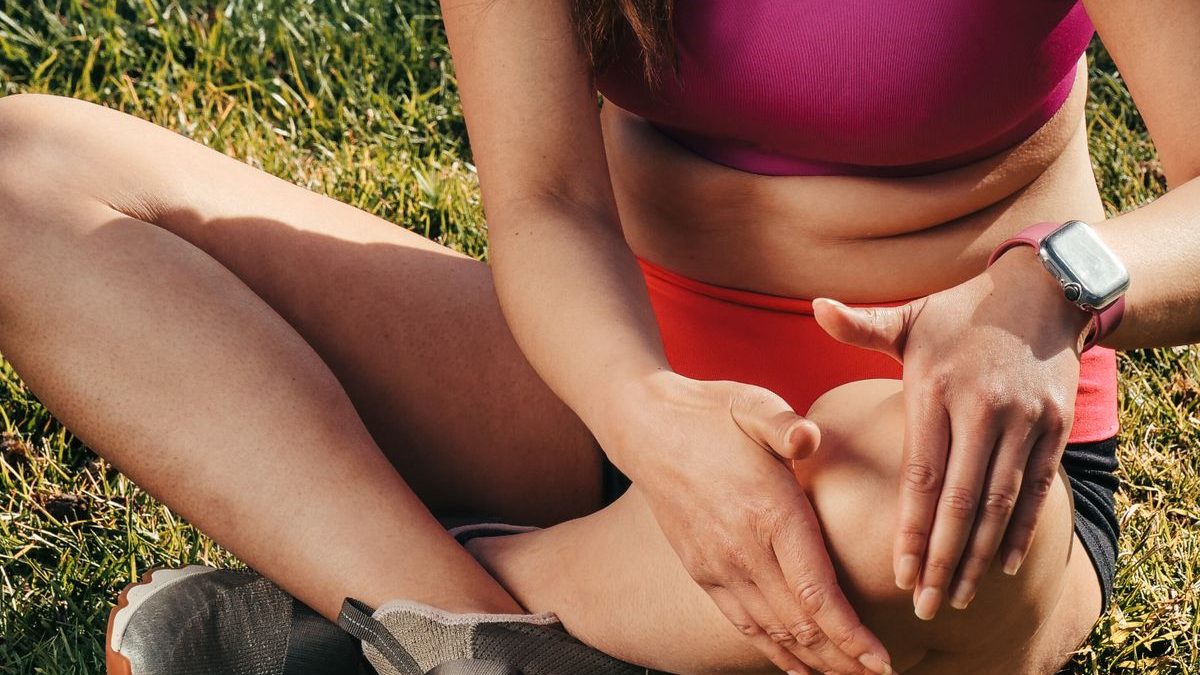
A knee that aches once the run is over, or that starts to complain a few miles in, is the most frequent reason recreational runners stop training. Runners are a large, motivated group who tend to seek help early and want a clear plan back to the road. This brief, written for people evaluating a clinic business, covers how often runners get knee pain, which diagnoses sit behind it, what training load and running itself have to do with it, what trials in runners actually tested, and what pulsed electromagnetic field (PEMF) research does and does not cover, null results included.
How common is knee pain in runners?
Very common. In long-distance runners the knee is the single most frequent site of a running injury, and in one large clinic series the two leading diagnoses were both knee problems.
Systematic review, incidence and determinants of lower-limb injuries in long-distance runners (van Gent et al., British Journal of Sports Medicine, 2007). Across the included studies, between 19.4% and 79.3% of runners sustained a lower-extremity running injury, and the knee was the predominant site. Strong evidence linked a long weekly training distance in men and a history of previous injury to more injuries; an increase in weekly distance was, in contrast, found to be protective for knee injuries. (PubMed 17473005)
Retrospective case-control analysis, 2,002 running injuries at a primary care sports medicine centre (Taunton et al., British Journal of Sports Medicine, 2002). Patellofemoral pain syndrome was the most common injury, followed by iliotibial band friction syndrome, plantar fasciitis, meniscal injuries of the knee and tibial stress syndrome. Being younger than 34 was a risk factor for patellofemoral pain in both sexes. The comparison group was runners with a different injury, not uninjured runners, which the authors name as a limit. (PubMed 11916889)
Which knee problems show up after a run?
Mostly two: pain at the front of the knee around the kneecap, often called runner's knee (patellofemoral pain), and pain on the outer side of the knee from the iliotibial band. Patellar tendon pain and meniscus problems are less frequent.
Clinical practice guideline, patellofemoral pain (Willy et al., Journal of Orthopaedic & Sports Physical Therapy, 2019). The guideline places the pain around or behind the kneecap, starting gradually and made worse by loading the leg; running sits in its list of aggravating activities next to squatting, jumping and stairs. It notes the problem can come back and persist for years. (PubMed 31475628)
Systematic review, iliotibial band syndrome in adult runners (van der Worp et al., Sports Medicine, 2012). Iliotibial band syndrome is described as the most common injury of the outer knee in runners, with an estimated incidence of 5% to 14%. Studies of its causes gave limited or conflicting evidence, and the clinical tests used to follow it have not been validated in runners. Hip and knee coordination and running style appeared to be key factors in treatment, but the review rates the quality of the treatment research as poor and its results as highly conflicting. (PubMed 22994651)
Systematic review, conservative treatment of iliotibial band friction syndrome (Ellis et al., Manual Therapy, 2007). Only four randomized trials were found, testing anti-inflammatory drugs, deep friction massage, phonophoresis against immobilization, and a corticosteroid injection. The authors found limited evidence that any of the treatments studied offers a significant benefit. (PubMed 17208506)
Not every sore knee after a run is an overuse problem. A knee that swells quickly, locks, gives way, cannot take weight, or follows a twist or a fall belongs with a physician, as does a red, hot knee with fever.
Does increasing mileage too fast matter?
Probably, for the overuse problems that are tied to distance, though the evidence comes from cohort data rather than trials.
Prospective cohort, 874 novice runners followed for one year with GPS watches (Nielsen et al., Journal of Orthopaedic & Sports Physical Therapy, 2014). 202 runners were injured. Overall injury rates did not differ by how fast weekly distance grew. For distance-related injuries, a group that includes patellofemoral pain, iliotibial band syndrome and patellar tendinopathy, runners who raised their weekly distance by more than 30% had a hazard ratio of 1.59 (95% CI 0.96 to 2.66; p = 0.07) against those who raised it by less than 10%. The authors call the study exploratory and say randomized trials are needed. (PubMed 25155475)
Does running wear out the knees?
For recreational runners, observational studies do not show more osteoarthritis than in people who do not run. The picture is less reassuring for long careers of high-volume competitive running, and none of these studies can prove cause.
Systematic review and meta-analysis, 25 studies and 125,810 people, 17 studies pooled (Alentorn-Geli et al., Journal of Orthopaedic & Sports Physical Therapy, 2017). Hip or knee osteoarthritis was present in 3.5% of recreational runners (95% CI 3.4% to 3.6%), 13.3% of competitive runners and 10.2% of sedentary or non-running controls. Running for under 15 years carried lower odds of osteoarthritis than being a control (OR 0.6; 95% CI 0.49 to 0.73). The authors could not determine whether these associations were causal or confounded, for example by earlier injury. (PubMed 28504066)
Nested cohort, 1,203 people aged 50 or older who already had knee osteoarthritis, Osteoarthritis Initiative (Lo et al., Clinical Rheumatology, 2018). Over 48 months, self-selected running was not associated with radiographic worsening (adjusted OR 0.9; 0.6 to 1.3) or new frequent knee pain (0.9; 0.6 to 1.6), and was associated with resolution of frequent knee pain (1.7; 1.0 to 2.8). Only 11.5% were runners, and running was self-reported. (PubMed 29728929)
What did trials in runners with knee pain test?
Mostly education about training loads, strengthening and changes to running technique. In the one randomized trial that compared them head to head in runners, education alone did as well as education plus either of the other two.
Randomized single-blind trial, 69 runners with patellofemoral pain (Esculier et al., British Journal of Sports Medicine, 2018). Eight weeks of education on symptom management and training changes, education plus an exercise program, or education plus gait retraining. All three groups improved similarly at 4, 8 and 20 weeks, with no group-by-time interaction for the knee function scale or for usual pain, worst pain and pain during running. Exercise raised knee extension strength, and gait retraining raised step rate by 7.0% and cut vertical loading rate by 25.4%, without extra benefit on symptoms. The authors recommend education on symptoms and training loads as a primary component of treatment. (PubMed 28476901)
Systematic review and meta-analysis, 28 studies of runners with patellofemoral pain (Neal et al., Gait & Posture, 2016). Moderate evidence linked the condition with greater peak hip adduction, hip internal rotation and pelvic drop on the opposite side; very limited evidence made greater hip adduction a risk factor in female runners. Limited evidence from intervention studies favoured both running retraining and hip and trunk strengthening for pain and function. The authors call for high-quality prospective trials. (PubMed 26979886)
Mixed-methods review with 16 international experts, running retraining for lower-limb injuries (Barton et al., British Journal of Sports Medicine, 2016). Clinical evidence was limited: for patellofemoral pain it came down to visual and verbal feedback to reduce hip adduction in women. Experts still recommended retraining for iliotibial band syndrome, patellar tendinopathy and other running injuries, despite the paucity of clinical evidence. (PubMed 26884223)
Systematic review and meta-analysis, 37 randomized trials of conservative care for patellofemoral pain in adults (Saltychev et al., Journal of Rehabilitation Medicine, 2018). Over 80% of the trials showed no clinically significant benefit, and most were underpowered. Among the seven that did, hip muscle strengthening gave pain differences of −65.0 and −32.0, weight-bearing exercise −40.0 and patellar bracing −31.6; PEMF plus home exercise gave −33.0 (95% CI −45.2 to −20.8), a figure drawn from a single 31-person trial. The authors conclude that no single treatment works for every patient. (PubMed 29392329)
Has any PEMF trial been designed for runners?
No. A PubMed search we ran in November 2026 for PEMF or magnetic field trials in runners with knee, patellofemoral or iliotibial band pain returned no such trial, and we found no PEMF trial of iliotibial band syndrome at all. The nearest evidence is two small trials of patellofemoral pain in young adults who were not described as runners (PubMed 26756278, PubMed 30763468), and a sham-controlled Achilles tendon trial that measured pain during sport and found no difference. Our anterior knee pain and patellar tendinopathy brief goes through them in more detail.
Randomized, double-blind, placebo-controlled trial, 25 patients and 41 knees, aged 20 to 50, with patellofemoral pain and damaged cartilage under the kneecap (Gomes Gobbi et al., Bioelectromagnetics, 2019). Nine daily 60-minute sessions of pulsed signal therapy, a form of PEMF, or placebo. At 3 months the Kujala knee score had gone up by 9.63 ± 7.5 points in the 24 treated knees and by 0.53 ± 1.8 in the 17 placebo knees (p < 0.001), and the treated knees kept improving to 6 and 12 months (p < 0.016). The placebo group crossed over to active treatment after 3 months, so the blinded comparison covers 3 months only, and the sample is small. (PubMed 30763468)
Randomized trial, 31 young adults with patellofemoral pain syndrome, home exercise with or without PEMF, followed for 12 months (Servodio Iammarrone et al., Bioelectromagnetics, 2016). Gains in the VISA function score were significantly larger with PEMF at 6 and 12 months, Feller's Patella Score was higher at 12 months, and visual analogue pain was lower from the 6-month visit. The abstract reports no numeric effect sizes, and there was no sham device. This is the single trial behind the PEMF figure in the Saltychev meta-analysis above. (PubMed 26756278)
Randomized sham-controlled trial, 65 adults with Achilles tendinopathy (Ko et al., Orthopaedic Journal of Sports Medicine, 2024). Not a knee trial, but the closest sham-controlled test in a sports overuse injury. Everyone did 12 weeks of eccentric exercise, with active PEMF or a sham device for 8 weeks. Pain during sport fell from 6.05 to 2.95 with PEMF and from 6.45 to 3.85 with sham, a between-group difference that was not significant (p = 0.346); the VISA-A score did not differ either (p = 0.527). (PubMed 39534390)
What do the knee osteoarthritis trials add?
They concern older adults with arthritic knees, not runners. Pooled against sham, the Cochrane review found a modest pain difference and no significant gain in function (PubMed 24338431), and the largest recent sham-controlled trial found no change in function tests through a year (PubMed 41588476). The full set is in our knee osteoarthritis brief.
Cochrane review, 9 randomized trials and 636 participants, electromagnetic fields against placebo or sham (Li et al., 2013). After 4 to 26 weeks, pain was 15.10 points lower than with sham on a 100-point scale (95% CI 9.08 to 21.13). The function difference, 4.55 points (95% CI −2.23 to 11.32), was not significant, nor was quality of life; adverse events matched sham and none were serious. (PubMed 24338431)
Meta-analysis, 12 sham-controlled trials of which 10 were in knee osteoarthritis (Wu et al., BMJ Open, 2018). For the knee, the pooled pain estimate was a standardized mean difference of −0.54 (95% CI −1.04 to −0.04), with heterogeneity of 88%, and function −0.34 (95% CI −0.53 to −0.14). The upper end of the pain interval sits near zero. (PubMed 30552258)
Randomized trial, 40 adults with Kellgren-Lawrence grade 2 to 3 knee osteoarthritis, PEMF against low-level laser (Elboim-Gabyzon & Nahhas, University of Haifa, BMC Geriatrics, 2023). Six sessions of 15 minutes over 3 weeks. Both groups improved (p < 0.0001); pain at rest, on rising from a chair and on stairs, WOMAC and the timed up-and-go test improved more with PEMF (p ≤ 0.0003). No adverse events were reported. The comparison was laser rather than sham, and outcomes were taken only straight after the course. (PubMed 36922781)
Randomized trial, 60 adults with end-stage knee osteoarthritis, home exercise with or without PEMF twice weekly for 8 weeks (Wang et al., Chinese University of Hong Kong, Frontiers in Medicine, 2024). Pain dropped in both arms, with a between-group difference at week 4 (p = 0.010) and week 8 (p = 0.046); knee strength increased in the PEMF arm. There was no sham device, so expectation cannot be separated from the field itself. (PubMed 39478814)
Randomized double-blind sham-controlled trial, 60 adults aged 50 and over with mild-to-moderate knee osteoarthritis (Lau et al., Journal of Cachexia, Sarcopenia and Muscle, 2026). Thirty-minute sessions three times weekly for 8 weeks, with follow-up to 12 months. Knee extensor strength went up 72% with PEMF and 25% with sham at 6 months (p = 0.003). WOMAC, the 6-meter walk, 30-second chair stands, lean mass, cartilage thickness and joint space width showed no difference from sham at any time point (all p > 0.05). (PubMed 41588476)
Where does the PEMF evidence stop?
Before the running population altogether. On top of that, several sham-controlled knee trials and two meta-analyses found no significant effect on pain.
Randomized double-blind placebo-controlled trial, 83 people with knee osteoarthritis (Thamsborg et al., Osteoarthritis and Cartilage, 2005). Two hours daily, five days a week, for 6 weeks, with WOMAC at 2, 6 and 12 weeks. The between-group analysis showed no significant improvement over time; stiffness in patients under 65 at 2 weeks was the one exception. (PubMed 15979009)
Randomized sham-controlled trial, 40 people with knee osteoarthritis (Ozgüçlü et al., Clinical Rheumatology, 2010). Ten sessions of PEMF or sham on top of hot packs, ultrasound and isometric exercise. Both arms improved (p < 0.001), with no difference between them in WOMAC pain (p = 0.906), stiffness (p = 0.855), function (p = 0.809) or paracetamol use (p = 0.289). (PubMed 20473540)
Meta-analysis, 8 randomized trials and 421 patients with knee osteoarthritis (Chen et al., Journal of Rehabilitation Medicine, 2019). Differences in WOMAC total (p = 0.06), WOMAC pain (p = 0.09), VAS pain (p = 0.15) and stiffness were not significant; WOMAC function was (weighted mean difference −5.28; 95% CI −9.45 to −1.11). (PubMed 31583420)
Systematic review and meta-analysis, 9 randomized trials and 457 patients, published 2015 to 2025 (Chang et al., Medicina, 2026). VAS pain and total WOMAC did not improve significantly at one month; WOMAC pain was better at 18 to 21 days but not at one month, while stiffness and daily activity were better at one month. Objective function did not change, risk of bias was high, and the authors caution the gains may fall short of clinically meaningful thresholds. (PubMed 42075549)
- No PEMF trial we found enrolled runners, measured pain during or after running, or studied iliotibial band syndrome.
- The two patellofemoral trials were small (25 and 31 people); one had a blinded placebo only for 3 months, the other no sham at all.
- The one sham-controlled trial in a sports overuse injury, the Achilles trial, found no difference in pain during sport.
- The knee osteoarthritis trials are in older adults with arthritic knees, a different population from most runners.
- Devices, field strengths, session lengths and course lengths varied from trial to trial, so each result applies to the protocol that was tested.
What should a buyer ask when evaluating a clinic model?
- How will runners with a swollen, locking or unstable knee, or pain after a twist or fall, be identified and referred before anything else happens?
- Does the model include education on training load and a graded return to running, the element the runner trial put first?
- Will outcomes be recorded in running terms, such as pain during a run or distance run without pain, and not only as a general pain score?
- Is the seller clear that no PEMF trial has been run in runners, and that the patellofemoral evidence rests on two small studies?
- Are the trials that found no difference from sham shown alongside the positive ones?
What has the FDA decided about PEMF technology?
The FDA record of PEMF begins in 1979, when premarket approval (PMA P790002) went to a PEMF bone growth stimulator for fractures that had failed to unite. Postoperative pain and swelling are covered by a separate classification regulation, 21 CFR 890.5290(b), nonthermal shortwave therapy, under which prescription devices that apply pulsed electromagnetic energy as an adjunct for postoperative pain and soft-tissue edema are reviewed through 510(k). Neither of these indications is runner's knee, iliotibial band syndrome or knee pain from running. An FDA decision applies to a single device, model and indication, and is not a ruling on other devices or other uses. Our guide PEMF and the FDA shows how to find a particular device's record.
Where can I read the research myself?
Each study box links to its PubMed abstract. A wider library of published PEMF studies, each checked against the original paper, is at pemf-research.com. For related evidence see our anterior knee pain and patellar tendinopathy, knee osteoarthritis and knee ligament sprain briefs, and the questions on knee pain on stairs, knee pain when walking and knee pain when kneeling or standing up.
Who publishes these guides?
PainFree writes these guides. It has operated pain-relief clinics in Israel for 25 years, with more than 70 open today, and its Hebrew-language site is painfree.org.il. We think any buyer should read the evidence behind a clinic model this closely, including the evidence behind ours.
Related research on this site
This article is general information for prospective business owners. It is not legal, financial or medical advice. We do not make earnings claims, and this page is not an offer to sell a franchise or a business opportunity. Study results describe the trials cited, not any particular device or clinic. Equipment supplied to US clinics will meet the applicable US regulatory requirements.