
Evidence brief for clinic investors
Knee pain after sitting: what the research shows
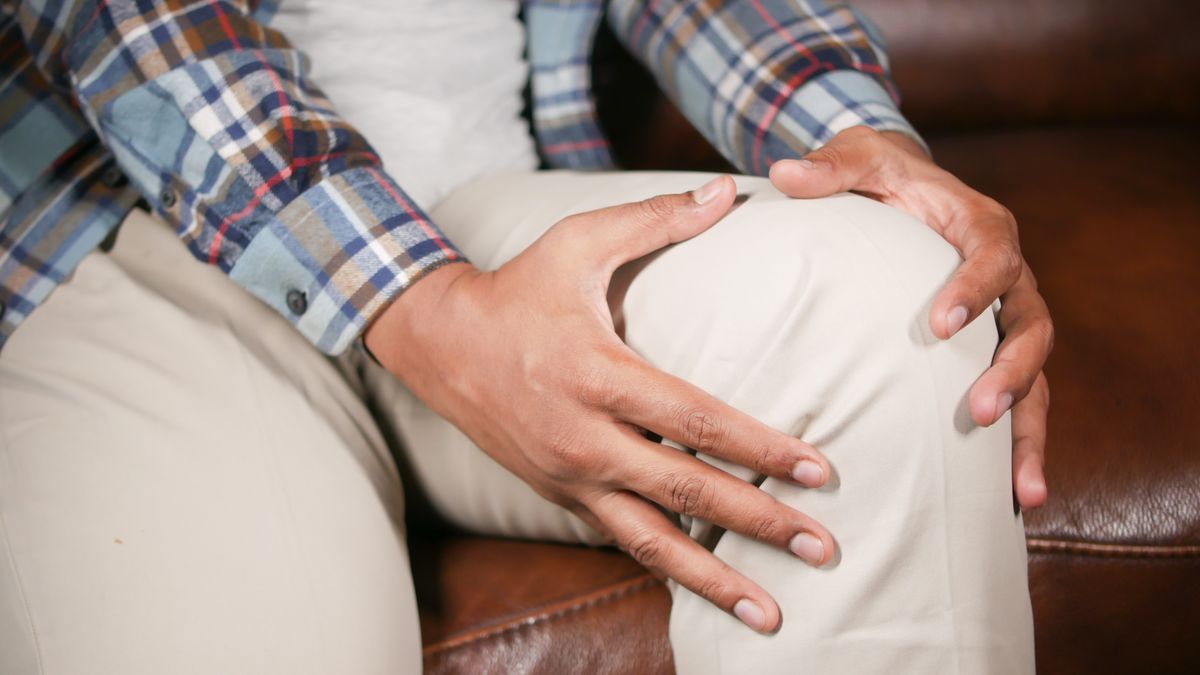
A film, a long drive, a flight or a day at a desk: the knee is fine while it moves, then aches at the front after a while in a chair and complains for the first few steps afterwards. Clinicians call the first pattern the theater sign, or moviegoer's knee. For anyone weighing a clinic business, it is a common way for a knee complaint to show up. This brief covers what the research says about which knees hurt after sitting, how long and how bent the knee has to be, the short stiffness after rest that people with knee osteoarthritis describe, what guidelines list first, and what pulsed electromagnetic field (PEMF) trials did and did not measure.
What is the theater sign?
Pain at the front of the knee that builds while sitting with the knees bent for a long time. It is a recognized feature of patellofemoral pain, the most common cause of front-of-knee pain in young and active adults, and it sits alongside pain on squatting and on going down stairs.
Clinical practice guideline, patellofemoral pain (Willy et al., Journal of Orthopaedic & Sports Physical Therapy, 2019). The guideline describes pain around or behind the kneecap that comes on gradually and is made worse by lower-limb loading, naming prolonged sitting in the same list as squatting, stairs, jumping and running. The complaint can limit sport and work and can keep returning for years. (PubMed 31475628)
Clinical review, patellofemoral pain syndrome (Gaitonde et al., American Family Physician, 2019). The defining feature is front-of-knee pain that rises when the bent knee bears weight, and the authors note that it often gets worse with prolonged sitting or walking down stairs. Pain on squatting is described as the most sensitive examination finding; plain X-rays are not needed to make the diagnosis but can rule out other problems such as osteoarthritis or a fracture of the kneecap. (PubMed 30633480)
Questionnaire development study, 68 women (Kujala et al., Arthroscopy, 1993). Controls, people with anterior knee pain, people with a slipping kneecap and people after a kneecap dislocation scored a mean 100, 83, 68 and 62 points. Episodes of the kneecap slipping, limping and pain on sitting with the knees bent separated the groups most clearly (each p < 0.0001), and the authors recommend asking about them when taking the history of a front-of-knee pain patient. The questionnaire became the Kujala score, which appears again in the PEMF section below. (PubMed 8461073)
How long, and how bent, before the knee starts to hurt?
In the one study we found that asked directly, most people with patellofemoral pain needed the knee bent to 90 degrees or more, and the pain began after about a quarter of an hour in the chair and took several minutes to fade after standing.
Online questionnaire, 87 people with patellofemoral pain in Dutch physical therapy clinics (Ophey et al., BMJ Open, 2024). The group was young (median age 22) and 70% female. 63 of the 87 (72%) had pain during prolonged sitting, and they scored 12 points lower on the Anterior Knee Pain Scale than those without it (p < 0.001). 85% said the knee had to be bent to at least 90 degrees; the median time to onset was 16 to 20 minutes and to disappearance 6 to 10 minutes. Those whose pain began at a smaller bend, or came on faster, rated their worst pain and their sitting pain higher. The data are self-reported, and the authors call for research on the mechanism and on targeted treatment. (PubMed 39551596)
Why would sitting make the front of the knee hurt?
Nobody has settled it. One idea is that blood flow in and around the kneecap is impaired; another looks at what a long sit does to the thigh muscles. Both rest on small laboratory studies, and the blood-flow study found no significant difference during the sitting task itself.
Case-control study, 30 people with patellofemoral pain and 30 healthy controls (Ophey et al., Journal of Experimental Orthopaedics, 2024). Near-infrared spectroscopy tracked oxygenated and deoxygenated hemoglobin in the kneecap. During prolonged sitting the patients showed smaller decreases than controls, but the differences were not statistically significant (p = 0.14 to 0.82 and p = 0.056 to 0.18). During stair descent the differences were significant (p = 0.043 and p = 0.004). The authors read this as support for a blood-flow model of patellofemoral pain that still needs testing in trials. (PubMed 38455453)
Laboratory study, 30 healthy young women after 15 minutes of sitting (Sondang Irawan et al., The Knee, 2022). Ten each sat cross-legged, side-sitting or on a chair. After cross-legged sitting, activity in the inner thigh muscle (vastus medialis) rose during a step-down test (p = 0.01), and sitting posture changed inner and outer quadriceps activity during step-up (p = 0.02); the clearest contrast was between cross-legged sitting and the chair. Nobody in the study had knee pain, so this describes muscle behaviour after a long sit, not a cause of pain. (PubMed 35660535)
Not every knee that hurts after sitting has patellofemoral pain. A physician should see a knee that is hot, red or swollen, one that locks or gives way, pain that followed a fall or a twist, or knee pain with fever or with calf swelling after a long flight.
Why does a knee with osteoarthritis stiffen after sitting?
People with knee osteoarthritis describe stiffness that follows a spell of inactivity, often eased by moving, and also stiffness after doing too much. The research on it is mostly what patients report; we found no trial built around the stiffness that follows a long sit.
Interview study, 12 people over 45 with knee osteoarthritis and recent stiffness (Reischl et al., Musculoskeletal Care, 2024). Five themes emerged: stiffness is hard to pin down and varies; inactivity or too much activity makes it worse; people adapt to its ebb and flow; risky experiences and fear of falling cut participation; and stiffness lowers quality of life. The authors suggest monitoring stiffness to set the intensity of a home program. (PubMed 39073278)
Cohort study, 2,034 adults in midlife with accelerometer data (Whitaker et al., CARDIA, Preventive Medicine Reports, 2021). More sedentary time at baseline went with slightly lower odds of knee pain, discomfort or stiffness 5 and 10 years later (OR 0.95 per extra 30 minutes a day), and people who reported knee symptoms later sat 13.5 to 17.5 fewer minutes a day. Many associations lost significance once people with other illnesses were excluded. Total sitting time across the day is not the same question as pain after one long sit, and this study does not show that sitting protects the knee. (PubMed 33816086)
Stiffness that lasts well over half an hour each morning is a different signal and can point to inflammatory arthritis; our brief on knee pain in the morning covers it.
What do guidelines list first?
For knee osteoarthritis, education and exercise, with weight management where it applies. For patellofemoral pain, the clinical review above lists rest, a short course of anti-inflammatory drugs and physical therapy that strengthens the hip, trunk and knee muscles. None of these guideline abstracts names PEMF.
OARSI guidelines for knee, hip and polyarticular osteoarthritis (Bannuru et al., Osteoarthritis and Cartilage, 2019). The core treatments for knee osteoarthritis are arthritis education and structured land-based exercise, with or without dietary weight management. Topical NSAIDs carry a strong recommendation for the knee; opioids are strongly not recommended. PEMF does not appear in the abstract. (PubMed 31278997)
American College of Rheumatology / Arthritis Foundation guideline (Kolasinski et al., Arthritis Care & Research, 2020). Exercise, weight loss for people who are overweight, self-management programs, tai chi and a cane are among the strong recommendations for knee osteoarthritis; thermal modalities and patellofemoral bracing are conditional. PEMF does not appear in the abstract. (PubMed 31908149)
Cochrane review, exercise for knee osteoarthritis, 139 trials and 12,468 participants (Lawford et al., 2024). Compared with placebo or attention control, exercise improved pain by a mean 8.70 points and function by 11.27 points on 0 to 100 scales, at low and moderate certainty respectively. Against the review's own thresholds for a minimal important difference, the size of that benefit may or may not matter to patients. (PubMed 39625083)
Did any PEMF trial measure pain after sitting?
Not that we found. No PEMF trial we located reported pain during or after prolonged sitting as its own outcome, in patellofemoral pain or in knee osteoarthritis. The closest are two small patellofemoral trials scored with composite knee questionnaires, and an osteoarthritis trial that rated pain on rising from a chair.
Randomized, double-blind, placebo-controlled trial, 25 patients (41 knees) aged 20 to 50 with patellofemoral pain and patellar cartilage damage (Gomes Gobbi et al., University of São Paulo, Bioelectromagnetics, 2019). Nine daily 60-minute sessions of pulsed signal therapy, a form of pulsed electromagnetic stimulation, or a blinded placebo. At 3 months the Kujala score rose a mean 9.63 points in the treated knees (24) against 0.53 in the placebo knees (17) (p < 0.001), and kept improving between months 3, 6 and 12 (p < 0.016). The placebo group was then treated, so the sham comparison ends at 3 months. The Kujala score includes a sitting item, but the abstract reports only the total; the trial is small and counted knees rather than people. (PubMed 30763468)
Randomized controlled study, 31 people with patellofemoral pain (Servodio Iammarrone et al., Bioelectromagnetics, 2016). Everyone followed a home exercise program; one group added PEMF. The VISA score rose more with PEMF at 6 and 12 months, the Feller patella score at 12 months, and pain on a visual analogue scale was lower from 6 months on. There was no sham device, so the comparison is exercise with PEMF against exercise alone. Sitting pain was not reported separately. (PubMed 26756278)
Randomized trial, 40 people with grade 2 to 3 knee osteoarthritis (Elboim-Gabyzon & Nahhas, University of Haifa, BMC Geriatrics, 2023). Six 15-minute sessions of PEMF or low-level laser. Pain was rated at rest, when walking, when standing up from sitting and on stairs. Both groups improved; PEMF did better on pain at rest, on rising from sitting and on stairs, and on WOMAC and the timed up-and-go test (p ≤ 0.0003). With no sham group and no follow-up after the last session, this says nothing about the long sit itself or about durability. (PubMed 36922781)
What did PEMF trials find for stiffness in knee osteoarthritis?
A mixed picture. Pooled sham-controlled results show a modest effect on overall pain; for stiffness, which is the closer match to the after-sitting complaint in osteoarthritis, the results split between trials and reviews. Our knee osteoarthritis brief goes through the trials one by one.
Cochrane review, 9 trials and 636 participants, PEMF against sham (Li et al., 2013). After 4 to 26 weeks, pain relief was rated 15.10 points better than sham on a 0 to 100 scale (95% CI 9.08 to 21.13). Physical function did not differ significantly (mean difference 4.55; 95% CI −2.23 to 11.32), and neither did quality of life. (PubMed 24338431)
Meta-analysis, 12 sham-controlled trials (Wu et al., BMJ Open, 2018). For knee osteoarthritis the pooled pain effect was SMD −0.54 (95% CI −1.04 to −0.04), with an interval reaching close to zero, and the function effect was SMD −0.34 (95% CI −0.53 to −0.14). (PubMed 30552258)
Systematic review and meta-analysis, 9 trials and 457 patients, 2015 to 2025 (Chang et al., Medicina, 2026). WOMAC stiffness improved at one month (MD −1.11; 95% CI −1.39 to −0.85; I² = 0%), as did daily activity, while VAS pain and total WOMAC did not, and WOMAC pain improved at 18 to 21 days but not at one month. Objective function did not improve, risk of bias was high overall, and the authors say the gains may fall short of clinical importance. (PubMed 42075549)
Where does the PEMF evidence stop?
At the complaint this page is about, and at several null results on stiffness and pain against sham.
Null result. Randomized, double-blind, placebo-controlled trial, 83 people with knee osteoarthritis (Thamsborg et al., Osteoarthritis and Cartilage, 2005). Two hours a day, five days a week for 6 weeks. Both the PEMF and the placebo group improved within themselves, and between-group analysis showed no significant improvement over time in daily activities, pain or stiffness. The one exception was stiffness in people under 65 at 2 weeks. (PubMed 15979009)
Null result. Randomized sham-controlled trial, 40 people with knee osteoarthritis (Ozgüçlü et al., Clinical Rheumatology, 2010). PEMF or sham was added to hot packs, ultrasound and exercise for 10 sessions. WOMAC stiffness did not differ between groups (p = 0.855), nor did WOMAC pain (p = 0.906) or function (p = 0.809). (PubMed 20473540)
Null result for pain and stiffness. Meta-analysis, 8 trials and 421 patients (Chen et al., Journal of Rehabilitation Medicine, 2019). No significant difference in WOMAC stiffness (WMD −0.50; 95% CI −1.09 to 0.09; p = 0.1), WOMAC pain (p = 0.09), VAS pain (p = 0.15) or WOMAC total (p = 0.06). Physical function did differ (WMD −5.28; 95% CI −9.45 to −1.11; p = 0.01). (PubMed 31583420)
- No PEMF trial we found measured pain during or after prolonged sitting as a separate outcome.
- The two patellofemoral trials had 25 and 31 participants; one lost its placebo comparison after 3 months, the other had no sham at all.
- Total questionnaire scores can move without the sitting item moving, and the abstracts do not break the item out.
- Stiffness results in knee osteoarthritis split: one 2026 meta-analysis found a gain at one month, a 2019 meta-analysis and two sham-controlled trials did not.
- Devices, field strengths, session lengths and course lengths differed widely, and a result applies to the protocol tested, not to every device sold as PEMF.
What should a buyer ask when evaluating a clinic model?
- How does the intake tell patellofemoral pain from knee osteoarthritis, and who refers a hot, swollen, locking or injured knee to a physician?
- Does the model sit alongside exercise and education, which guidelines put first, or try to replace them?
- Will the clinic record the complaint itself, such as minutes of sitting before pain or the Kujala sitting item, rather than only a general pain score?
- Does the seller cite the sham-controlled null results on stiffness as readily as the positive trials?
What has the FDA decided about PEMF technology?
Two FDA pathways matter here. PEMF bone-growth stimulators reached the market through premarket approval: PMA P790002, approved in 1979 for fractures that had not united. Devices that apply pulsed electromagnetic energy for adjunctive use in postoperative pain and edema are classified under 21 CFR 890.5290(b), nonthermal shortwave therapy, and reach the market through 510(k). Neither indication covers patellofemoral pain, knee osteoarthritis or pain after sitting, and every FDA decision is specific to one device, model and intended use. Our guide PEMF and the FDA shows how to check a particular device's record.
Where can I read the research myself?
Every study on this page links to its PubMed abstract. A wider library of PEMF studies, each checked against the original paper, is at pemf-research.com. On this site, see the briefs on anterior knee pain and patellar tendinopathy, knee osteoarthritis and knee replacement recovery, and the companion questions on knee pain when kneeling or standing up, knee pain in the morning, knee pain on stairs, knee pain when walking and knee pain at night.
Who publishes these guides?
These guides are written by PainFree. PainFree has run pain-relief clinics in Israel for 25 years, and more than 70 operate today; its Israeli site, in Hebrew, is painfree.org.il. We would want any buyer to read the evidence behind a clinic model this carefully, ours included.
Related research on this site
This article is general information for prospective business owners. It is not legal, financial or medical advice. We do not make earnings claims, and this page is not an offer to sell a franchise or a business opportunity. Study results describe the trials cited, not any particular device or clinic. Equipment supplied to US clinics will meet the applicable US regulatory requirements.