
Evidence brief for clinic investors
PEMF for posterior tibial tendon dysfunction (adult flatfoot): what the research shows
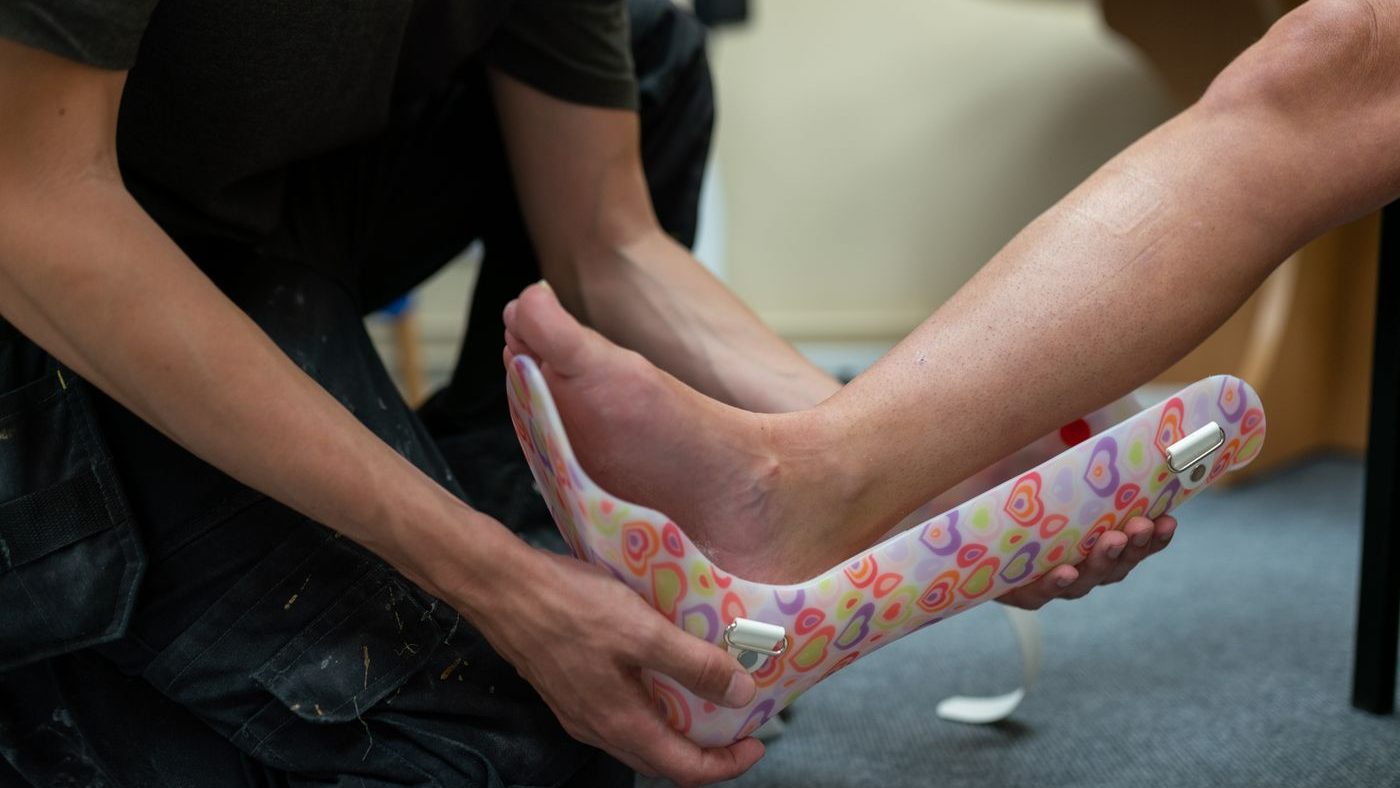
The posterior tibial tendon runs behind the inner ankle bone and holds up the arch of the foot. When it weakens or tears, the arch can slowly collapse, a condition called posterior tibial tendon dysfunction, adult acquired flatfoot, or, since 2020, progressive collapsing foot deformity. Pulsed electromagnetic field (PEMF) technology is sometimes offered for inner-ankle and arch pain. We found no PEMF trial of any kind in this condition. This is an evidence-gap brief: it shows what the posterior tibial tendon research does test, and the nearest PEMF trials, each labelled by the condition it actually studied.
We found no official US figure for posterior tibial tendon dysfunction or adult flatfoot from the CDC, NCHS or NIH, so this brief gives none. The one population count we found comes from England (below).
What the trials measured
The search: no PEMF trial in posterior tibial tendon dysfunction
On 19 November 2026 we searched PubMed for pulsed electromagnetic field, PEMF, electromagnetic field, magnetotherapy, magnetic therapy, magnetic field therapy and magnetic stimulation, combined with posterior tibial, tibialis posterior, flatfoot, flat foot, pes planus, pes planovalgus, acquired flatfoot and progressive collapsing foot. The search returned 38 records. We read every title: none applied PEMF to the tendon or the arch. Most were magnetic stimulation studies of the spinal cord, leg reflexes or the bladder, where "posterior tibial" names a nerve, not the tendon. We then read the titles of all 31 randomized trials and systematic reviews indexed under posterior tibial tendon dysfunction, adult acquired flatfoot or progressive collapsing foot deformity. None tested PEMF. The two device trials among them used low-level laser and percutaneous electrolysis, which are different technologies.
How common it is, how it is named and how it is found
Population survey, 1,000 women over 40 from one general practice in Hertfordshire, England, 582 usable replies (Kohls-Gatzoulis et al., Foot and Ankle Surgery, 2009). Women who screened positive were telephoned and, when indicated, examined. The authors found 7 cases of stage I and 12 of stage II posterior tibial tendon dysfunction and put the prevalence at 3.3%. Every case was undiagnosed despite characteristic and prolonged symptoms. One practice, women only. (PubMed 19410173)
Expert consensus on classification and nomenclature, 9 delegates (Myerson et al., Foot & Ankle International, 2020). Level V evidence, expert opinion. The group voted 9 of 9 to rename the condition progressive collapsing foot deformity, and 9 of 9 that existing classifications, starting with Johnson and Strom's 1989 staging, are incomplete or outdated; none of the earlier systems had ever been validated. Eight of nine backed a new staging system to define care. (PubMed 32856474)
Systematic review of imaging accuracy, 12 studies (Rehman et al., European Radiology, 2024). MRI detected tendon tears with a sensitivity of up to 95%, specificity of up to 100% and accuracy of 96%. Ultrasound had a sensitivity of 80% and specificity of 90% for tendinopathy, against MRI. Weight-bearing X-rays had a sensitivity of 71.4% and specificity of 88.9% for tendon rupture. Measurements on X-ray related to tears but poorly to tendinosis or tenosynovitis. (PubMed 37889271)
Orthoses and bracing
Systematic review of randomized trials, 4 trials, 186 people with stage I or II posterior tibial tendon dysfunction (Gómez-Jurado et al., Clinical Rehabilitation, 2021). 75% of the trials were at high risk of bias for blinding. Foot orthoses with a personalised inner arch support reduced pain more than flat insoles or standard care, and adding exercise appeared to add to the orthosis. The authors concluded orthoses may reduce pain in early stages and called for more research. (PubMed 33040609)
Systematic review and meta-analysis, 14 studies of orthoses for progressive collapsing foot deformity (Khaliliyan et al., Foot and Ankle Surgery, 2026). Quality was rated with ROBINS-I, a tool for non-randomized studies. Pooled results showed a 56.84% improvement in the Foot Function Index (95% CI 41.1 to 72.58) and a 28.53-point rise on the AOFAS ankle-hindfoot scale (95% CI 22.66 to 34.4). Orthoses reduced hindfoot eversion by 3 to 5 degrees. (PubMed 40480881)
Exercise
Systematic review of randomized exercise trials, 3 trials, 93 people (Ross et al., University of Queensland, BMJ Open Sport & Exercise Medicine, 2018). Eccentric strengthening added to stretching and orthoses had moderate effects on pain and disability (SMD 0.6 to 1.2) against concentric exercise, or stretching and orthoses alone. Exercise doses were barely reported. The authors describe a paucity of high-quality research in the conservative management of the condition. (PubMed 30271611)
Randomized trial, 36 adults with stage I or II tibialis posterior tendinopathy, 12 weeks (Kulig et al., University of Southern California, Physical Therapy, 2009). Three groups: orthoses and stretching; the same plus concentric resistance exercise; or the same plus eccentric resistance exercise. Foot Function Index scores for pain and disability fell in all three groups, most with eccentric exercise and least with orthoses and stretching alone, and pain right after a 5-minute walk fell in all groups. Small trial, early stages only. (PubMed 19022863)
Randomized trial, 39 people with stage II tibialis posterior tendon dysfunction, 36 analysed (Houck et al., Foot & Ankle International, 2015). A largely null comparison. Everyone wore a prefabricated orthosis; one group added stretching and the other stretching plus strengthening at home for 12 weeks. Both groups improved in pain and function, the self-report measures showed minimal differences between groups, and deep calf strength did not differ. The authors judged the home exercise minimally effective in adding to the orthosis. (PubMed 25857939)
Other physical modalities tested in the condition (not PEMF)
Randomized trial, 52 people with stage II posterior tibial tendon dysfunction (Koltak and Yurt, Journal of Back and Musculoskeletal Rehabilitation, 2021). Low-level laser, not PEMF. Laser was compared with insoles. Foot pain and function improved in both groups after treatment (p < 0.05), but at the 9-month follow-up the insole group had better values. Neither method had a clinically important effect on muscle strength. (PubMed 34151822)
Randomized trial, 46 people with tibialis posterior tendinopathy (Rejas-Fernández et al., Journal of Pain, 2026). Ultrasound-guided percutaneous electrolysis, a needle-based technique, not PEMF. Adding electrolysis to 4 weekly sessions of manual therapy and exercise lowered pain more than manual therapy and exercise alone, by 3.4 points after treatment (95% CI −4.8 to −2.0) and 2.6 points at 6 months (95% CI −4.2 to −1.0) on a 0 to 10 scale. No sham needle was used. (PubMed 41724415)
Surgery for the collapsed arch
Network meta-analysis, 21 studies, 498 patients with adult acquired flatfoot deformity (Tao et al., Journal of Orthopaedic Surgery and Research, 2019). Different measures pointed to different procedures as best: medial displacement calcaneal osteotomy on one X-ray angle, lateral column lengthening on others, triple arthrodesis on most angles and the AOFAS score, and double arthrodesis on function. Across procedures, the AOFAS score improved (SMD −5.24) and function improved (SMD 0.95). (PubMed 30791933)
The nearest PEMF evidence: different conditions, labelled as such
Double-blind, multicenter, placebo-controlled randomized trial, 70 people with plantar fasciitis (Brook et al., Journal of Foot and Ankle Surgery, 2012). Heel pain, not the posterior tibial tendon; a wearable pulsed radiofrequency electromagnetic device worn overnight. On day 7, morning pain was 40% lower than on day 1 with the active device and 7% lower with placebo (p = .03). Evening pain fell 30% and 19%, a difference that was not significant. One week of follow-up. (PubMed 22297104)
Randomized trial, 40 people aged 20 to 68 with plantar fasciitis (Arani et al., Bioelectromagnetics, 2026). Heel pain, not the posterior tibial tendon; no sham. Conventional physiotherapy with or without PEMF. Both groups improved. Adding PEMF lowered evening pain and the Foot Function Index more than physiotherapy alone (p < 0.05), but morning pain, the hallmark complaint, did not differ between groups. (PubMed 42708522)
Randomized, sham-controlled trial, 65 people with Achilles tendinopathy (Ko et al., Orthopaedic Journal of Sports Medicine, 2024). A tendon at the back of the heel, not the posterior tibial tendon. A null result. PEMF 10 minutes twice a week for 8 weeks, or sham, with 12 weeks of eccentric exercise in both groups. VISA-A scores rose in both groups (57.9 to 71.7 with PEMF, 55.1 to 66.8 with sham) with no difference between groups (P = .527), and pain during sport did not differ either (P = .346). (PubMed 39534390)
26-week follow-up of the same Achilles trial (Ko et al., Scientific Reports, 2026). Both groups, PEMF and sham, kept their improvements on all outcomes at 26 weeks. The abstract reports no between-group advantage and calls for more research on PEMF dosage. (PubMed 41651914)
Systematic review of PEMF in foot and ankle soft-tissue conditions, 4 randomized trials, 243 participants (Chia et al., Frontiers in Sports and Active Living, 2026). Heel, Achilles and ankle conditions; no posterior tibial tendon trial was found. In three trials PEMF was added to another treatment, such as shockwave, heel pads or eccentric exercise; only one compared PEMF alone with sham. Three reported lower pain than control (p < 0.05), but only one of three found better physical function, and protocols varied widely. Only minor skin redness was reported. (PubMed 41716305)
Randomized, patient-blinded, sham-controlled trial, 34 people with mixed tendinopathies, 30 analysed (Wilms et al., Die Orthopädie, 2024). Tendon site not limited to the posterior tibial tendon; a single 10-minute session. Pressure pain threshold rose 83% to 139% after high-energy PEMF and 10% to 36% after sham over one week (p = 0.045, with a small effect size, η² = 0.013). The blood marker the authors expected to change, HSP70, did not. (PubMed 39172175)
Double-blind controlled trial, 29 people with persistent rotator cuff tendinitis who had not responded to steroid injection (Binder et al., Lancet, 1984). A shoulder tendon, not the foot. The PEMF group did significantly better than placebo during the first 4 weeks. When both groups then received active coils for 4 weeks, and during 8 further weeks without treatment, no difference between groups remained. (PubMed 6143039)
Double-blind, randomized, sham-controlled trial, 46 people with subacromial impingement of the shoulder (Aktas et al., Clinical Rheumatology, 2007). A shoulder tendon condition, not the foot. A null result. PEMF or sham 25 minutes a day, 5 days a week for 3 weeks, on top of exercise, cold packs and an anti-inflammatory drug. Both groups improved, with no significant difference between them in pain, function or daily activities (p > 0.05). (PubMed 17086382)
For how inner-arch pain differs from heel, forefoot and ankle pain, see our foot pain by location guide. The two foot tendon conditions with their own PEMF trials have their own briefs: plantar fasciitis and Achilles tendinopathy.
Where the evidence stops
- Direct PEMF evidence in posterior tibial tendon dysfunction or adult acquired flatfoot is zero: no sham-controlled trial, no comparative trial and no case series turned up in our search.
- The condition's own research is thin. The exercise review found 3 randomized trials with 93 people, the orthosis review 4 trials with 186 people, and most trials were not blinded.
- The largest sham-controlled PEMF trial in a foot tendon, in the Achilles, found no difference from sham, and a sham-controlled shoulder tendon trial was also null. The positive tendon results are small, short or from a single session.
- The plantar fasciitis trials studied the heel; one used a pulsed radiofrequency device and the other had no sham group.
- A collapsing arch is a structural deformity. Orthoses, bracing and surgery address the shape of the foot; no PEMF study has measured arch height, hindfoot alignment or tendon integrity in this condition.
- Low-level laser, percutaneous electrolysis, shockwave and transcranial or peripheral magnetic stimulation are not PEMF; their results are not covered here.
What to ask when you evaluate a clinic model
- Does any claim about inner-ankle or arch pain cite a PEMF trial in posterior tibial tendon dysfunction? Ask for it by name. We found none.
- Is a plantar fasciitis or Achilles result being presented as evidence for the posterior tibial tendon?
- How are patients screened so that a progressive arch collapse or tendon tear is referred to the physician or foot surgeon who stages it?
- How will pain, walking tolerance and foot function be recorded for every patient, not only those who do well?
- Can the seller show you this research, with its gap, the way it is written here?
Questions buyers ask
Is there a PEMF trial in posterior tibial tendon dysfunction or adult flatfoot?
We found none in PubMed, and none appears among the randomized trials and systematic reviews of the condition.
What does the posterior tibial tendon research test instead?
Foot orthoses and braces, stretching and strengthening, low-level laser, percutaneous electrolysis and reconstructive surgery. The reviews describe a small evidence base with few blinded trials.
Are the plantar fasciitis and Achilles PEMF trials evidence for this condition?
No. They studied other tissues, and the sham-controlled Achilles trial found no difference from sham.
The regulatory side
The FDA record of PEMF starts in 1979, when a PEMF bone-growth stimulator was approved through premarket approval (PMA P790002) for non-union fractures. Postoperative pain and soft-tissue edema fall under 21 CFR 890.5290(b), nonthermal shortwave therapy, a prescription device class reviewed through 510(k). None of these decisions names the posterior tibial tendon, flatfoot or arch pain, and each covers one device, one model and one indication and does not extend to other devices or uses. Our guide PEMF and the FDA explains how to look up a device's own record.
Read the research yourself
Every study above links to its PubMed abstract. More published PEMF studies, each checked against the original paper: pemf-research.com. Compare with our tarsal tunnel syndrome, Morton's neuroma and foot and ankle soft tissue injury briefs.
About the publisher
These guides are written by PainFree. PainFree has run pain-relief clinics in Israel for 25 years, and more than 70 operate today; its Israeli site, in Hebrew, is painfree.org.il. We would want any buyer to read the evidence behind a clinic model this carefully, ours included.
Related research on this site
This article is general information for prospective business owners. It is not legal, financial or medical advice. We do not make earnings claims, and this page is not an offer to sell a franchise or a business opportunity. Study results describe the trials cited, not any particular device or clinic. Equipment supplied to US clinics will meet the applicable US regulatory requirements.