
Evidence brief for clinic investors
PEMF for meralgia paresthetica (lateral femoral cutaneous nerve): what the research shows
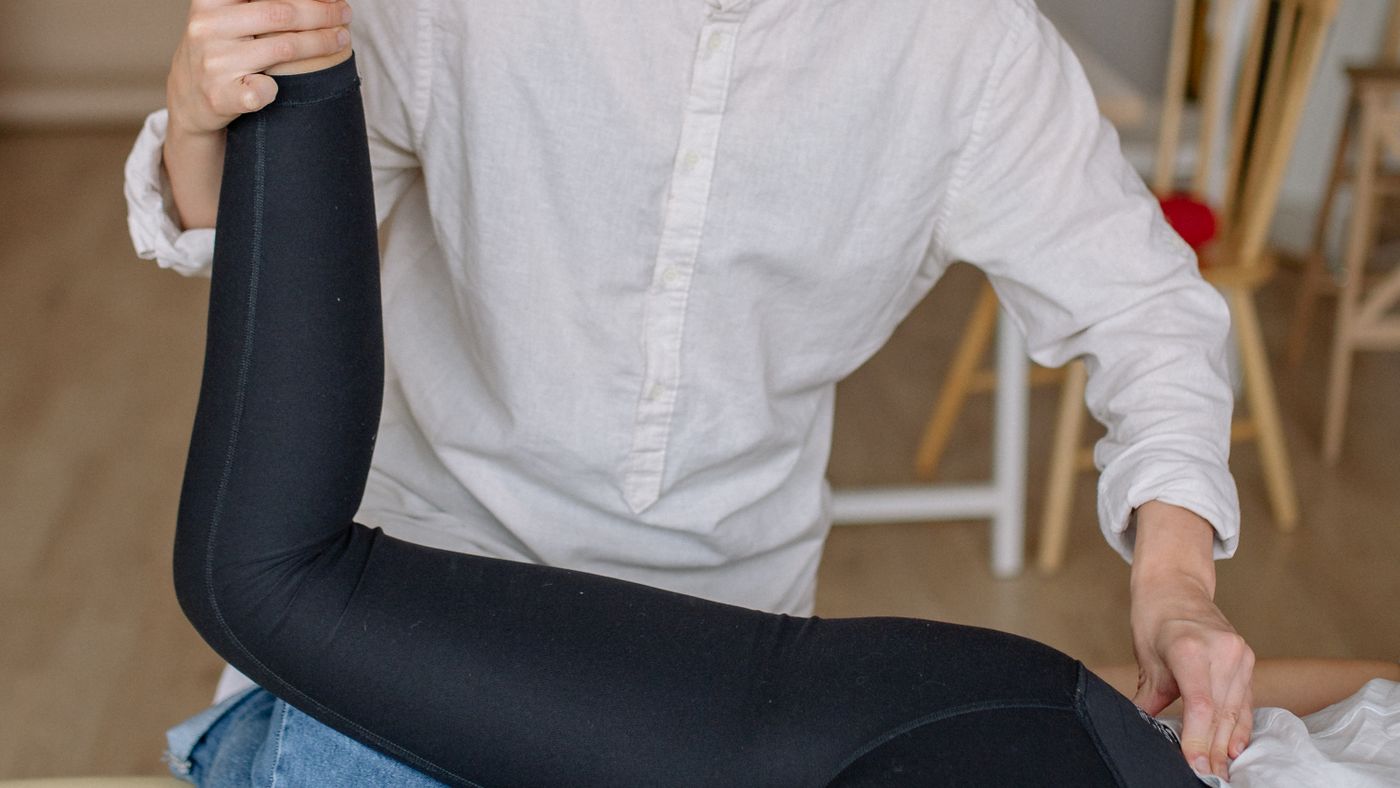
Meralgia paresthetica is pressure on the lateral femoral cutaneous nerve, a sensory nerve that passes near the front of the hip bone, under or through the inguinal ligament, on its way to the skin of the outer thigh. It causes burning, tingling and numbness over the front and side of the thigh, with no muscle weakness. A 2023 review puts its incidence at about 32 new cases per 100,000 people a year and links its rise to obesity and diabetes. Pulsed electromagnetic field (PEMF) technology is sometimes offered for it. We found no PEMF trial of any kind in meralgia paresthetica. This is an evidence-gap brief: it shows what the research on this nerve tests, and the nearest magnetic field trials, each labelled by the condition it actually studied.
What the trials measured
The search: no PEMF trial in meralgia paresthetica
On 19 November 2026 we searched PubMed for meralgia paresthetica and the lateral femoral cutaneous nerve, combined with electromagnetic, PEMF, magnetotherapy, magnetic field and pulsed. That search returned 21 records, and a second one, on the same nerve terms with any word starting with "magnet", returned 38. None was a PEMF treatment study. The magnetic records were MRI and magnetic resonance neurography of the hip and pelvis, and magnetic recordings of spinal cord activity. The "pulsed" records were all pulsed radiofrequency, a needle procedure that is a different technology (see below). The Cochrane review and the abstracts of the two later narrative reviews we read name no PEMF study.
The reference reviews: weak evidence for every option
Cochrane systematic review of treatments for meralgia paresthetica (Khalil, Nicotra and Rakowicz, Cochrane Database of Systematic Reviews, 2012). The authors found no randomized or quasi-randomized trial of any treatment, so they pooled high-quality observational studies. One natural history study reported spontaneous improvement in 20 of 29 cases (69%) with no intervention. Four studies of steroid and local anaesthetic injection reported cure or improvement in 130 of 157 cases (83%). Nerve decompression was reported beneficial in 264 of 300 cases (88%, nine studies) and neurectomy in 45 of 48 (94%, three studies). The authors concluded that the objective evidence base for treatment choices is weak, and that a similar outcome has been reported without any intervention. (PubMed 23235604)
Narrative review of diagnosis and treatment (Scholz et al., Deutsches Ärzteblatt International, 2023). Diagnosis rests mainly on the typical symptoms plus a positive response to an injection at the nerve, with nerve testing, ultrasound and MRI for atypical cases. The literature search found no high-quality studies, only four small prospective observational studies with partly inconsistent results. The authors note that hardly any data exist on newer options such as radiofrequency, spinal cord stimulation or peripheral nerve stimulation. (PubMed 37534445)
Narrative review of idiopathic meralgia paresthetica (Dengler, Neurological Research, 2023). The author states that no level 1 evidence exists for any treatment, and that surgical decompression has never been compared with neurectomy in a randomized design. (PubMed 36520581)
Injections and surgery: pooled observational results
Systematic review and meta-analysis, 25 studies, 670 patients given an injection, decompression (neurolysis) or neurectomy (Lu et al., Journal of Neurosurgery, 2021). Complete pain relief was reported in 85% after neurectomy (95% CI 71 to 96), 63% after neurolysis (95% CI 56 to 71) and 22% after injection (95% CI 13 to 33). Repeat procedures were needed in 81% after injection, 12% after neurolysis and 0% after neurectomy. Complications ranged from 0% to 5% across the three. These are rates within treated groups across separate studies, not results of a head-to-head trial. (PubMed 33450741)
Meta-analysis, 10 studies, 149 patients, ultrasound-guided injection vs surgery (Tagliafico, Torri and Signori, European Journal of Radiology, 2021). Success was reported in 49 of 57 patients after injection (85%) and 74 of 92 after surgery (80%), with no statistically significant difference. The authors note that no comparative cohort study or randomized trial was available. (PubMed 33933838)
Case series of 13 patients (14 nerves) plus a meta-analysis of decompression vs neurectomy (Fortuniak et al., Journal of Clinical Neuroscience, 2025). The pooled success rate was 65% after decompression (95% CI 56 to 73) and 86% after neurectomy (95% CI 72 to 93; p < 0.001). In the authors' own series, median pain before surgery was 8 on a 10-point scale, and no complications were seen. (PubMed 40651176)
Systematic review and meta-analysis of steroid injections (Jawaid et al., Pakistan Journal of Medical Sciences, 2024). Compared with control groups, steroid injection improved complete pain relief and the pain score at 15 days (p = 0.02), but the pain score at one month did not differ (p = 0.79). (PubMed 38196491)
Randomized trials of injections: mostly no difference from the control injection
Double-blind randomized placebo-controlled trial, 20 patients, steroid plus lidocaine injection vs saline (Kloosterziel et al., Muscle & Nerve, 2020). Pain fell from 6.8 to 4.3 at 12 weeks in the saline group (P = .014) and from 7.4 to 4.8 in the steroid group (P = .053). There was no significant difference between the groups. The authors found no objective evidence of benefit from the steroid, with the caveat of a small sample. (PubMed 32239737)
Double-blind randomized trial, 32 patients, ultrasound-guided lidocaine with or without steroid (Palamar et al., Annals of Indian Academy of Neurology, 2023). Pain scores fell in both groups, to 2.47 with steroid and 3.13 without it at four weeks, with no statistically significant difference between the groups. (PubMed 37034043)
Double-blind randomized trial, 56 patients, ultrasound-guided 5% dextrose vs steroid hydrodissection (Shi et al., Pain Physician, 2024). Two active injections, no placebo group. Both groups improved from baseline. The dextrose group had better pain and quality-of-life scores at 4 and 6 months (P < 0.05). Six patients in the steroid group reported an adverse effect and none in the dextrose group. (PubMed 39621981)
Electrical and light therapies: TENS and laser, not PEMF
Randomized sham-controlled trial, 62 patients, ultrasound-guided injection vs TENS vs sham TENS (Kiliç et al., Pain Physician, 2020). TENS is electrical stimulation through skin pads, not PEMF. Fifty-four patients finished. Neuropathic pain questionnaire and sensory test scores changed more in the injection group at 15 days and one month (P < 0.05). The visual pain scale, quality of life and sleep scores did not differ between the three groups (P > 0.05). Follow-up was one month. (PubMed 32517391)
Randomized double-blind sham-controlled trial, 62 patients randomized and 54 analysed, high-intensity laser (Mogahed et al., American Journal of Physical Medicine & Rehabilitation, 2026). Laser, not PEMF. Twelve sessions over four weeks. At week 12, laser improved pain (P = 0.006), function (P = 0.043) and sensory nerve conduction velocity (P = 0.027) more than sham. The nerve conduction changes were small and stayed within normal limits. Mild, transient adverse events occurred in 16.1% of the laser group and none of the sham group. (PubMed 42307460)
Pulsed radiofrequency: a needle procedure, not PEMF
Retrospective case series, 11 patients with meralgia paresthetica that had not responded to conservative care, pulsed radiofrequency at the nerve (Lee et al., Pain Physician, 2016). Pulsed radiofrequency delivers an electrical current through a needle placed at the nerve. It is not a pulsed electromagnetic field, and there was no control group. Mean pain fell from 6.4 to 0.63 cm on a 10-cm scale at six months (P < 0.001), and no complications were seen. Several other case series and case reports of pulsed radiofrequency in this condition turned up in our search; none is a PEMF study. (PubMed 27008291)
The nearest magnetic field trials: other nerves, other conditions
Randomized double-blind placebo-controlled trial, 36 hands with refractory carpal tunnel syndrome, a combined static and pulsed magnetic field worn at the wrist (Weintraub and Cole, Pain Medicine, 2008). The median nerve at the wrist, not the thigh nerve. At two months, 31 hands were analysed. The reduction on the visual pain scale and the global impression of change was not significant. Two neuropathic pain sub-scores favoured the magnetic field (P = 0.018 and P = 0.042), while motor strength, nerve conduction and sensory thresholds did not change. (PubMed 18777606)
Randomized double-blinded trial, 40 women with carpal tunnel syndrome after childbirth, PEMF plus gliding exercises vs pulsed ultrasound plus the same exercises (Kamel et al., Journal of Advanced Research, 2017). Carpal tunnel, two active treatments, no sham. Both groups improved in pain, median nerve latencies and grip (P < 0.05), with differences favouring PEMF. The functional status scale did not differ between the groups (P > 0.05). (PubMed 27980864)
Randomized double-blind placebo-controlled trial, 225 patients with painful diabetic neuropathy, PEMF or sham to the feet 2 hours a day for 3 months, 16 sites in 13 US states (Weintraub et al., Archives of Physical Medicine and Rehabilitation, 2009). Diabetic nerve damage in the feet, not an entrapment. There was no significant difference between PEMF and sham in pain intensity on either pain scale. More PEMF patients reported overall improvement (44% vs 31%; P = .04). The authors concluded that PEMF at this dose did not reduce neuropathic pain. (PubMed 19577022)
For the full median nerve evidence, with its limits, see our carpal tunnel syndrome evidence brief. For the diabetic neuropathy trials, see the diabetic peripheral neuropathy evidence brief.
Where the evidence stops
- Direct PEMF evidence in meralgia paresthetica is zero: no sham-controlled trial, no comparative trial and no case series turned up in our search.
- The research on every option is thin. The Cochrane review found no randomized trial of any treatment, and the pooled injection and surgery figures are rates within the groups that had each procedure, not differences from a control group.
- In the one natural history study, about two in three cases improved with no intervention, so uncontrolled before-and-after results for any method say little.
- Two placebo-controlled trials found no difference between a steroid injection and a control injection, and the steroid meta-analysis found no difference in pain at one month.
- Pulsed radiofrequency, TENS and laser are different technologies. Their results in this nerve are not PEMF results, and the pulsed radiofrequency data come from case series without a control group.
- The nearest magnetic field trials studied the median nerve at the wrist or diabetic nerve damage in the feet. Their null results are listed with each study above.
What to ask when you evaluate a clinic model
- Does any claim about meralgia paresthetica cite a PEMF trial in the lateral femoral cutaneous nerve? Ask for it by name. We found none.
- Is a pulsed radiofrequency, TENS, laser, carpal tunnel or diabetic neuropathy result being presented as PEMF evidence for this nerve?
- How will the clinic make sure patients with burning or numbness in the outer thigh have been assessed by a physician, so that a spinal nerve root problem or a mass in the pelvis is not missed?
- Will these patients be seen alongside, never instead of, the weight, clothing and activity advice, injections and surgical referral the research describes?
- How will symptoms and the area of numbness be recorded for every patient, not only those who do well, given that many cases improve on their own?
- Can the seller show you this research, with its gap, the way it is written here?
Questions buyers ask
Is there a PEMF trial in meralgia paresthetica?
We found none in PubMed, and none appears in the Cochrane review or the two later reviews we read.
Is pulsed radiofrequency the same as PEMF?
No. Pulsed radiofrequency sends an electrical current through a needle placed at the nerve. PEMF uses a magnetic field from a coil outside the body. The word "pulsed" is the only thing they share.
Do carpal tunnel PEMF trials apply to the thigh nerve?
Not directly. They studied a different nerve at a different site, and none enrolled anyone with meralgia paresthetica.
The regulatory side
The FDA record of the technology goes back to 1979, when bone-growth stimulators were approved through premarket approval P790002. Devices for pain and edema are cleared through the 510(k) route under 21 CFR 890.5290(b). These decisions are specific to one device, one model and one indication, and they do not carry over to other devices or other conditions. Before you rely on any device for a clinic, look up its own FDA record. Our guide PEMF and the FDA explains how.
Read the research yourself
Every study above links to its PubMed abstract. More published PEMF studies, each checked against the original paper: pemf-research.com. Compare with our trochanteric bursitis and lateral hip pain, hip osteoarthritis and neuropathic pain briefs.
About the publisher
These guides are written by PainFree. PainFree has run pain-relief clinics in Israel for 25 years, and more than 70 operate today; its Israeli site, in Hebrew, is painfree.org.il. We would want any buyer to read the evidence behind a clinic model this carefully, ours included.
Related research on this site
This article is general information for prospective business owners. It is not legal, financial or medical advice. We do not make earnings claims, and this page is not an offer to sell a franchise or a business opportunity. Study results describe the trials cited, not any particular device or clinic. Equipment supplied to US clinics will meet the applicable US regulatory requirements.