
Evidence brief for clinic investors
PEMF for elbow and knee bursitis: what the research shows
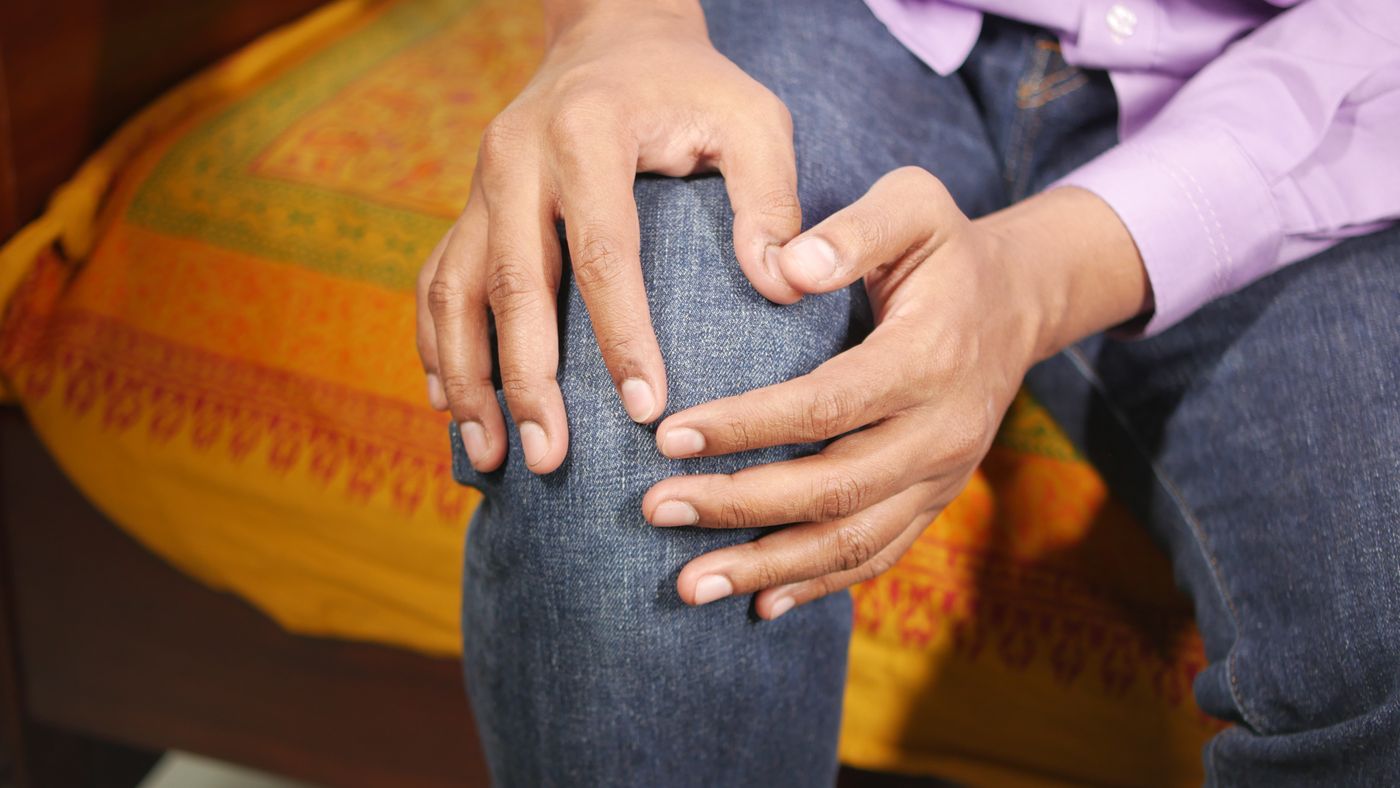
A bursa is a small fluid-filled sac that cushions a bone where skin, tendon or muscle glides over it. Bursitis is swelling and irritation of that sac, and according to the National Library of Medicine it usually occurs at the knee or elbow, often after long periods of kneeling or leaning on the elbows (MedlinePlus, Bursitis). At the elbow it is olecranon bursitis; in front of the kneecap it is prepatellar bursitis. Pulsed electromagnetic field (PEMF) technology is sometimes offered for both. We found no PEMF trial in either. This is an evidence-gap brief: it shows what the bursitis research does test, and how the standard options perform.
What the trials measured
The search: no PEMF trial in elbow or knee bursitis
On 2 November 2026 we searched PubMed for pulsed electromagnetic field, PEMF, magnetotherapy, magnetic field therapy, magnetic therapy and electromagnetic field combined with olecranon, prepatellar, elbow bursitis and knee bursitis. That search returned no records. A wider search pairing the same PEMF terms with any bursitis returned 14 records, and the indexed subject headings for bursitis and magnetic field therapy returned 3. None studied the elbow or knee bursa. Most were MRI and imaging papers, studies in horses, or unrelated reviews. The PEMF trials among them were in shoulder pain:
Randomized, triple-blind trial, 47 patients with shoulder periarthritis (Leclaire and Bourgouin, Archives of Physical Medicine and Rehabilitation, 1991). Magnetotherapy added to heat and exercise three times a week for up to 12 weeks gave no significant benefit in pain, range of motion or function over the same program without it. (PubMed 2009043)
Randomized trial, 60 patients with shoulder periarthritis, Italian-language (Battisti et al., Clinica Terapeutica, 2007). Two types of low-frequency electromagnetic field were compared with a simulated field over 15 daily sessions; the abstract reports improved pain and function in both active groups and none with the simulated field, without giving effect sizes. (PubMed 18062345)
Shoulder periarthritis is a broad label for painful shoulders, not a bursitis of the elbow or knee, and these trials are not evidence for it. Shoulder PEMF research is covered in our shoulder impingement and rotator cuff brief. A 1961 paper on pulsed short wave for calcified bursitis also turned up; it has no abstract in PubMed, and pulsed shortwave is a radio-frequency heating modality, not PEMF.
What the reviews of olecranon and prepatellar bursitis contain
Systematic review of non-surgical management of aseptic olecranon bursitis, 2 randomized trials and 2 observational studies (Kaur et al., Reumatología Clínica, 2023). The risk of bias in both randomized trials was high, and neither showed a significant difference in resolution of the bursitis or bursal tenderness between invasive and non-invasive options. Steroid injection was associated with a significantly shorter duration of symptoms, but also with more complications, including bursal infection and skin atrophy. The authors conclude that the bursitis can resolve with conservative methods if they are started early, and that injection should be kept for cases that do not respond. No PEMF study was included. (PubMed 37945181)
Systematic review of septic and aseptic prepatellar bursitis, 10 studies, 702 patients (Brown et al., Archives of Orthopaedic and Trauma Surgery, 2022). Endoscopic and open removal of the bursa showed no difference in recurrence after 1 year (OR 0.41, 95% CI 0.05 to 3.53, p = 0.67) or in surgical complications (OR 1.44, 95% CI 0.34 to 6.08). 80% of endoscopically operated patients were pain free after 1 year. For septic bursitis, antibiotics for less than 8 days were not followed by more recurrence than longer courses (2 of 17 vs 10 of 114; OR 0.66, 95% CI 0.13 to 3.29). The comparisons were surgical and antibiotic; no PEMF study was included. (PubMed 33721054)
Narrative review of olecranon bursitis management (Nchinda and Wolf, Journal of Hand Surgery, 2021). The authors note a lack of evidence-based recommendations for non-septic olecranon bursitis. The condition is often self-limited and resolves with rest, ice, compression, an orthosis and anti-inflammatory drugs; more recent literature reports adverse effects of injection and surgery compared with non-invasive first-line care. (PubMed 33840568)
The benchmark any new option is measured against
Randomized trial, 90 patients with non-septic olecranon bursitis, compression bandage with anti-inflammatory drugs vs aspiration vs aspiration with steroid injection (Kim et al., Clinical Orthopaedics and Related Research, 2016). At 4 weeks the bursitis had resolved in 83% with compression and drugs, 65% with aspiration alone and 85% with aspiration plus steroid; the difference between groups was not significant (p = 0.073). Steroid injection gave the earliest resolution (2.3 weeks, against 3.1 and 3.2 weeks; p = 0.015). A longer duration of symptoms before care began was the only factor linked to failure. The trial was powered only to detect a 30% difference, and the authors suggest compression and a short course of anti-inflammatory drugs as the best balance of safety and efficacy. (PubMed 26463567)
Double-blind randomized trial, 42 patients with non-septic olecranon bursitis, intrabursal steroid injection vs oral naproxen vs placebo (Smith et al., Archives of Internal Medicine, 1989). The steroid groups had the fastest decrease in swelling at 1 week and sustained improvement at 6 weeks; at 6 months the groups without the injection needed more repeat aspirations (mean 1.0 with naproxen and 0.4 with placebo). The authors judged the injection the most effective regimen. This is an old, small trial, and later reviews weigh its benefit against infection and skin atrophy. (PubMed 2684077)
Randomized trial, 164 hospitalized adults with septic bursitis, 130 at the elbow and 34 at the knee, one-stage vs two-stage surgical removal of the bursa (Uçkay et al., Mayo Clinic Proceedings, 2017). All received 7 days of oral antibiotics after surgery. The approach failed in 10% after one-stage and 16% after two-stage surgery (p = 0.23). One-stage surgery had less wound breakdown at the elbow (1 of 66 vs 9 of 64; p = 0.03) and a shorter hospital stay (median 4.5 vs 6.0 days). (PubMed 28602435)
National recommendations for prepatellar and olecranon septic bursitis (French Society for Rheumatology work group, Joint Bone Spine, 2024). Septic bursitis accounts for about one third of all inflammatory bursitis and is often related to work. Drawing on a literature review and expert opinion, the group set 3 general principles and 11 recommendations covering blood tests and imaging, antibiotic choice and duration, surgical indications, non-drug measures and prevention. (PubMed 37995861)
The nearest PEMF evidence: neighbouring conditions
The closest conditions with PEMF trials are different diseases at the same joints or another bursa: tendon pain on the outside of the elbow, osteoarthritis and tendon pain at the knee, and greater trochanteric pain at the hip, which was long labelled trochanteric bursitis. None of them is a fluid-filled bursa over the point of the elbow or the kneecap. Their trials, including the ones that found no difference from sham, are set out in our tennis elbow, knee osteoarthritis, anterior knee pain and patellar tendinopathy and trochanteric bursitis and lateral hip pain briefs.
Where the evidence stops
- Direct PEMF evidence in olecranon or prepatellar bursitis is zero: no sham-controlled trial, no comparative trial and no case series turned up in our searches.
- The reviews we opened, covering olecranon and prepatellar bursitis, include no PEMF study.
- The bursitis research is itself thin: the olecranon review found only 2 randomized trials, both at high risk of bias, and the largest non-septic trial was powered only for a 30% difference (see the studies above).
- The real benchmark is simple and widely available: compression and anti-inflammatory drugs. A new option would have to beat that, or match it with fewer complications than injection, and no PEMF study has tried.
- Infection changes everything. Septic bursitis needs antibiotics and sometimes surgery, and no non-invasive physical modality replaces that.
- The shoulder trials that appear under bursitis search terms studied shoulder periarthritis, and the larger one found no benefit. They do not transfer to the elbow or knee.
- Shockwave (ESWT), laser, therapeutic ultrasound, TENS, pulsed shortwave diathermy and static magnets are not PEMF; results for them, if any, do not transfer.
What to ask when you evaluate a clinic model
- Does any claim about elbow or knee bursitis cite a PEMF trial in bursitis patients? Ask for it by name. We found none.
- Is a tennis elbow, knee osteoarthritis, hip or shoulder result being presented as PEMF evidence for elbow or knee bursitis?
- How is a hot, red or rapidly swollen bursa screened for infection and sent for medical assessment before anything else is offered?
- Will patients be seen alongside, never instead of, the physicians who aspirate, inject or operate when that is needed?
- How will swelling, pain and recurrence be recorded for every patient, not only those who do well?
- Can the seller show you this research, with its gap, the way it is written here?
Questions buyers ask
Is there a PEMF trial in elbow or knee bursitis?
No. Our PubMed searches found none, and the systematic reviews of olecranon and prepatellar bursitis include none.
What does the bursitis research test instead?
Compression with anti-inflammatory drugs, aspiration and steroid injection for non-infected bursitis; antibiotics and surgical removal of the bursa for infected bursitis.
Why does septic bursitis matter here?
Because an infected bursa needs medical care first. Any clinic model has to screen for it.
The regulatory side
FDA decisions on PEMF devices are specific to one device, one model and one indication, and they do not carry over to other devices. No FDA decision we know of covers PEMF for olecranon or prepatellar bursitis. Before you rely on any device for a clinic, look up its own FDA record. Our guide PEMF and the FDA explains how, and what the technology's record since 1979 does and does not cover.
Read the research yourself
Every study above links to its PubMed abstract. More published PEMF studies, each checked against the original paper: pemf-research.com. Compare with our trochanteric bursitis and lateral hip pain, shoulder impingement and rotator cuff and tennis elbow briefs.
About the publisher
These guides are written by PainFree. PainFree has run pain-relief clinics in Israel for 25 years, and more than 70 operate today; its Israeli site, in Hebrew, is painfree.org.il. We would want any buyer to read the evidence behind a clinic model this carefully, ours included.
Related research on this site
This article is general information for prospective business owners. It is not legal, financial or medical advice. We do not make earnings claims, and this page is not an offer to sell a franchise or a business opportunity. Study results describe the trials cited, not any particular device or clinic. Equipment supplied to US clinics will meet the applicable US regulatory requirements.