
Evidence brief for clinic investors
PEMF added to standard care: what add-on trials show
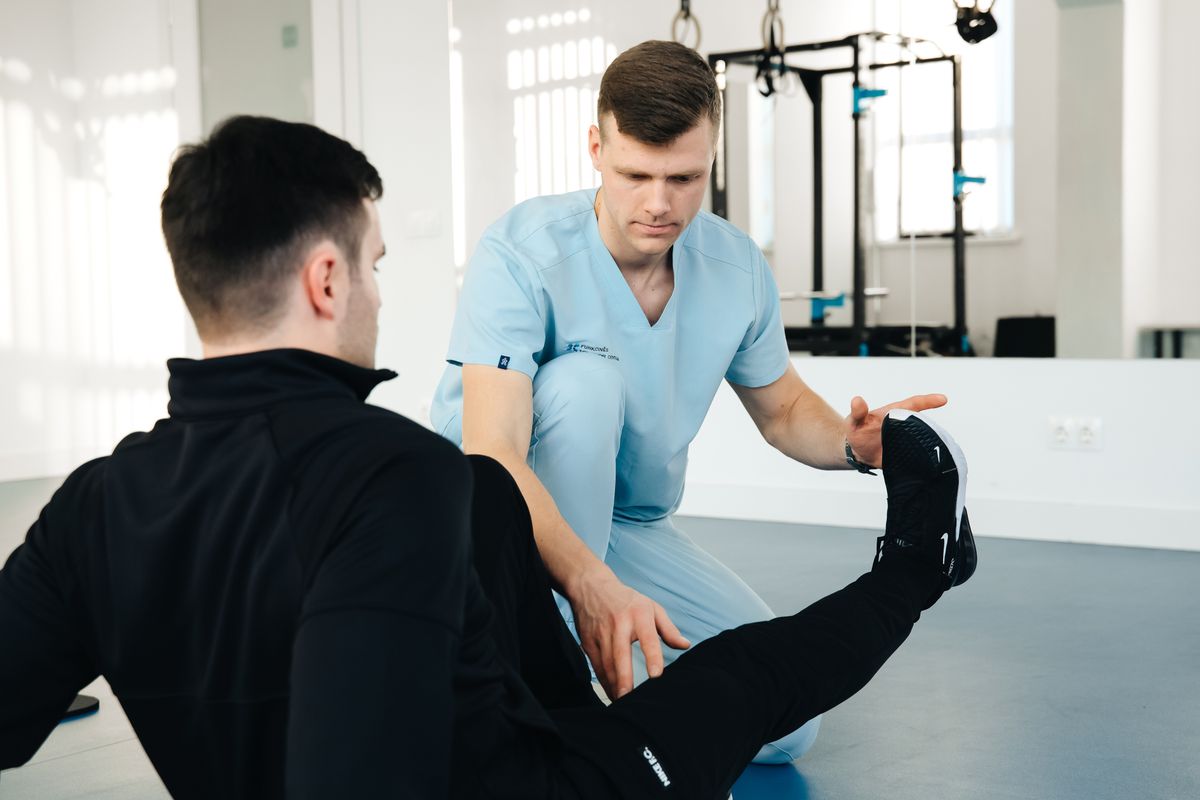
In a clinic, pulsed electromagnetic field (PEMF) sessions rarely stand alone: patients also exercise, see a physiotherapist or recover from surgery. The research question that matches that setting is narrow: does adding PEMF to the same care change the result, compared with the same care plus a sham session? This brief collects the trials that tested exactly that, including the ones that found nothing.
What an add-on trial tests
In an add-on (adjunct) design, both groups receive identical usual care: an exercise program, a physiotherapy protocol, shockwave sessions or post-surgical rehabilitation. One group also receives active PEMF; the other receives a sham PEMF session that looks and sounds the same but delivers no field. Because the usual care improves most patients in both groups, the question is not whether patients got better, but whether the gap between two improving groups is real. A positive add-on trial says nothing about PEMF on its own; a null one says nothing about the usual care.
Trials that reported a between-group difference
Chronic non-specific low back pain, 50 patients (Elshiwi et al., Brazilian Journal of Physical Therapy, 2019). PEMF (50 Hz, 20 gauss) added to a conventional physiotherapy program, against the same program plus sham, 12 sessions over 4 weeks, patient-blinded. Disability improved by 8.14 points more (95% CI 6.5 to 9.96) and lumbar range of motion improved more in the PEMF group. The pain difference was 1.52 points, but its 95% CI ran from −0.34 to 3.35, so it crosses zero even though the authors report it as significant. No adverse events. (PubMed 30177406)
After arthroscopic rotator cuff repair, 66 patients (Osti et al., Orthopedics, 2015). PEMF or placebo after surgery, with the same rehabilitation protocol for everyone. At 3 months, pain (VAS), range of motion, UCLA and Constant scores were significantly better in the PEMF group (P<.05), and the authors report less analgesic use and stiffness in the short term. At 2 years there was no difference between the groups. (PubMed 25760511)
Rotator cuff tendinopathy, 86 patients (Klüter et al., Electromagnetic Biology and Medicine, 2018). Three shockwave sessions plus eight sessions of high-energy electromagnetic transduction therapy (EMTT), against shockwave plus sham EMTT. Both groups improved significantly in pain and Constant-Murley score; at 24 weeks pain reduction on the VAS was significantly greater with the combination. Note the add-on here is to shockwave, not to exercise, and EMTT is a high-energy form of the technology. (PubMed 30183430)
Cervical disc herniation (Hattapoğlu et al., Turkish Journal of Medical Sciences, 2019). PEMF added to a hot pack and electrical nerve stimulation, against the same two modalities plus a sham magnetic field. Both groups improved in neck pain, disability, anxiety, depression and quality of life. Comparing the change between groups, significant differences appeared only in pain (VAS) and the sleep sub-score of the Nottingham Health Profile at week 12. The abstract does not report the number of patients. (PubMed 31385489)
Trials that found no added difference
Knee osteoarthritis, 40 patients (Özgüçlü et al., Clinical Rheumatology, 2010). PEMF or sham PEMF added to hot pack, therapeutic ultrasound and isometric exercises, 30 minutes of PEMF per session, 5 sessions a week for 2 weeks. Both groups improved significantly in WOMAC pain and function (p<0.001 in each). Between groups there was no difference in WOMAC pain (p=0.906), stiffness (p=0.855), physical function (p=0.809) or acetaminophen use. The authors conclude that PEMF had no additional effect on the physical therapy program. (PubMed 20473540)
Shoulder impingement syndrome, 56 patients (Galace de Freitas et al., Archives of Physical Medicine and Rehabilitation, 2014). Three weeks of active or placebo PEMF, then the same shoulder-strengthening exercise program for both groups, double-blind, 3-month follow-up. The active group improved earlier compared with its own baseline, but there were no significant between-group differences on any outcome (P>.05), and the authors ask that the results be interpreted carefully for that reason. (PubMed 24139986)
After arthroscopic surgery for talar cartilage defects, 68 patients (Reilingh et al., American Journal of Sports Medicine, 2016). PEMF or placebo after debridement and microfracture, multicenter and double-blind. Return to sport was 79% with PEMF and 80% with placebo (P=.95), median time to return 17 versus 16 weeks (P=.69), with no between-group difference in function scores or bone repair on CT at one year. (PubMed 26903214)
Achilles tendinopathy, 65 patients (Ko et al., Scientific Reports, 2026). Eight weeks of active or sham PEMF alongside a 12-week home eccentric exercise program. Both groups improved notably on all outcomes, maintained at 26 weeks; the abstract does not report an advantage of active PEMF over sham, and the authors call for research into the optimal dose. (PubMed 41651914)
What the reviews say about combining
Systematic review, 8 randomized trials, 2015 to 2025 (Silva et al., Frontiers in Pain Research, 2026). Most included trials reported reductions in pain and improvements in function, with no serious adverse events; some reported greater benefits when the therapy was combined with exercise. The authors call for larger, more standardized trials. (PubMed 42146884)
Cochrane review, electrotherapy for frozen shoulder, 19 trials, 1,249 participants (Page et al., 2014). PEMF was one of only two modalities compared with placebo, and the review found that no trial had compared an electrotherapy modality plus manual therapy and exercise with manual therapy and exercise alone. For frozen shoulder, the add-on question had not been tested. (PubMed 25271097)
How to read add-on trials
- Sham, not nothing. A control group that gets usual care alone, with no sham session, cannot separate the field from the extra attention and time on the table. All eight trials above used a sham or placebo arm.
- Blinding. Check whether patients, therapists and outcome assessors were all blinded, or only patients (Elshiwi was patient-blinded; Özgüçlü, Galace de Freitas and Reilingh describe double-blind or placebo designs).
- Which outcome moved. In the low back pain trial, disability and range of motion differed while the pain interval crossed zero; in the neck trial only pain and one sleep sub-score differed. A difference in a secondary outcome is weaker than one in the primary outcome.
- Duration. The rotator cuff repair difference at 3 months was gone at 2 years. A short-term gap and a lasting one are different findings.
- Size. Every trial here enrolled fewer than 100 patients. Small trials can miss a real effect and can also overstate one.
- Protocol. Frequencies, intensities, session length and the usual care itself differ from trial to trial, and EMTT is not the same exposure as low-intensity PEMF. A result belongs to the protocol tested.
Where the evidence stops
- Across these eight add-on trials the record is split: four reported a between-group difference on at least one outcome and four did not.
- The one knee osteoarthritis add-on trial found here (40 patients) found no added difference over physical therapy.
- No add-on trial here followed patients long term and found a lasting difference; the one with two-year follow-up found none at that point.
- Every trial kept the usual care identical in both groups, so none of them tests whether PEMF could replace any part of that care.
What to ask when you evaluate a clinic model
- Does the model present PEMF as an addition to exercise and physiotherapy, and which add-on trials does it rely on?
- Does it show the null add-on trials, such as the knee osteoarthritis and shoulder impingement trials, alongside the positive ones?
- How will the clinic record outcomes for every patient, so it can see what the combination delivers in its own setting?
- How are patients screened for contraindications before the first session?
The regulatory side
FDA decisions on PEMF devices are specific to one device, one model and one indication, and they do not carry over to other devices. The technology's US record begins with bone growth stimulators approved through premarket approval P790002 in 1979; devices for adjunctive use in the palliative care of postoperative pain and edema are cleared through 510(k) under 21 CFR 890.5290(b). Before you rely on any device for a clinic, look up its own FDA record. Our guide PEMF and the FDA explains how.
Questions evaluators ask
What does an add-on PEMF trial test?
Both groups receive the same exercise, physiotherapy or post-surgical rehabilitation; one group also gets active PEMF and the other gets a sham PEMF session that looks the same. Any difference between the groups is the added value of PEMF on top of that care, not the value of the whole program.
Did every add-on trial find a difference?
No. Of the eight add-on trials summarized on this page, four reported a between-group difference on at least one outcome (low back pain, rotator cuff repair, rotator cuff tendinopathy with shockwave, cervical disc herniation) and four did not (knee osteoarthritis, shoulder impingement, talar cartilage surgery, Achilles tendinopathy). In the null trials both groups improved.
How should an evaluator read an add-on trial?
Check that the control group received a sham session, not nothing; that patients and assessors were blinded; that the outcome that differed was the primary outcome; how long the difference lasted at follow-up; and whether the confidence interval crosses zero. In both groups the usual care usually improves patients, so the add-on effect is the gap between two improving groups.
Read the research yourself
Every study above links to its PubMed abstract. More published PEMF studies, each checked against the original paper: pemf-research.com.
About the publisher
These guides are written by PainFree. PainFree has run pain-relief clinics in Israel for 25 years, and more than 70 operate today; its Israeli site, in Hebrew, is painfree.org.il. In those clinics PEMF sessions sit alongside physiotherapy and exercise, which is why the add-on question is the one we think a buyer should read most carefully.
Related research on this site
This article is general information for prospective business owners. It is not legal, financial or medical advice. We do not make earnings claims, and this page is not an offer to sell a franchise or a business opportunity. Study results describe the trials cited, not any particular device or clinic. Equipment supplied to US clinics will meet the applicable US regulatory requirements.