
Evidence brief for clinic investors
PEMF vs cupping therapy: what the research shows
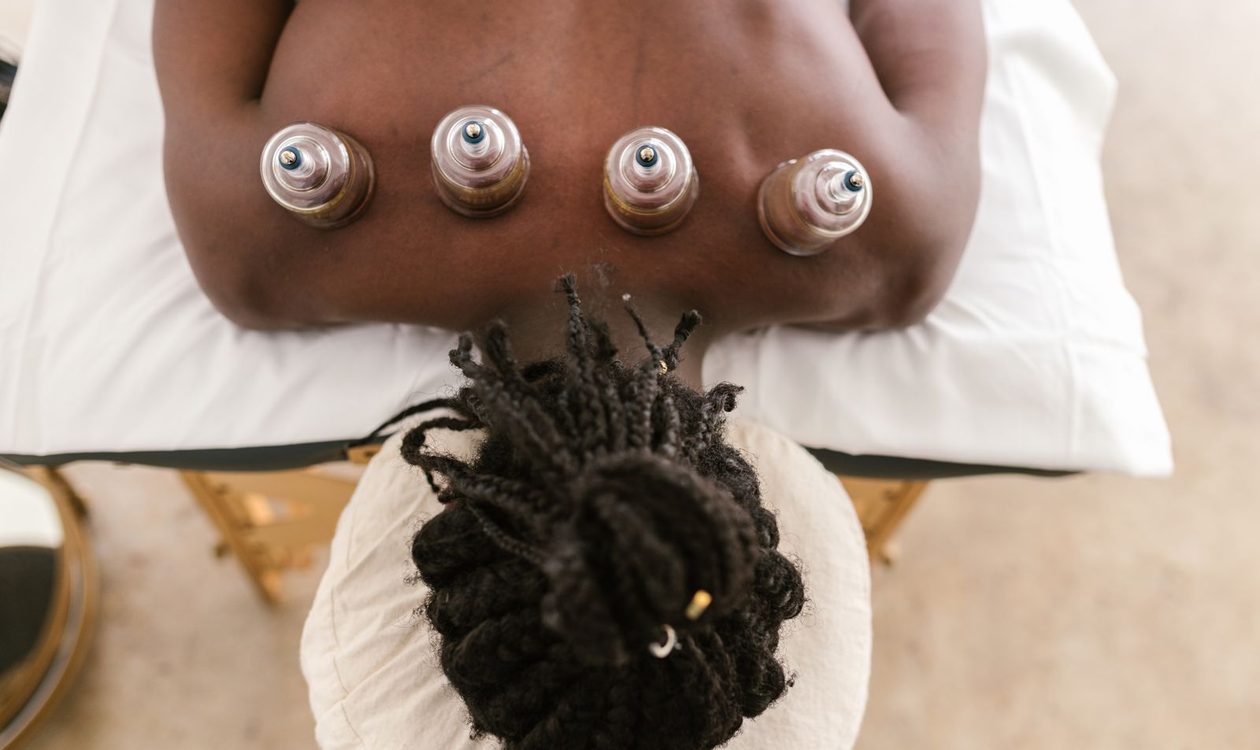
Pulsed electromagnetic field (PEMF) therapy and cupping are both offered for neck and back pain, and buyers often ask which one has the stronger evidence. The plain answer is that no randomized trial we could find has tested one against the other. This brief collects what each has on its own record: the sham-controlled cupping trials and reviews, most of which are null or very uncertain, and the PEMF trials and reviews in the same conditions, with their own limits.
How the two technologies differ
PEMF delivers a pulsed magnetic field from a coil or mat placed on or near the painful area; nothing touches the skin with force and nothing is left on the body. Cupping places glass, plastic or silicone cups on the skin and creates suction, by heat or by a hand pump, for several minutes. In dry cupping the skin stays intact; in wet cupping (hijama) the skin is scratched or punctured and blood is drawn into the cup. Cupping usually leaves round bruise-like marks for days. These are differences of method and logistics; they say nothing about which one works better, which is a question only trials can answer.
No head-to-head randomized trial
We searched PubMed for cupping together with magnetic, electromagnetic, PEMF or magnetotherapy in the title or abstract. The search returned 63 records, most of them about optic disc cupping in the eye, plus a few Korean case reports of mixed traditional care. None randomized patients to PEMF against cupping, in any condition, and we found no trial that tested the two together. Any statement that one beats the other therefore rests on indirect comparisons, which are below.
Cupping against sham: what the trials found
Cupping can be tested against a sham: a cup with a hole or valve that gives little or no suction, or a cup applied with minimal pressure. The sham-controlled record is the most informative part of the cupping evidence, and most of it is null or very uncertain.
Dry cupping against placebo cupping, systematic review and meta-analysis, five randomized trials, 281 participants with musculoskeletal pain (Jenkins et al., JOSPT Open, 2026). In the short term (about one week), the pain difference was 9.9 points on a 0 to 100 scale (95% CI 30.5 better to 10.7 worse, four trials, 243 participants); at six months it was 2.2 points (95% CI 11.8 better to 7.4 worse, one trial, 52 participants). Only the one-trial medium-term estimate reached significance (17.2 points, 95% CI 33.0 to 1.4). All evidence was very low certainty, four of the five trials were at high risk of bias, and the authors conclude that the effects of dry cupping on pain "were very uncertain at all timepoints." (PubMed 42686168)
Chronic pain, systematic review and meta-analysis, 18 randomized trials, 1,172 participants (Kim et al., Journal of Pain, 2020). Against no intervention, cupping showed a large short-term pain effect (SMD −1.03, 95% CI −1.41 to −0.65). Against sham cupping the pain effect was not significant (SMD −0.27, 95% CI −0.58 to 0.05), and neither was the effect against other active treatment (SMD −0.24, 95% CI −0.57 to 0.09). Disability did not differ from sham either. Adverse events were more frequent with cupping than with no intervention. Most trials were limited by heterogeneity and risk of bias. (PubMed 31982686)
Chronic non-specific low back pain, randomized sham-controlled trial, 90 participants (Almeida Silva et al., Journal of Physiotherapy, 2021). Dry cupping once a week for eight weeks against sham cupping, with participants and assessors blinded. On a 0 to 10 scale, the between-group difference in pain at rest was 0.0 after the first session, 0.4 at four weeks and 0.6 at eight weeks, all with confidence intervals crossing zero. Function, mobility, quality of life and medication use did not differ either. The authors conclude that dry cupping was not superior to sham cupping. (PubMed 33757719)
Knee osteoarthritis, randomized placebo-controlled trial, 62 women aged 50 to 75 (Cavalcanti et al., Brazilian Journal of Physical Therapy, 2026). Twelve 15-minute sessions of dry cupping over six weeks against sham cupping. Pain fell within both groups, but there were no differences between groups on pain, function, disability, quality of life or global perceived effect at any time point, up to ten weeks. (PubMed 41043303)
Chronic low back pain, three-armed randomized trial, 110 patients (Teut et al., BMC Complementary and Alternative Medicine, 2018). Pulsatile cupping, minimal cupping, or paracetamol on demand only. At four weeks, pain on a 0 to 100 mm scale was 34.9 with pulsatile cupping, 40.4 with minimal cupping and 56.1 in the control group; both cupping arms differed from control, but pulsatile and minimal cupping did not differ from each other at four or twelve weeks. Limits: the comparison that matters for a sham test, full against minimal cupping, was null, and the control group received no sham. (PubMed 29609566)
Persistent non-specific low back pain, randomized sham-controlled trial, 37 participants (Salemi et al., Journal of Acupuncture and Meridian Studies, 2021). Five 10-minute dry cupping sessions over two and a half weeks against sham. Pain on a 0 to 10 scale was 2.36 points lower than sham after treatment (p < 0.001) and 1.71 points lower at four-week follow-up (p = 0.042). Disability (Oswestry) was lower after treatment but not at follow-up (p = 0.17). Limits: a small trial, and its result runs against the larger sham-controlled trial above. (PubMed 35770601)
Non-specific neck pain, single-session laboratory trial, 32 participants (Journal of Athletic Training, 2020). One cup over the most painful area for eight minutes, against a sham cup and no intervention. Immediately afterwards, pain (VAS) was lower in the dry cupping group than in the sham and control groups (p ≤ 0.008), but no differences from baseline remained 24 hours later. (PubMed 32556324)
Chronic neck pain, randomized trial, 61 patients (Lauche et al., PLoS One, 2013). Twelve weeks of partner-delivered home cupping massage against progressive muscle relaxation. Pain fell in both groups with no significant difference between them; differences appeared only for wellbeing and pressure pain thresholds. The authors conclude that cupping massage is no more effective than progressive muscle relaxation for chronic non-specific neck pain. (PubMed 23762355)
The positive cupping reviews, and what they compare
Several reviews report a pain effect for cupping. Most of that effect comes from comparisons with no intervention or with usual care, not with a sham, and the authors rate the evidence low.
Neck pain, systematic review and meta-analysis, 18 randomized trials (Kim et al., BMJ Open, 2018). Against no intervention, cupping reduced pain (MD −2.42, 95% CI −3.98 to −0.86) and improved function (MD −4.34, 95% CI −6.77 to −1.19); against active controls and as an add-on, pain was also lower (p = 0.0009 and p = 0.001). Only 8 of the 18 trials reported adverse events, mostly mild. Because the included trials were of low quality, the authors state that definitive conclusions could not be drawn. (PubMed 30397006)
Chronic neck pain, systematic review and meta-analysis, nine randomized trials, 401 participants (Journal of Back and Musculoskeletal Rehabilitation, 2026). Cupping reduced pain (Cohen's d = 1.17, 95% CI 0.26 to 2.09) and improved disability (d = 0.77, 95% CI 0.63 to 0.91, I² = 0%) against a mix of control interventions. The authors note that the evidence is stronger for function than for pain and is tempered by methodological limits in several trials. (PubMed 42105092)
Chronic musculoskeletal pain, systematic review and meta-analysis (Jia et al., BMJ Open, 2025). Cupping reduced pain intensity (SMD −1.17, 95% CI −1.93 to −0.42, I² = 94%) but did not improve functional disability (SMD −0.24, 95% CI −0.93 to 0.46, p = 0.51) or mental health (SMD 0.08, p = 0.46). The very high heterogeneity on pain means the trials disagreed widely. (PubMed 40441767)
Cochrane review of cupping for chronic non-specific low back pain, protocol only (Saragiotto et al., 2025). Cochrane registered this review in 2025 to assess the benefits and harms of cupping in chronic low back pain. What is published is the protocol; it reports no results yet, so there is no Cochrane verdict on cupping for back pain to cite. (PubMed 40530582)
PEMF in neck and low back pain
These trials test PEMF against placebo in separate sets of patients. Setting them next to the cupping trials is an indirect comparison: the patients, doses and trial quality differ.
Low back pain, meta-analysis, 14 randomized trials, 618 participants (Sun et al., Clinical Rehabilitation, 2022). PEMF reduced pain more than placebo (SMD −1.01, 95% CI −1.42 to −0.6, I² = 31%) and more than other therapy alone (SMD −0.36, 95% CI −0.62 to −0.11). The effect was significant in chronic low back pain (SMD −0.6) but not in acute low back pain (SMD −0.46, 95% CI −0.99 to 0.07, p = 0.09). PEMF did not improve physical function compared with control (SMD −0.45, 95% CI −0.98 to 0.07, p = 0.09, I² = 86%). (PubMed 35077249)
Neck pain, Cochrane review of electrotherapy, 20 small trials, 1,239 people (Kroeling et al., 2013). Very low quality evidence suggested PEMF was more effective than placebo for neck pain; the results could not be pooled, and the authors could make no definite statement on efficacy. They add that funding bias "should be considered, especially in PEMF studies", and that when PEMF was compared with another treatment the evidence was too weak for any recommendation. No adverse effects were reported in the included trials. (PubMed 23979926)
Chronic non-specific neck pain, double-blind sham-controlled trial, 63 patients (Karakaş and Gök, Turkish Journal of Physical Medicine and Rehabilitation, 2020). All patients received 15 sessions of conventional physical therapy over three weeks; one group added 20 minutes of PEMF, the other 20 minutes of sham PEMF. Both groups improved on pain, disability and quality of life, but PEMF was not superior to sham on any outcome. The authors conclude that PEMF did not provide further improvement on top of physical therapy. (PubMed 32760890)
Cervical osteoarthritis, double-blind sham-controlled trial, 34 patients (Sutbeyaz et al., Rheumatology International, 2006). A whole-body PEMF mat, 30 minutes twice a day for three weeks. Pain, range of motion, muscle spasm and neck disability improved significantly in the PEMF group (p < 0.001), with no change in the sham group. Limits: a small trial with no follow-up after the three weeks. (PubMed 15986086)
Safety records
Sacroiliac joint abscess and osteomyelitis after wet cupping, case report (Kandemir et al., BMC Complementary Medicine and Therapies, 2026). A 35-year-old man with two months of low back and leg pain had an abscess at the sacroiliac joint extending into the iliopsoas muscle, with osteomyelitis of the iliac bone, after wet cupping on that area. He recovered after six months of antibiotics. The authors warn that wet cupping under non-sterile conditions can cause deep tissue infection. A single case shows that the risk exists, not how often it occurs. (PubMed 42399906)
The PEMF trials above report few adverse events, but small trials are not built to detect rare ones, and both methods need screening for contraindications before the first session.
Where the evidence stops
- We found no randomized trial of PEMF against cupping, and no trial that used the two together.
- Against a sham, the cupping record is mostly null or very uncertain: the 2026 dry-versus-placebo meta-analysis, the 2020 chronic pain meta-analysis, and the two Brazilian placebo-controlled trials in low back pain and knee osteoarthritis.
- The positive cupping reviews rest mainly on comparisons with no intervention or usual care, with low-quality trials and very high heterogeneity.
- The PEMF record has its own null trials: no effect on function in the low back pain meta-analysis, none in acute low back pain, and no added effect over sham in the 2020 neck pain trial. The Cochrane neck review rated the PEMF evidence very low quality and flagged funding bias.
- Almost every trial on both sides is small and short, and a Cochrane review of cupping for back pain has so far published only its protocol.
How to read a "PEMF vs cupping" claim
- Head-to-head or side by side? No trial randomized patients to one or the other. A claim that PEMF "beats" cupping is an indirect comparison at best.
- Against what control? Cupping looks strong against no intervention and much weaker against sham. Ask the same question of every PEMF trial being cited.
- Which outcome? Pain, function and quality of life are not the same result. Several reviews on both sides found an effect on pain but not on function.
- Which cupping? Dry, wet, pulsatile, moving and minimal cupping were tested in different trials, and wet cupping carries an infection risk the others do not.
- How long? In the single-session neck trial, the difference was gone after 24 hours.
What to ask when you evaluate a clinic model
- When the model compares PEMF with cupping, does it admit that no head-to-head trial exists?
- Does it show the sham-controlled cupping trials, and the null PEMF trials, such as the 2020 neck pain trial and the function result in low back pain?
- If the clinic will offer PEMF alongside cupping or other manual methods, which published trial supports that combination? We found none.
- How will the clinic record pain and function for every patient, so it can see what its own protocol delivers?
- How are patients screened for contraindications before the first session?
The regulatory side
FDA decisions on PEMF devices are specific to one device, one model and one indication, and they do not carry over to other devices. The technology's US record begins with bone growth stimulators approved through premarket approval P790002 in 1979; devices for adjunctive use in the palliative care of postoperative pain and edema are cleared through 510(k) under 21 CFR 890.5290(b). Before you rely on any device for a clinic, look up its own FDA record. Our guide PEMF and the FDA explains how.
Questions evaluators ask
Has any trial compared PEMF with cupping therapy directly?
We found none. A PubMed search for cupping together with magnetic, electromagnetic, PEMF or magnetotherapy returned 63 records, most of them about optic disc cupping in the eye. None randomized patients to PEMF against cupping, and we found no trial that tested the two together.
Does cupping beat sham cupping?
Mostly not. A 2026 meta-analysis of five dry-versus-placebo cupping trials (281 participants) called the effect on pain very uncertain at every time point (PubMed 42686168); a 2020 meta-analysis of 18 trials found no significant pain effect against sham cupping (PubMed 31982686); and two Brazilian placebo-controlled trials, in chronic low back pain (90 participants) and in knee osteoarthritis (62 women), found no difference from sham (PubMed 33757719, PubMed 41043303). One smaller low back pain trial of 37 participants reported a difference (PubMed 35770601).
Is the PEMF evidence stronger?
Not clearly. A 2022 meta-analysis of 14 PEMF trials in low back pain (618 participants) reported a pain effect over placebo but no effect on physical function (PubMed 35077249); a 2013 Cochrane review of electrotherapy for neck pain rated the PEMF evidence very low quality (PubMed 23979926); and a 2020 neck pain trial of 63 patients found PEMF added nothing over sham on top of physical therapy (PubMed 32760890). These are separate sets of trials, so none of them is a head-to-head comparison.
Read the research yourself
Every study above links to its PubMed abstract. More published PEMF studies, each checked against the original paper: pemf-research.com.
About the publisher
These guides are written by PainFree. PainFree has run pain-relief clinics in Israel for 25 years, and more than 70 operate today; its Israeli site, in Hebrew, is painfree.org.il. We publish the comparisons that do not favor PEMF alongside the ones that do, because a buyer will meet both.
Related research on this site
This article is general information for prospective business owners. It is not legal, financial or medical advice. We do not make earnings claims, and this page is not an offer to sell a franchise or a business opportunity. Study results describe the trials cited, not any particular device or clinic. Equipment supplied to US clinics will meet the applicable US regulatory requirements.