
Evidence brief for clinic investors
PEMF for costochondritis and chest wall pain: what the research shows
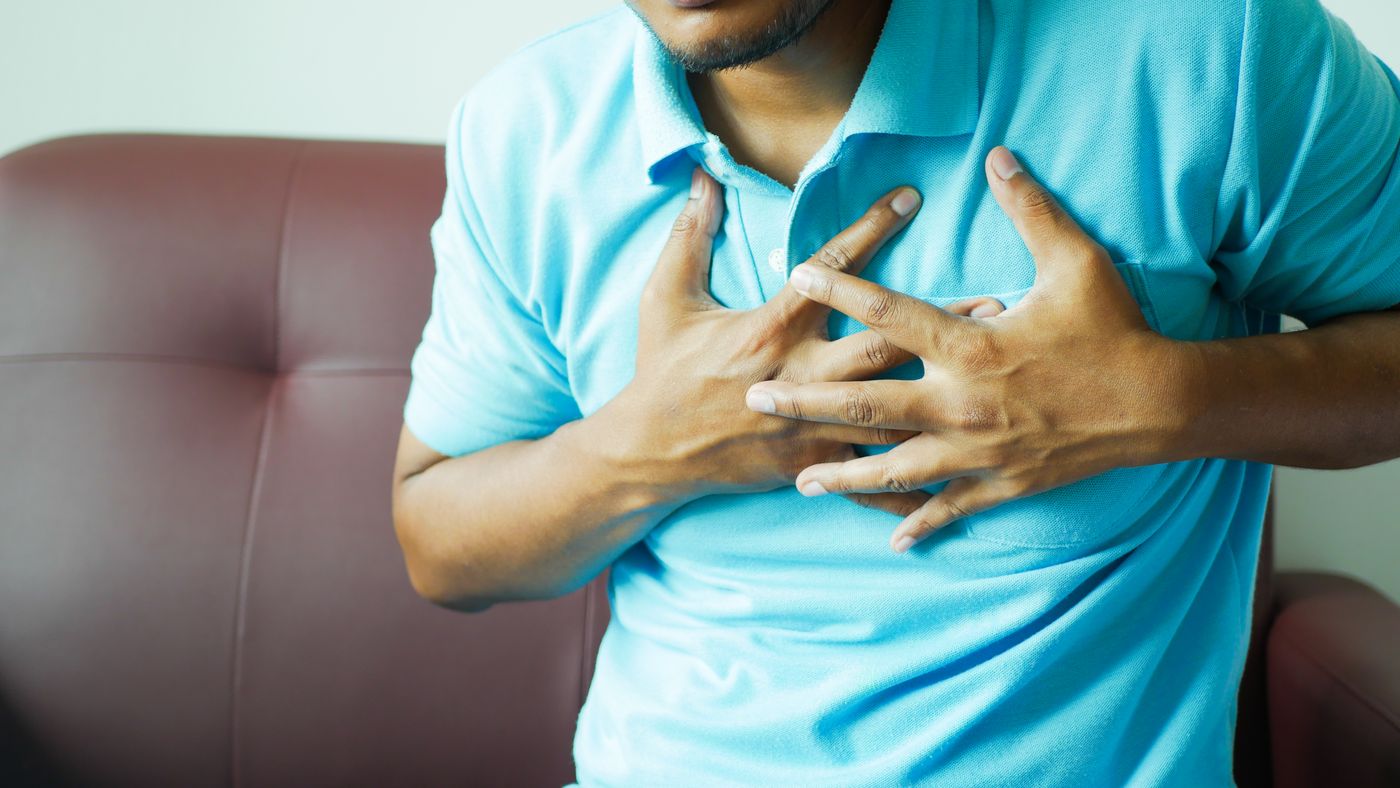
Costochondritis is pain and tenderness where the ribs join the breastbone; Tietze syndrome is the rarer form with visible swelling of the joint. Both sit inside a wider group of chest wall pain conditions. We searched PubMed for studies of pulsed electromagnetic field (PEMF) technology in these conditions and found one small trial, in women with osteoporosis and sternocostal joint pain, that gave PEMF together with manual therapy and had no sham control. No sham-controlled PEMF trial was found. This is an evidence-gap brief: it says what has been tested instead, what the PEMF laboratory work does and does not show, and why chest pain belongs with a physician first.
How big the problem is
No official US figure for costochondritis or chest wall pain was found from CDC, NCHS or NIH. The nearest official number covers all chest pain: in the National Center for Health Statistics' 2022 National Hospital Ambulatory Medical Care Survey (Table 9), chest pain and related symptoms were the principal reason for about 8.4 million emergency department visits, 5.4% of all 155.4 million visits, second only to abdominal pain. Most of those visits are not costochondritis, and the share that is cannot be read from this table.
What the trials measured
The PEMF search: one trial, no sham control
On 30 October 2026 we searched PubMed through the NCBI E-utilities for pulsed electromagnetic field, PEMF, magnetotherapy, magnetic field therapy or electromagnetic therapy combined with costochondritis, Tietze, costosternal, chest wall pain, chest wall syndrome, xiphodynia or slipping rib. Those searches returned MRI contrast research, transcranial magnetic stimulation for language mapping, cancer nanoparticle work and one case of chest wall reconstruction, and a wider search for PEMF with sternotomy, thoracotomy, rib fracture, sternum or chest wall found no patient study. They missed one trial, indexed under sternocostal joint pain and found on a later check (November 2026). It is described below. It did not use a sham device, and no sham-controlled PEMF trial in these conditions was found.
Two-group trial, 80 perimenopausal women with osteoporosis and sternocostal joint pain, 40 per group (Li et al., Alternative Therapies in Health and Medicine, 2023). The abstract says patients were assigned to the groups; it does not say they were randomized. The treatment group had low-frequency PEMF plus Traditional Chinese Medicine kneading manipulation; the control group took oral aceclofenac (an anti-inflammatory drug) with calcium carbonate and vitamin D3. Pain scores (NRS) differed between the groups at 3 days and at 1, 3 and 6 months after treatment (P < .05), and femoral neck bone density differed at 6 months (P = .016). There was no sham arm, PEMF was never given alone, and the comparison was a drug regimen, not a placebo. (PubMed 35180097)
What has been tested in costochondritis and Tietze syndrome (none of it PEMF)
Pragmatic randomized trial, 40 patients with Tietze syndrome, 20 per group (Elsayed et al., Journal of Clinical Pharmacy and Therapeutics, 2022). One group had 3 weeks of tapering oral prednisolone plus anti-inflammatory drugs (NSAIDs); the other had NSAIDs alone. Mean pain scores fell more in the steroid group at 1, 2 and 3 weeks (46.8% vs. 17.7%, 56.3% vs. 35.8% and 65.4% vs. 46.7%; p < 0.001 each), and a 25.8% difference (95% CI 13.2–38.8) remained at a median of 6.5 months. Joint swelling clearly improved in only 2 of 20 steroid patients and 1 of 20 NSAID patients (p = 0.393). There was no placebo arm, and this is a drug trial, not PEMF evidence. (PubMed 36443282)
Retrospective single-center series, 28 patients with Tietze syndrome (Yıldız et al., Turkish Journal of Thoracic and Cardiovascular Surgery, 2021). Painful joints were injected with a steroid (triamcinolone) and a local anesthetic (prilocaine). The authors report that 75% of patients had more than a 70% drop in pain after the injection. There was no control group. (PubMed 34104518)
Evidence review for family physicians (Mott et al., American Family Physician, 2021). The review states that high-quality evidence is lacking. It lists heat, oral or topical NSAIDs, lidocaine patches and capsaicin cream as first-line therapy, and acupuncture, physical therapy and corticosteroid injections for stubborn cases, all at the lowest evidence grade (C: usual practice, expert opinion or case series). Most patients have complete resolution in a few weeks. PEMF is not among the options it lists. The review also warns that a notable portion of patients with chest wall tenderness may also have an acute heart attack. (PubMed 34264599; full text at aafp.org)
Emergency medicine evidence check on steroids for costochondritis (Gandhi and Costello, Emergency Medicine Journal, 2012). The search found no papers, and the bottom line was that further research is needed. (PubMed 22787240)
Review of Tietze syndrome (Rokicki et al., Kardiochirurgia i Torakochirurgia Polska, 2018). The authors describe Tietze syndrome as a benign, self-limiting condition of the rib-breastbone joints, diagnosed by examination, inflammatory markers and imaging after heart, lung and pleural causes are excluded, and usually managed conservatively, with surgery for resistant cases. (PubMed 30310397)
Where the evidence stops
Laboratory study, embryonic chick sternal cartilage in culture (Liu et al., Osteoarthritis and Cartilage, 1996). Breastbone cartilage from 16-day-old chick embryos was exposed to PEMF for 3 hours a day for 48 hours. PEMF slowed both the breakdown and the making of cartilage proteoglycans and kept the tissue's structure intact, without changing the molecules themselves. This is tissue in a dish, not a patient study. (PubMed 8731397)
Follow-up laboratory study by the same team (Liu et al., Biochimica et Biophysica Acta, 1997). Chick sternal cartilage exposed to a 15 Hz, 1.25 gauss PEMF for 3 hours a day for 2 days kept more of its matrix; cell growth was unchanged. Again a culture model, with no pain outcome. (PubMed 9305803)
Case report, one patient with sternal pain after trauma (Aguiar et al., Cureus, 2025). Bipolar pulsed radiofrequency aimed at the xiphoid process was followed by lasting pain relief. Pulsed radiofrequency is a needle-delivered procedure, not PEMF, and this is a single case. (PubMed 40656274)
- Only one human PEMF study was found in this area, and it does not test PEMF on its own. There is no sham-controlled trial, no uncontrolled series and no case report.
- That one trial (Li et al., 2023) gave PEMF together with kneading manipulation, so PEMF's own contribution cannot be separated. Its control group took a drug regimen, not a sham device, and the abstract does not say the groups were randomized. It is a single small trial, and its patients were perimenopausal women with osteoporosis and sternocostal joint pain, not a general costochondritis or Tietze population.
- The PEMF work on breastbone cartilage was done on chick embryo tissue in culture over 2 days. It measured cartilage chemistry, not pain, and has not been tested in patients.
- Even the standard treatments rest on thin evidence: one 40-patient steroid trial without placebo, one uncontrolled injection series, and a review that grades every option C.
- Costochondritis usually settles within weeks with simple care, so any uncontrolled before-and-after result would be hard to tell apart from natural recovery.
- Chest pain studies often involve pulsed radiofrequency, radiofrequency ablation, cryoablation, nerve blocks, injections, TENS, laser, shockwave, acupuncture or transcranial magnetic stimulation. These are different treatments, and their results are not PEMF evidence. None is cited here as such.
- Results from PEMF trials in other conditions, such as knee osteoarthritis, cannot be carried over to the chest wall.
What to ask when you evaluate a clinic model
- Does any claim about chest or rib pain cite a sham-controlled PEMF study in costochondritis or chest wall pain? None was found in PubMed; the one trial found combined PEMF with manipulation and had no sham arm. Ask the seller to show one.
- How does the model make sure every patient with chest pain has had heart, lung and other serious causes ruled out by a physician first?
- Is a radiofrequency, nerve-block, laser or magnetic brain-stimulation result, or a lab study on chick cartilage, being presented as PEMF evidence for patients?
- Given that costochondritis often resolves in a few weeks on its own, how would the clinic tell any change from natural recovery?
- Can the seller show you this research, with its gap, the way it is written here?
Questions buyers ask
Is there a PEMF trial in costochondritis or Tietze syndrome?
Not a sham-controlled one. Our PubMed search found one small trial in women with osteoporosis and sternocostal joint pain, where PEMF was given together with kneading manipulation and compared with anti-inflammatory drugs, so PEMF's own effect cannot be separated. The other PEMF research on breastbone cartilage was done on chick embryo tissue in the lab.
How common is chest pain as a reason for emergency visits?
In the 2022 NCHS emergency department survey, chest pain was the second most common reason for a visit. That covers all chest pain; there is no official US count for costochondritis.
Do pulsed radiofrequency, nerve-block or acupuncture studies count as PEMF evidence?
No. They are different treatments, and their chest wall studies are not PEMF evidence.
The regulatory side
FDA decisions on PEMF devices are specific to one device, one model and one indication, and they do not carry over to other devices. No FDA decision we know of covers PEMF for costochondritis or chest wall pain. Before you rely on any device for a clinic, look up its own FDA record. Our guide PEMF and the FDA explains how, and what the technology's record since 1979 does and does not cover.
Read the research yourself
Every study above links to its PubMed abstract. More published PEMF studies, each checked against the original paper: pemf-research.com. Compare with our musculoskeletal pain and fibromyalgia briefs.
About the publisher
These guides are written by PainFree. PainFree has run pain-relief clinics in Israel for 25 years, and more than 70 operate today; its Israeli site, in Hebrew, is painfree.org.il. We would want any buyer to read the evidence behind a clinic model this carefully, ours included.
Related research on this site
This article is general information for prospective business owners. It is not legal, financial or medical advice. We do not make earnings claims, and this page is not an offer to sell a franchise or a business opportunity. Study results describe the trials cited, not any particular device or clinic. Equipment supplied to US clinics will meet the applicable US regulatory requirements.