
Evidence brief for clinic investors
PEMF for shoulder osteoarthritis: what the research shows
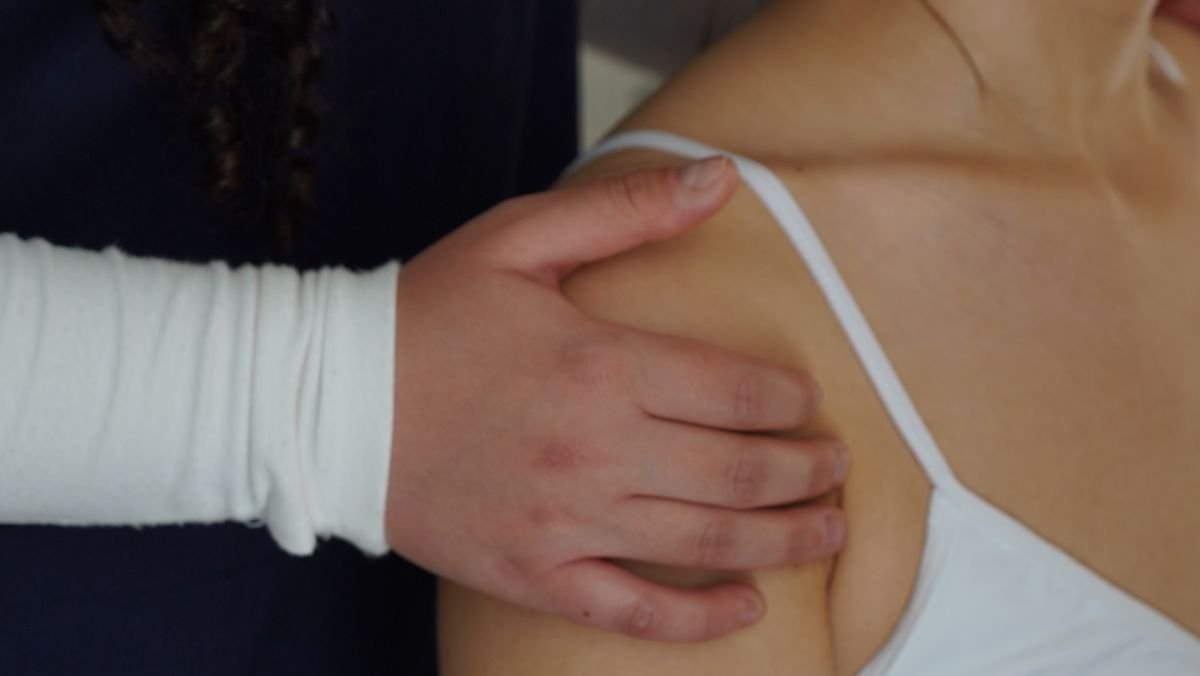
Shoulder osteoarthritis is wear of the cartilage in the ball-and-socket joint between the upper arm bone and the shoulder blade, the glenohumeral joint. It causes deep, aching pain and a slow loss of rotation, and it is usually seen in people over 60. Pulsed electromagnetic field (PEMF) technology is sometimes offered for it. We found no PEMF trial in glenohumeral osteoarthritis. This is an evidence-gap brief: it shows what the shoulder arthritis trials test, and the nearest PEMF trials, each labelled by the condition it actually studied.
What the trials measured
The search: no PEMF trial in shoulder osteoarthritis
On 18 November 2026 we searched PubMed for shoulder osteoarthritis, glenohumeral osteoarthritis, glenohumeral arthritis, shoulder arthritis and omarthrosis combined with pulsed electromagnetic, PEMF, magnetotherapy, magnetic field therapy and electromagnetic field. The search returned 18 records. None was a PEMF trial in glenohumeral osteoarthritis. The few magnetic field trials among them studied shoulder periarthritis, a loose older label for painful, stiff shoulders, not arthritis of the joint itself; the rest were imaging, nerve stimulation, other conditions and a hand osteoarthritis trial. A wider search that left out the imaging records found shockwave, laser and impingement studies, and no shoulder osteoarthritis PEMF study either.
The reference reviews: shoulder arthritis care is thinly tested
Cochrane review of shoulder replacement for osteoarthritis and rotator cuff tear arthropathy, 20 trials, 1,083 participants (Craig et al., Cochrane Database of Systematic Reviews, 2020). The review found no trial comparing shoulder replacement with any other surgery or with any non-surgical treatment. In osteoarthritis, low-quality evidence from two trials suggested a small but clinically uncertain advantage of total shoulder replacement over replacing only the ball: pain 1.49 points lower on a 0 to 10 scale (0.1 to 2.88 lower) and function 10.57 points higher on a 0 to 100 scale at two years. All studies were at unclear or high risk of bias in at least two domains. (PubMed 32315453)
Systematic review of joint injections for glenohumeral osteoarthritis, 1,125 patients, at least six months of follow-up (Migliorini et al., European Journal of Medical Research, 2025). Hyaluronic acid and corticosteroids were the most studied. 3.2% of reported procedures were followed by surgery and 7.2% by a complication. The authors describe hyaluronic acid's benefit as consistent but modest, and the evidence for platelet-rich plasma, bone marrow concentrate and stem cells as limited. (PubMed 41204311)
Injections: a large null trial and a strong placebo response
Double-blind randomized multicentre trial, 300 patients with glenohumeral osteoarthritis, three weekly injections of hyaluronic acid vs saline (Kwon et al., Journal of Shoulder and Elbow Surgery, 2013). Result: null on the main analysis. At 26 weeks pain improved by 19.88 mm with hyaluronic acid and 16.29 mm with saline on a 100 mm scale; high responders were 40.8% vs 34.9%. Neither difference was significant (P = .1121 and P = .0690). A subset without other shoulder problems reached significance, which the authors say needs confirming. (PubMed 23333168)
Systematic review and meta-analysis of hyaluronic acid for glenohumeral osteoarthritis (Zhang et al., Journal of Shoulder and Elbow Surgery, 2019). Pain fell by 26.2 mm at 3 months (95% CI 22.0 to 30.3) and 29.5 mm at 6 months (95% CI 25.5 to 33.4) in the injected arms. Similar improvements in the control groups led the authors to suggest a significant placebo effect with shoulder injections. (PubMed 30502030)
Double-blind randomized trial, 70 patients with chronic glenohumeral osteoarthritis, one ultrasound-guided injection of platelet-rich plasma vs hyaluronic acid (Kirschner et al., Clinical Journal of Sport Medicine, 2022). Two active treatments, no placebo. No between-group difference in SPADI, ASES or pain scores at any point up to 12 months (P > 0.05). Both groups improved from baseline. (PubMed 35316820)
Exercise and manual therapy
Randomized trial, 40 patients with glenohumeral osteoarthritis (30 completed), manual therapy plus exercise vs exercise alone, three times a week for 5 weeks (Gayretli Atan et al., Journal of Hand Therapy, 2026). Both groups improved in pain, range of motion, strength, function and quality of life (p < 0.05). Between groups, rotation range, strength, DASH, ASES and the physical quality-of-life score favoured the manual therapy group, with small effect sizes (0.14 to 0.25). Manual therapy, not PEMF. (PubMed 41986176)
The nearest PEMF trials: other joints, other shoulder conditions
Cochrane review of electromagnetic fields for osteoarthritis, 9 randomized trials, 636 participants (Li et al., Cochrane Database of Systematic Reviews, 2013). Knee and neck trials, no shoulder trial. Pain relief was 15.10 points more than placebo on a 0 to 100 scale (95% CI 9.08 to 21.13) after 4 to 26 weeks. Physical function (MD 4.55; 95% CI −2.23 to 11.32) and quality of life did not differ significantly. No serious adverse events. (PubMed 24338431)
Meta-analysis of 12 sham-controlled trials of PEMF in osteoarthritis: 10 knee, 2 cervical spine, 1 hand (Wu et al., BMJ Open, 2018). No shoulder trial. Knee pain improved more than sham (SMD −0.54; 95% CI −1.04 to −0.04; p = 0.03), and so did hand pain in one trial. In cervical osteoarthritis there was no significant effect on pain or function. The authors caution that the hand and cervical results rest on very few trials. (PubMed 30552258)
Triple-blind randomized trial, 47 outpatients with shoulder periarthritis, magnetotherapy added to hot packs, stretching and pulley exercises, up to 12 weeks (Leclaire and Bourgouin, Archives of Physical Medicine and Rehabilitation, 1991). Periarthritis, not osteoarthritis. Result: null. Pain scale scores fell from 71 to 21 in both groups. Range of motion gained 109° with magnetotherapy and 122° without, and the handicap score ended at 24 vs 17; neither difference was significant. (PubMed 2009043)
Randomized three-arm trial, 60 patients with shoulder periarthritis, a music-modulated field vs a 100 Hz low-frequency field vs a simulated field, 15 daily 30-minute sessions (Battisti et al., Clinica Terapeutica, 2007, in Italian). Periarthritis, not osteoarthritis. The authors report significant improvement in pain and functional limitation in both active groups, stable at 30 days, and none with the simulated field. The abstract gives no numbers. (PubMed 18062345) An earlier report from the same group, 150 patients with cervical spondylosis or shoulder periarthritis, says only that the two active fields gave equivalent effects. (PubMed 12490031)
Meta-analysis of 4 randomized trials of PEMF in shoulder impingement and rotator cuff tendinopathy, 252 participants (Wang et al., 2025). Tendons and the space under the shoulder roof, not the joint cartilage. Short-term pain (SMD −0.34; p = 0.04) and function favoured PEMF; long-term pain did not differ (p = 0.07). Older reviews of the same condition were negative; our shoulder impingement and rotator cuff brief sets out both sides. (PubMed 40388433)
Randomized trial at five US orthopedic clinics, 120 patients with joint or soft-tissue pain (91 analysed), a home PEMF device vs standard care for 14 days (Hackel et al., Pain and Therapy, 2025). Mixed joints, mostly knee; about 15% shoulder by the full text; no shoulder or osteoarthritis subgroup result. Not blinded, no sham, two authors linked to the manufacturer. Pain fell 1.8 points with PEMF and 0.46 points with standard care (p < 0.0001), and pain-medicine use fell from 40% to 18% vs 40% to 35%. (PubMed 39928254)
For the joints where PEMF osteoarthritis trials exist, see our knee osteoarthritis, hip osteoarthritis and hand and thumb osteoarthritis briefs.
Where the evidence stops
- Direct PEMF evidence in glenohumeral osteoarthritis is zero: no sham-controlled trial, no comparative trial and no case series turned up in our search, and neither PEMF osteoarthritis review includes a shoulder trial.
- The PEMF osteoarthritis benefit was measured mostly in the knee, a weight-bearing joint. Cervical osteoarthritis, the other non-knee joint pooled, showed no effect, so the knee result cannot be assumed to travel to another joint.
- Physical function was the weak outcome in the Cochrane osteoarthritis review, and loss of rotation is a central problem in shoulder arthritis.
- The two magnetic field trials closest in anatomy studied shoulder periarthritis, not osteoarthritis. The triple-blind one was null; the positive one is in Italian, gives no numbers in its abstract, and came from the developers of the field it tested.
- Shoulder impingement and rotator cuff results concern tendons, and their evidence is split. The multi-joint US trial was unblinded, sham-free, 14 days long and manufacturer-linked.
- The established shoulder arthritis treatments are thinly proven too: the largest injection trial was null against saline, injection reviews report a large placebo response, and no trial has compared shoulder replacement with non-surgical care.
What to ask when you evaluate a clinic model
- Does any claim about shoulder arthritis cite a PEMF trial in glenohumeral osteoarthritis patients? Ask for it by name. We found none.
- Is a knee osteoarthritis or shoulder tendon result being presented as evidence for the shoulder joint?
- How will the clinic confirm the diagnosis, by a physician and imaging, so that rotator cuff tears, frozen shoulder and pain referred from the neck are told apart from osteoarthritis?
- Will these patients be seen alongside, never instead of, the exercise, injection and surgical referral the trials describe?
- How will pain, rotation range and shoulder function be recorded for every patient, not only those who do well?
- Can the seller show you this research, with its gap, the way it is written here?
Questions buyers ask
Is there a PEMF trial in shoulder osteoarthritis?
We found none in PubMed, and none appears in the two PEMF osteoarthritis reviews we read.
What does the shoulder arthritis research test instead?
Hyaluronic acid, corticosteroid and platelet-rich plasma injections, exercise and manual therapy, and the different types of shoulder replacement.
Do knee osteoarthritis PEMF trials apply to the shoulder?
Not directly. They studied a different, weight-bearing joint, and the one other joint pooled with them, the neck, showed no effect.
What has the FDA decided about PEMF technology?
The FDA record of PEMF starts in 1979, when a PEMF bone growth stimulator received premarket approval (PMA P790002) for non-union fractures. Pain and swelling after surgery have their own FDA classification regulation, 21 CFR 890.5290(b), nonthermal shortwave therapy: a prescription device that applies pulsed electromagnetic energy and is used adjunctively for postoperative pain and soft-tissue edema, reviewed through 510(k). Neither indication is shoulder osteoarthritis. Each FDA decision covers one device, one model and one indication, and it does not carry over to other devices or uses. Our guide PEMF and the FDA explains how to look up a device's own record.
Read the research yourself
Every study above links to its PubMed abstract. More published PEMF studies, each checked against the original paper: pemf-research.com.
About the publisher
These guides are written by PainFree. PainFree has run pain-relief clinics in Israel for 25 years, and more than 70 operate today; its Israeli site, in Hebrew, is painfree.org.il. We would want any buyer to read the evidence behind a clinic model this carefully, ours included.
Related research on this site
This article is general information for prospective business owners. It is not legal, financial or medical advice. We do not make earnings claims, and this page is not an offer to sell a franchise or a business opportunity. Study results describe the trials cited, not any particular device or clinic. Equipment supplied to US clinics will meet the applicable US regulatory requirements.