
Evidence brief for clinic investors
PEMF for hand and thumb osteoarthritis: what the research shows
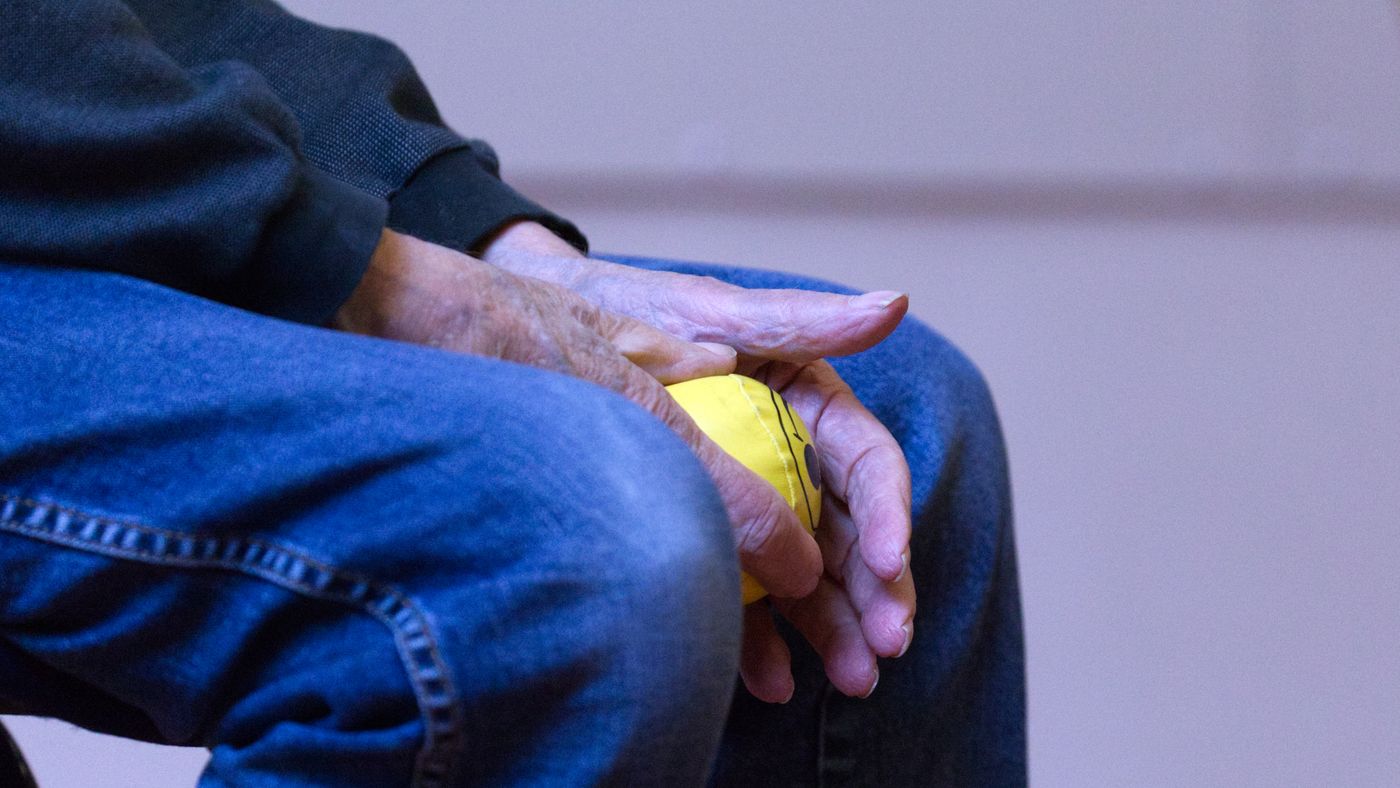
The hand, and the joint at the base of the thumb in particular, is one of the places osteoarthritis strikes most often. The research on pulsed electromagnetic field (PEMF) technology here is thin: three small sham-controlled trials, two of which missed their main outcome, and guidelines that do not recommend it. If you are weighing a clinic business built on this technology, this brief shows what was measured and where the evidence stops.
How big the problem is
About 33 million US adults have osteoarthritis, and it usually affects the hands, hips, back or knees (CDC, Osteoarthritis page). The CDC gives no separate figure for the hand or the thumb base.
What the trials measured
A PubMed search on 31 October 2026, combining PEMF, pulsed electromagnetic fields, magnetotherapy and magnetic field therapy with hand osteoarthritis, the thumb, the carpometacarpal joint, rhizarthrosis and the finger joints, found three randomized trials that compared PEMF with a sham. They are listed below, largest effect first, with the two that missed their main outcome after it.
Randomized single-blind sham-controlled trial, 50 patients with hand osteoarthritis (Kanat et al., Complementary Therapies in Medicine, 2013, Turkey). Both groups did the same active range-of-motion and strengthening exercises for 10 days; one group added 20 minutes a day of magnetotherapy (25 Hz), the other a sham. Compared with sham, the magnetotherapy group improved more in pain at rest and in motion (p<0.001), joint stiffness (p<0.001), a hand osteoarthritis function index (p<0.001) and several quality-of-life scales. The authors called it a pilot trial. (PubMed 24280467)
Randomized double-blind sham-controlled trial, 61 adults with thumb-base (carpometacarpal) osteoarthritis (Durtschi et al., Stanford University, Hand, 2026). Participants used a PEMF device or an identical sham at home for 8 hours each night for 4 weeks; 51 completed the 4-week visit. Both groups improved in pain and hand function, but on the primary outcome, the change in average daily pain at 4 weeks, there was no significant difference between groups. At 6 weeks, two weeks after use stopped, the reduction in pain was significantly greater with PEMF (p=0.02). One author disclosed stock or options in orthopedic companies. (PubMed 41015912)
Randomized double-blind placebo-controlled trial, 19 women with erosive hand osteoarthritis (Boada-Pladellorens et al., Rehabilitación, 2021, in Spanish). Fifteen 20-minute sessions of magnetotherapy against placebo. The share of patients with pain under control was higher with magnetotherapy, but the difference was not significant (77.8% vs 33.3%, p=0.1 after treatment; 83.3% vs 33.3%, p=0.2 at 3 months), and neither was the change in pain score (regression coefficient −2.1, 95% CI −5.7 to 1.5). Function, stiffness and quality of life did not differ; grip strength was higher in the magnetotherapy group (p<0.01 and p<0.04 for the two hands). No adverse effects were reported. (PubMed 33066980)
What the reviews found
Meta-analysis, 12 sham-controlled trials in osteoarthritis (Wu et al., BMJ Open, 2018): 10 knee, 2 neck, 1 hand. In hand osteoarthritis, pain (standardized mean difference −2.85; 95% CI −3.65 to −2.04) and function (SMD −1.49; 95% CI −2.12 to −0.86) favored PEMF over sham. The hand result is a single trial, the 50-patient Kanat 2013 study above, and the authors wrote that the conclusion for the hand should be read with caution because so few studies exist. (PubMed 30552258)
Meta-analysis, 11 randomized trials since 2009, 614 patients (Tong et al., Pain Research and Management, 2022): 10 knee, 1 hand. Pooled across all joints, PEMF did better than control on pain (SMD 0.71; 95% CI 0.08 to 1.34), stiffness and function. With one hand trial in the pool, this is mostly a knee result, and the authors called for research in other joints. (PubMed 35586276)
Systematic review of 10 systematic reviews (Markovic et al., Medical University of Vienna, 2022). All 10 covered the knee; only 2 reported on the hand. PEMF appeared to relieve pain and improve function in the short term, but most reviews were of low or medium quality, treatment schemes varied widely and samples were small, and the authors concluded that no sufficient proof of efficacy can be derived. (PubMed 35362792)
For the joints where most of these trials were run, see our briefs on knee osteoarthritis and, for a joint with no sham-controlled trial at all, hip osteoarthritis.
What the hand guidelines say
French Society of Rheumatology and French Society of Physical and Rehabilitation Medicine, recommendations for hand osteoarthritis (Joint Bone Spine, 2026). Based on a systematic review to November 2023 and a 25-member expert group, the recommendations support exercise, ergonomic advice, assistive devices, orthoses and heat, and advise against electromagnetic waves, laser therapy, acupuncture and kinesiotaping. (PubMed 41183591)
American College of Rheumatology / Arthritis Foundation guideline for hand, hip and knee osteoarthritis (2019). Hand orthoses are strongly recommended for thumb-base osteoarthritis; kinesiotaping, thermal modalities and paraffin are conditionally recommended. We searched the full text: PEMF, electromagnetic and magnetic therapy are not mentioned. (PubMed 31908163)
EULAR recommendations for the management of hand osteoarthritis, 2018 update. The non-drug recommendations in the abstract cover education, assistive devices, exercise and orthoses. Electromagnetic therapy is not among them. We could read the abstract only. (PubMed 30154087)
Where the evidence stops
- Three sham-controlled trials, with 50, 61 and 19 patients. Two of the three, including the largest and most recent, did not reach significance on their main outcome.
- The one clearly positive trial was single-blind, lasted 10 days, called itself a pilot and added the treatment to an exercise program. It has not been repeated, and the "hand osteoarthritis" figure in the 2018 meta-analysis is that one trial.
- The thumb-base trial used a device worn at home for 8 hours a night. It says little about short in-clinic sessions, and the in-clinic trials say little about the thumb base specifically.
- Follow-up was short: 10 days, 6 weeks and 3 months.
- The 2026 French recommendations advise against electromagnetic waves for hand osteoarthritis, and the ACR guideline does not mention PEMF at all.
- A trial often cited for hand osteoarthritis and magnetotherapy (Horváth et al., 2012, 63 patients) gave magnetotherapy to every group, including the control, and tested thermal water baths. It tells you nothing about the magnetic treatment itself. (PubMed 22144722)
- Trials used different frequencies, session lengths and devices. A result belongs to the protocol that was tested, not to every device sold under the PEMF label.
What to ask when you evaluate a clinic model
- When the clinic talks about hand or thumb pain, does it say that two of the three sham-controlled trials missed their main outcome, and that hand guidelines do not recommend PEMF?
- Which protocols will the clinic use, and which published trials, in which joints, are they based on?
- How will outcomes be measured and recorded for every patient, so the clinic knows what it delivers in the hand specifically?
- How are patients screened for contraindications before the first session?
- Can the seller show you this research, with its nulls, the way it is written here?
The regulatory side
FDA decisions on PEMF devices are specific to one device, one model and one indication, and they do not carry over to other devices. Before you rely on any device for a clinic, look up its own FDA record. Our guide PEMF and the FDA explains how, and what the technology's record since 1979 does and does not cover.
Read the research yourself
Every study above links to its PubMed abstract. More published PEMF studies, each checked against the original paper: pemf-research.com.
About the publisher
These guides are written by PainFree. PainFree has run pain-relief clinics in Israel for 25 years, and more than 70 operate today; its Israeli site, in Hebrew, is painfree.org.il. We would want any buyer to read the evidence behind a clinic model this carefully, ours included.
Related research on this site
This article is general information for prospective business owners. It is not legal, financial or medical advice. We do not make earnings claims, and this page is not an offer to sell a franchise or a business opportunity. Study results describe the trials cited, not any particular device or clinic. Equipment supplied to US clinics will meet the applicable US regulatory requirements.