
Evidence brief for clinic investors
PEMF for chemotherapy-induced peripheral neuropathy: what the research shows
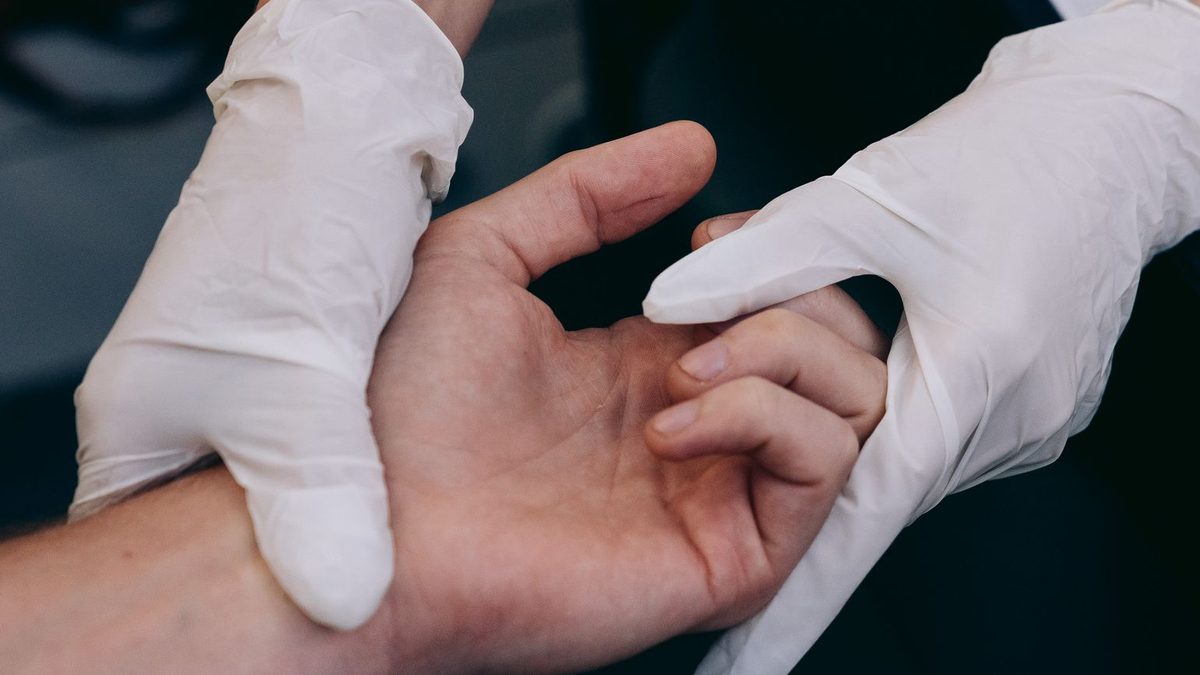
Chemotherapy-induced peripheral neuropathy (CIPN) is nerve damage caused by some cancer drugs, most often taxanes and platinum agents. It shows up as numbness, tingling and burning pain in the hands and feet, and in many survivors it lasts long after treatment ends. Magnetic field therapy has been tested for these symptoms in two randomized trials. Neither was positive on pain. This brief is about symptom research only: nothing here is a treatment for cancer, and none of these trials tested any effect on cancer.
What the trials measured
The reference point: the ASCO guideline
American Society of Clinical Oncology guideline update on prevention and management of CIPN in adult cancer survivors (Loprinzi et al., Journal of Clinical Oncology, 2020). The panel reviewed 28 prevention trials and 14 trials of treatment for established CIPN. No agent is recommended for prevention. Duloxetine is the only agent with appropriate evidence for established painful CIPN, and the guideline states that the amount of benefit from it is limited. (PubMed 32663120)
The two randomized magnetic field trials in CIPN
Double-blind randomized placebo-controlled trial, 44 patients with CIPN, a single cancer rehabilitation center in Bad Wildungen, Germany (Rick et al., Bioelectromagnetics, 2017). Low-frequency magnetic field (4 to 12 Hz, from a rotating magnetic disc), twice daily on the palms and soles. Result: null on pain. 21 patients received the magnetic field and 23 placebo; 17 and 14 completed. At 3 months the primary endpoint, nerve conduction velocity, improved (P = 0.015), mainly in sensory conduction of the peroneal nerve. Patient-reported neurotoxicity on the CTCAE score improved (P = 0.04). Neuropathic pain on the PainDetect score did not differ (P = 0.11). The paper calls itself phase III; PubMed indexes it as phase II. (PubMed 27657350)
Randomized double-blind sham-controlled multicenter phase II trial, 28 patients with CIPN lasting at least 12 weeks after chemotherapy and pain of 4 or more out of 10, National Cancer Center Hospital, Japan (Kubo et al., Cancers, 2026, SMILE study). A portable alternating magnetic field, twice daily for 12 weeks. Result: null on the primary endpoint. Pain on day 85 fell by 1.74 points with the active device and 1.45 with sham (one-sided p = 0.36). Motor scores on the CIPN20 questionnaire improved more with the active device on day 29 (p = 0.035) and day 57 (p < 0.01). No treatment-related adverse events in the active group. One author holds stock options in the device maker. (PubMed 41749832)
Before the trials: an uncontrolled pilot
Phase II pilot, 20 patients, no control group (Geiger et al., Bioelectromagnetics, 2015). The same low-frequency (4 to 12 Hz) magnetic field and the same rehabilitation center as the 2017 trial. After 3 to 4 weeks the authors report improvement in sensory ataxia, neuropathy and neuropathic pain, and an increase in nerve conduction velocity. Without a control group, these changes cannot be separated from natural recovery or placebo. (PubMed 25644670)
The reviews
Systematic review of non-invasive neuromodulation for established CIPN, 9 randomized and 9 quasi-experimental studies (Wang et al., European Journal of Oncology Nursing, 2022). Techniques included scrambler therapy, electrical stimulation, photobiomodulation, magnetic field therapy, ultrasound, neurofeedback and repetitive transcranial magnetic stimulation. They were generally safe and feasible. The efficacy of peripheral techniques was mostly unsatisfactory; central techniques looked more promising. The authors call the field still in its infancy. (PubMed 35461045)
Narrative review of transcranial and peripheral magnetic stimulation in CIPN, Medical College of Georgia (Wernecke et al., Cancers, 2025). Preliminary trials suggest improved patient-reported outcomes and faster nerve conduction. The authors call for sham-controlled trials with standardized techniques and outcome measures. A narrative review, not a pooled analysis. (PubMed 41300995)
Systematic review of therapeutic magnetic fields in people with cancer, 3,841 records screened (Colonna and Casacci, Cureus, 2026). Only one randomized trial specifically measured oncological safety, and it found no disease progression, reduced survival or impaired treatment response linked to magnetic field exposure. Supportive-care studies, mostly in CIPN, reported improvements, with common methodological limitations. The authors state that data on oncological safety remain limited. (PubMed 41728579)
CIPN is one kind of peripheral neuropathy. For diabetic neuropathy and nerve pain more broadly, including the larger sham-controlled trials and the pooled analysis that separates spinal from peripheral nerve pain, see our neuropathic pain evidence brief.
Where the evidence stops
- Neither randomized trial in CIPN was positive on pain. The signals are on nerve conduction, patient-reported neurotoxicity and motor scores.
- Both trials were small: 44 and 28 patients. In the German trial, 13 of 44 did not complete treatment.
- Both tested low-frequency magnetic fields from a rotating magnet and a portable alternating-field device, not the coil-based pulsed devices used in most other PEMF trials. A result belongs to the field that was tested.
- The German pilot and trial came from one rehabilitation center; the Japanese trial had a device-maker shareholder among its authors.
- No trial tested prevention of CIPN during chemotherapy, and the ASCO guideline recommends nothing for prevention.
- Data on safety in people with active cancer are limited. These trials enrolled people with established neuropathy and do not answer questions about cancer itself.
- Transcranial magnetic stimulation, scrambler therapy and electrical stimulation appear next to magnetic field therapy in the reviews. Their results are not PEMF results.
What to ask when you evaluate a clinic model
- Does any claim about chemotherapy-related neuropathy cite a trial in CIPN patients? Ask which one, and whether it was positive on pain. The two we found were not.
- Is any copy, anywhere, suggesting an effect on cancer? It should not; no trial here tested one.
- How will the clinic coordinate with the patient's oncologist before the first session, especially for anyone still in treatment?
- Will these patients be seen alongside, never instead of, the care the ASCO guideline describes?
- How will numbness, tingling, pain and hand and foot function be recorded for every patient, not only those who do well?
- Can the seller show you this research, with its limits, the way it is written here?
Questions buyers ask
Has magnetic field therapy been tested in chemotherapy-induced neuropathy?
Yes, in two small randomized trials and one uncontrolled pilot. The study section above gives their results, including the null results on pain.
Is this a cancer treatment?
No. The trials studied nerve symptoms after chemotherapy. None measured any effect on the cancer.
Do diabetic neuropathy trials apply to CIPN?
Not directly. The cause of the nerve damage is different, and the trials enrolled different patients. Our neuropathic pain brief covers them separately.
What has the FDA decided about PEMF technology?
The FDA record of PEMF starts in 1979, when a PEMF bone growth stimulator received premarket approval (PMA P790002) for non-union fractures. Pain and swelling after surgery have their own FDA classification regulation, 21 CFR 890.5290(b), nonthermal shortwave therapy: a prescription device that applies pulsed electromagnetic energy and is used adjunctively for postoperative pain and soft-tissue edema, reviewed through 510(k). Neither indication is chemotherapy-induced neuropathy. Each FDA decision covers one device, one model and one indication, and it does not carry over to other devices or uses. Our guide PEMF and the FDA explains how to look up a device's own record.
Read the research yourself
Every study above links to its PubMed abstract. More published PEMF studies, each checked against the original paper: pemf-research.com.
About the publisher
These guides are written by PainFree. PainFree has run pain-relief clinics in Israel for 25 years, and more than 70 operate today; its Israeli site, in Hebrew, is painfree.org.il. We would want any buyer to read the evidence behind a clinic model this carefully, ours included.
Related research on this site
This article is general information for prospective business owners. It is not legal, financial or medical advice. We do not make earnings claims, and this page is not an offer to sell a franchise or a business opportunity. Study results describe the trials cited, not any particular device or clinic. Nothing on this page is a treatment for cancer or a substitute for oncology care. Equipment supplied to US clinics will meet the applicable US regulatory requirements.