
Evidence brief for clinic investors
Neck pain when turning the head: what the research shows
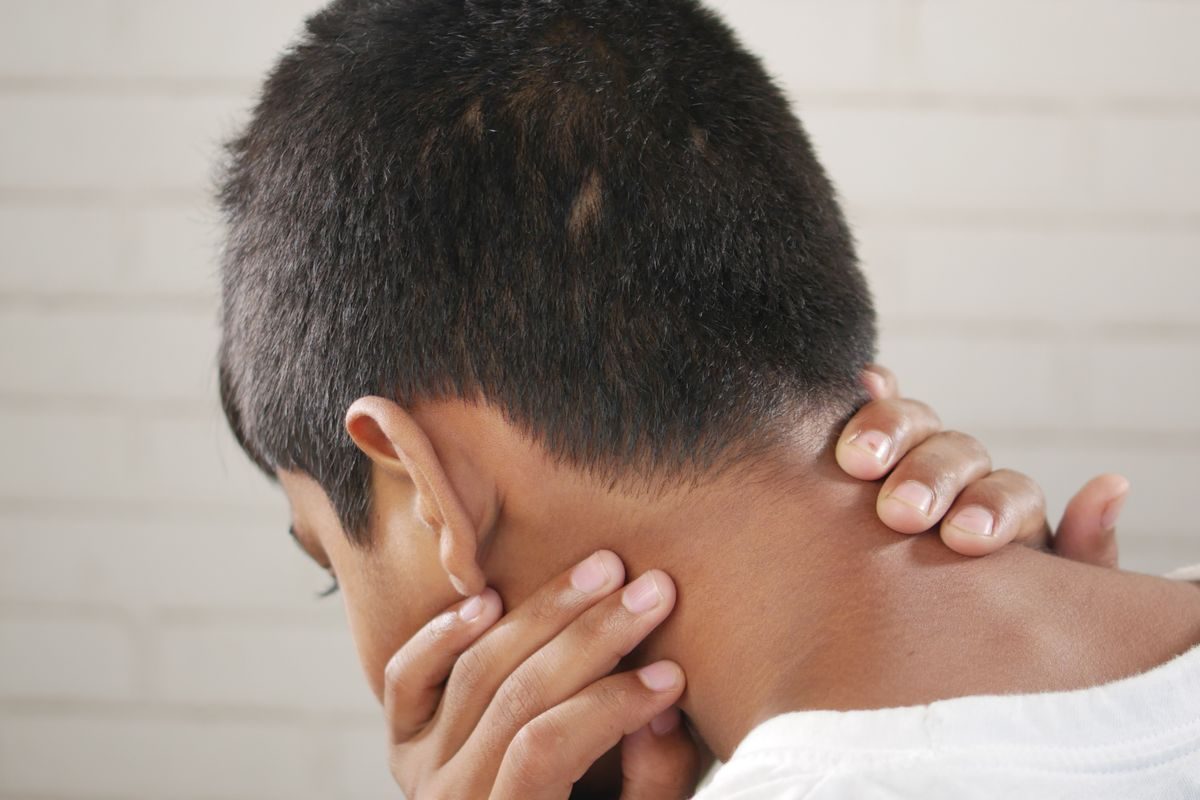
Glancing back while reversing a car, looking over a shoulder at someone calling, turning toward a second monitor: the head rotates and a catch of pain stops it short, usually on one side. Pain on rotation is one of the most common ways a neck complaint is described in a physical medicine practice. If you are looking at a clinic business, here is what published studies say about the structures that can produce it, the bedside tests clinicians use to sort them, what guidelines put first, what pulsed electromagnetic field (PEMF) trials did and did not measure, and which presentations belong with a physician.
How common is neck pain?
Very common, and most frequent in middle and older age. The global estimates below count neck pain in general; none of them counts pain on turning the head on its own.
Global Burden of Disease 2021 analysis of neck pain, 204 countries and territories (GBD 2021 Neck Pain Collaborators, Lancet Rheumatology, 2024). In 2020 neck pain affected an estimated 203 million people (95% UI 163 to 253 million), an age-standardised prevalence of 2,450 per 100,000. Prevalence was higher in females (2,890 per 100,000) than males (2,000), peaked between 45 and 74 years, and case numbers are projected to reach 269 million by 2050, driven mainly by population growth and ageing. (PubMed 38383088)
Do people with neck pain really turn less far?
Yes, on average, in every direction measured. But the amount of movement lost is only loosely tied to how much the neck hurts, so a range-of-motion number alone says little about pain.
Systematic review and meta-analysis, 27 studies, 2,366 participants (Stenneberg et al., Archives of Physical Medicine and Rehabilitation, 2017). People with neck pain had less active cervical range of motion than people of similar age without neck pain in all movement directions, with mean differences from −7.04° for right side-bending to −89.59° for total range. People after whiplash moved less than people with non-traumatic neck pain. No conclusive difference was found between acute and chronic complaints. (PubMed 27984030)
Systematic review and meta-analysis, 45 observational studies, 3,494 people (Soltanabadi et al., PLoS One, 2026). Active range of motion showed small to moderate negative correlations with pain and disability in every plane of motion (r = −0.21 to −0.34), stronger in acute and whiplash-related neck pain. Heterogeneity was substantial and the certainty of evidence very low. (PubMed 42497145)
What structures can make turning the head hurt?
Four come up most in the research: the facet joints, the muscles, age-related wear of the discs and joints (spondylosis), and a compressed nerve root. The studies below show each one can produce neck pain; none of them isolates pain on rotation as its own outcome.
The facet joints
Placebo-controlled diagnostic block study, 68 consecutive patients with neck pain for more than 3 months after whiplash (Lord et al., Spine, 1996). A joint was counted as the pain source only if two different local anesthetics each relieved the pain completely and a saline placebo did not. Overall, the prevalence of cervical facet (zygapophysial) joint pain was 60% (95% CI 46% to 73%). A selected, post-whiplash group referred to a specialist, so the figure does not describe neck pain in general. (PubMed 8855458)
Retrospective diagnostic accuracy study at a US interventional pain practice (Manchikanti et al., Pain Physician, 2020). With controlled comparative medial branch blocks, chronic cervical facet joint pain was diagnosed in 49.3% (95% CI 43.6% to 55.0%) of patients with chronic neck pain, with a false-positive rate of 25.6% for a single block. A single-center practice that selects patients for injections. (PubMed 33185369)
The muscles: the acute "wry neck"
Randomized double-blind placebo-controlled trial in two emergency departments, 30 adults with acute non-traumatic neck pain, the "wry neck" (Asha et al., Emergency Medicine Journal, 2015). The trial tested whether an anti-spasm drug, intramuscular benztropine, would ease pain and free up neck movement compared with saline. At 30 minutes pain differed by 0.6 points (95% CI −0.8 to 1.8; p = 0.40) and range of motion by very small, non-significant amounts, while side effects were more common with the drug. The authors note the confidence interval did not exclude a clinically important effect. It shows how little is known about a common, painful, movement-limiting presentation. (PubMed 25414475)
Wear and tear (cervical spondylosis): common on scans, also without pain
Cross-sectional MRI study, 1,211 healthy volunteers aged 20 to 70 with no symptoms (Nakashima et al., Spine, 2015). 87.6% had disc bulging, which rose with age; even in their 20s, 73.3% of men and 78.0% of women had bulging discs. Spinal cord compression (5.3%) and cord signal change (2.3%) were uncommon and increased after 50. A scan finding therefore has to match the history and examination before it explains a painful turn. (PubMed 25584950)
A pinched nerve root (cervical radiculopathy)
Population-based study, 561 patients, Rochester, Minnesota, 1976 to 1990 (Radhakrishnan et al., Brain, 1994). Annual age-adjusted incidence was 83.2 per 100,000, peaking at 202.9 at ages 50 to 54. A confirmed disc protrusion was the cause in 21.9%, and 68.4% were related to spondylosis, disc or both; only 14.8% recalled exertion or trauma before onset. Over a median 4.9 years 26% had surgery, and at last follow-up 90% were free of symptoms or only mildly limited. (PubMed 8186959)
Which bedside tests use rotation, and how accurate are they?
Several neck tests combine turning with another position to reproduce symptoms. Spurling's test, which loads the neck while it is extended and turned toward the painful side, is specific for a pinched nerve but misses many cases; a flexion-rotation test helps separate headache that starts in the upper neck. No single test settles the diagnosis.
Systematic review, 6 diagnostic studies of 5 provocative neck tests (Rubinstein et al., European Spine Journal, 2007). Spurling's test showed low to moderate sensitivity and high specificity for cervical radiculopathy, as did neck traction/distraction and the Valsalva maneuver; the upper limb tension test showed high sensitivity and low specificity. The studies had many methodological flaws, so the authors draw no firm conclusions, especially for primary care. (PubMed 17013656)
Updated systematic review, 5 diagnostic studies with imaging or surgery as the reference (Thoomes et al., Spine Journal, 2018). Only Spurling's test had been studied more than once: specificity 0.89 to 1.00, sensitivity 0.38 to 0.97. When consistent with the history, Spurling's, axial traction and an arm squeeze test together raise the likelihood of radiculopathy, while four negative neurodynamic tests plus a negative arm squeeze test can help rule it out. No study tested the accuracy of strength, reflex or sensory testing. (PubMed 28838857)
Single-blind diagnostic study, 23 people with cervicogenic headache, 23 without symptoms and 12 with migraine with aura (Ogince et al., Manual Therapy, 2007). In the cervical flexion-rotation test the examiner bends the neck forward fully and then turns the head, judging the range. Against a separate examiner's finding of upper-neck (C1/2) dysfunction, it had a sensitivity of 91% and specificity of 90%. A small study run by experienced manual therapists. (PubMed 17112768)
When does pain on turning need a physician first?
When it comes after a fall or a crash, with fever, weight loss or a history of cancer, with arm weakness, clumsy hands or trouble walking, or with dizziness, a new severe headache, double vision, slurred speech or trouble swallowing. Guidelines disagree on the exact list, as the review below shows, which is why a clinic's own screening routine matters.
Systematic review of 29 clinical practice guidelines, 12 of which listed red flags (Feller et al., Archives of Physiotherapy, 2024). Together they named 114 red flags for fracture, cancer, spinal infection, myelopathy, spinal cord injury, artery dissection, intracranial disease, inflammatory arthritis and other systemic disease. Agreement between guidelines was very low (median Fleiss' kappa 0), most flags rested on expert opinion, and the only specific recommendation the authors could support was the Canadian C-Spine rule for screening fractures after trauma. (PubMed 39639931)
Systematic review, 75 studies, 1,972 patients with symptomatic vertebral artery dissection (Gottesman et al., The Neurologist, 2012). The most common symptoms were dizziness or vertigo (58%), headache (51%) and neck pain (46%), and stroke occurred in 63%. Fewer than half had obvious trauma. The authors advise considering dissection in patients who present with dizziness or head and neck pain, even without other risk factors. (PubMed 22931728)
What do guidelines put first?
Screen for serious disease, then education, reassurance and keeping the neck moving, with exercise as the backbone. The main guideline below advises against electrotherapy, collars and clinic-based heat for these grades of neck pain; its abstract does not name PEMF.
Clinical practice guideline, Ontario Protocol for Traffic Injury Management (OPTIMa) Collaboration (Côté et al., European Spine Journal, 2016). Clinicians should first rule out major structural or other pathology, assess prognostic factors, and educate and reassure about the benign, self-limited typical course and the value of staying active. For grade I to II neck pain up to 3 months, options are education combined with range-of-motion exercise, multimodal care or muscle relaxants; beyond 3 months, range-of-motion and strengthening exercise, qigong, yoga, multimodal care, clinical massage, low-level laser or NSAIDs. In view of evidence of no effectiveness it advises against electrotherapy, a cervical collar, electroacupuncture and clinic-based heat. Patients with neurological signs and disability more than 3 months after injury should be referred to a physician. (PubMed 26984876)
Systematic review and best-evidence synthesis of exercise, 10 admissible randomized trials (Southerst et al., Spine Journal, 2016). For recent grade I to II neck pain, unsupervised range-of-motion exercise, NSAIDs and acetaminophen, or manual therapy led to similar outcomes. For persistent neck pain, supervised qigong and combined strengthening, range-of-motion and flexibility programs beat a wait list, and no supervised program beat another. Most effect sizes were small. (PubMed 24534390)
Did any PEMF trial measure pain when turning the head?
No, not by that name. On 21 November 2026 a PubMed search combining PEMF or magnetotherapy with neck or cervical and rotation or turning returned no clinical trial in people with neck pain. The nearest outcomes are pain on passive motion in one 1994 trial and active range of motion in one 2006 trial; neither reports rotation separately in its abstract. The sham-controlled trials closest to the question are small and mixed, and the largest recent one is null.
Double-blind placebo-controlled trial, 81 people with cervical spine osteoarthritis (Trock, Bollet and Markoll, Journal of Rheumatology, 1994; reported with a knee trial). 18 half-hour active or placebo sessions. Pain on passive motion was rated none, slight, moderate or severe. The active group improved more from baseline than placebo on most variables at the end of the course and at one month, and the differences reached statistical significance at one or more time points for pain, pain on motion and tenderness. The abstract gives no effect sizes and does not say which motions were tested. Pain on motion is the outcome closest to the question on this page. (PubMed 7837158)
Double-blind sham-controlled trial, 34 people with cervical osteoarthritis (Sutbeyaz, Sezer and Koseoglu, Rheumatology International, 2006). A whole-body mat, 30 minutes twice a day for 3 weeks. Pain, active range of motion, paravertebral muscle spasm and the Neck Pain and Disability Scale improved after PEMF (p < 0.001), with no change after sham. The abstract reports change within each group, not a between-group test, and does not break range of motion down by direction. (PubMed 15986086)
Randomized sham-controlled trial in cervical disc herniation (Hattapoğlu et al., Turkish Journal of Medical Sciences, 2019). Both groups had TENS and hot packs; one added PEMF, the other a magnetic field with no current. Both groups improved on pain, disability, anxiety, depression and quality of life. Comparing the changes, the PEMF group improved significantly more only on pain (VAS) and on the sleep part of the Nottingham Health Profile at week 12. Range of motion was not an outcome. (PubMed 31385489)
Null result. Double-blind placebo-controlled trial, 63 people with chronic non-specific (mechanical) neck pain (Karakaş and Gök, Turkish Journal of Physical Medicine and Rehabilitation, 2020). All had 15 sessions of conventional physical therapy over 3 weeks, plus 20 minutes of active or sham PEMF. Pain, the Neck Pain Disability Scale, SF-36 and the physician global assessment improved in both groups, and PEMF was not superior to sham on any of them. The authors conclude it adds no further improvement in pain or function on top of conventional physical therapy. (PubMed 32760890)
Null result for the neck. Meta-analysis of 12 sham-controlled trials in osteoarthritis (Wu et al., BMJ Open, 2018). PEMF lowered pain more than sham in knee osteoarthritis (SMD −0.54; 95% CI −1.04 to −0.04) and hand osteoarthritis, but not in cervical osteoarthritis, where function did not improve either. Only two cervical trials were available, and the authors ask for caution. Adverse events did not differ from sham in the three trials that reported them. (PubMed 30552258)
Cochrane review of electrotherapy for neck pain, 20 small trials, 1,239 people (Kroeling et al., 2013). Very low quality evidence that PEMF and repetitive magnetic stimulation were more effective than placebo for neck pain; none of the effects on function or global perceived effect was of clinical importance, and no pooling was possible. The authors state they cannot make any definite statements, that further research is very likely to change the estimates, and that funding bias should be considered, especially in PEMF studies. No adverse effects were reported. Search ran to August 2012. (PubMed 23979926)
The full trial-by-trial picture is in our PEMF neck pain brief. For the joint source, see the facet joint pain brief; for arm pain from the neck, the cervical radiculopathy brief; for headache that starts in the neck, the cervicogenic headache brief; and after a car crash, the whiplash brief.
Where does the PEMF evidence stop?
- Pain on turning the head was never a named PEMF trial outcome in what we searched and read. Any statement about it is an extrapolation from neck pain or cervical osteoarthritis in general.
- The two trials closest to the question (pain on motion, active range of motion) are small, from 1994 and 2006, and their abstracts do not report rotation on its own; one reports only within-group change.
- The trial in chronic non-specific neck pain, the most common type, was null, and a meta-analysis found no effect on pain or function in cervical osteoarthritis.
- Cochrane rates the neck PEMF evidence as very low quality and flags possible funding bias.
- The OPTIMa guideline advises against electrotherapy for these grades of neck pain; its abstract does not address PEMF by name.
- Field strength, frequency, session length and number of sessions differed from trial to trial, so each result belongs to the protocol tested and cannot be stretched to every device sold under the PEMF name.
What should a buyer ask about a clinic's neck protocol?
- How does intake screen for red flags, including trauma, neurological signs in the arms or legs, dizziness or new severe headache, and who sends those patients to a physician before any course starts?
- Does the protocol sit alongside the education and exercise that guidelines put first, or try to replace them?
- Will the clinic record rotation range and pain on turning to each side at the first and last visit, not only a general pain score?
- Does the seller cite the null trial in chronic neck pain, the cervical meta-analysis and the Cochrane grading as readily as the positive trials?
What has the FDA decided about PEMF technology?
PEMF technology carries two separate FDA histories. The first concerns fractures: PEMF bone-growth stimulators went through premarket approval, PMA P790002 in 1979, for fractures that had not joined. The second is soft tissue: equipment applying pulsed electromagnetic energy as an adjunct for pain and edema after surgery is classified at 21 CFR 890.5290(b), nonthermal shortwave therapy, with market entry through 510(k). Neither indication is neck pain or pain on turning the head, and each FDA decision is tied to one device, model and intended use. The site guide PEMF and the FDA walks through finding a given device's record.
Frequently asked questions
What usually causes neck pain when turning the head?
No single structure. The studies point to the small facet joints at the back of the neck, strained or guarded muscles, age-related wear (cervical spondylosis) and, when pain runs into one arm, a compressed nerve root. People with neck pain turn and bend the neck less far than people without it (PMID 27984030), but how much range is lost is only modestly linked to how much it hurts (PMID 42497145).
Does an MRI showing a bulging disc explain pain on turning?
Not on its own. In 1,211 volunteers with no symptoms, 87.6% had disc bulging on cervical MRI, including most people in their 20s (PMID 25584950). An imaging finding has to match the history and the examination before it counts as the cause.
What do guidelines recommend first?
Rule out serious disease, then education, reassurance and keeping the neck moving, with range-of-motion exercise, multimodal care or some medicines as options (OPTIMa guideline, PMID 26984876). The same guideline advises against electrotherapy, a cervical collar and clinic-based heat for these grades of neck pain.
Did any PEMF trial measure pain when turning the head?
Not by that name. A PubMed search on 21 November 2026 combining PEMF or magnetotherapy with neck and rotation or turning returned no clinical trial in people with neck pain. The closest outcomes are pain on passive motion in a 1994 cervical osteoarthritis trial (PMID 7837158) and active range of motion in a 2006 trial (PMID 15986086); a 2020 trial in chronic non-specific neck pain was null (PMID 32760890).
Where can I read the research myself?
Each study above carries a link to its abstract on PubMed. For a larger set of PEMF papers, each read against the full publication, see pemf-research.com. On this site, see the companion questions on neck pain on one side, neck pain at night and neck pain in the morning.
Who publishes these guides?
These guides are written by PainFree. PainFree has run pain-relief clinics in Israel for 25 years, and more than 70 operate today; its Israeli site, in Hebrew, is painfree.org.il. We would want any buyer to read the evidence behind a clinic model this carefully, ours included.
Related research on this site
This article is general information for prospective business owners. It is not legal, financial or medical advice. We do not make earnings claims, and this page is not an offer to sell a franchise or a business opportunity. Study results describe the trials cited, not any particular device or clinic. Equipment supplied to US clinics will meet the applicable US regulatory requirements.