
Evidence brief for clinic investors
PEMF for De Quervain's tenosynovitis: what the research shows
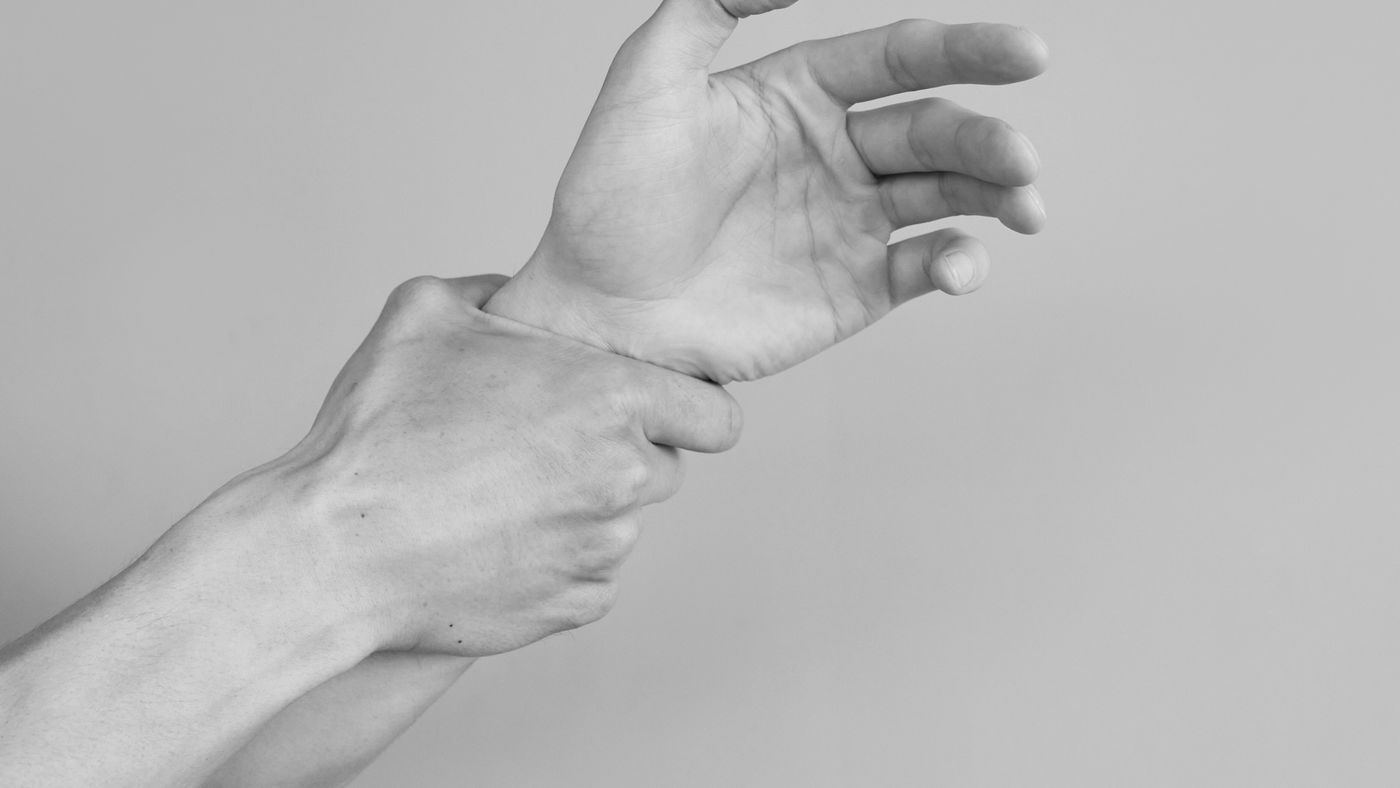
De Quervain's tenosynovitis is pain and swelling around the two tendons that move the thumb, where they run through a narrow tunnel on the thumb side of the wrist. Pulsed electromagnetic field (PEMF) technology is sometimes offered for it. We found no published PEMF trial in this condition, sham-controlled or otherwise, and the largest reviews of De Quervain treatment do not include one. This is an evidence-gap brief: it sets out what the reviews do support, which nearby studies are not PEMF evidence, and why a general soft-tissue trial cannot fill the gap.
What we searched
We searched PubMed on 30 October 2026 for pulsed electromagnetic field, PEMF, electromagnetic field, magnetic field therapy and magnetotherapy combined with De Quervain, tenosynovitis and wrist or thumb tendon conditions. None of the results was a trial of PEMF in De Quervain's tenosynovitis, in people or in animals. Most hits were magnetic resonance imaging (MRI) studies, which use magnets to take pictures and are not a treatment. We did not find a US prevalence figure for the condition from CDC, NCHS or NIH, so this brief gives none.
What the trials measured
The largest reviews of De Quervain treatment
Systematic review and network meta-analysis of every randomized trial of any De Quervain treatment, 30 studies with 1,663 patients, mean age 46, 80% women (Challoumas et al., JAMA Network Open, 2023). Adding 3 to 4 weeks of thumb spica immobilization to a corticosteroid injection gave statistically but not clinically significant gains in function in the short term (mean difference 10.5 points, 95% CI 6.8 to 14.1) and mid term (9.4, 95% CI 7.0 to 11.9), on moderate-certainty evidence. Ultrasound-guided injections ranked top for pain. The authors suggest injection followed by 3 to 4 weeks of immobilization as first-line treatment. The full text names shockwave, laser, ultrasound, acupuncture and injections among the treatments studied; it contains no PEMF trial. (PubMed 37889490)
Systematic review and network meta-analysis of conservative treatments, 21 studies with 1,178 adults, 12 in the network (Cuenca-Zaldívar et al., Journal of Hand Therapy, 2026). Full-time orthosis plus corticosteroid injection ranked highest for pain and function, followed by injection alone and acupuncture. Pain results were highly heterogeneous (I² = 83.5%), most studies had a high risk of bias, and certainty ranged from low to very low. PEMF is not named in the abstract. (PubMed 41298159)
Reviews of physical modalities
Systematic review of physical modalities for wrist and hand tenosynovitis, 15 studies, 10 of them randomized but only 2 at lower risk of bias (Ferrara et al., Seminars in Arthritis and Rheumatism, 2020). The 7 De Quervain papers studied ultrasound therapy, low-level laser, phonophoresis and anodyne therapy. Laser and therapeutic ultrasound were the most used and most effective. No PEMF study was among them. (PubMed 33065423)
Systematic review of passive physical modalities for wrist and hand soft-tissue injuries, 6,618 articles screened, 11 appraised, 7 at low risk of bias, 2 of them in De Quervain (D'Angelo et al., Journal of Manipulative and Physiological Therapeutics, 2015). Kinesio tape or a thumb spica cast may offer short-term benefit for De Quervain. No low-risk-of-bias study of any other passive modality for the wrist or hand was found. (PubMed 26303967)
Systematic review of conservative and surgical treatment for trigger finger, Dupuytren and De Quervain disease, 2 reviews and 37 randomized trials, 15 of them in De Quervain (Huisstede et al., Archives of Physical Medicine and Rehabilitation, 2018). It found moderate evidence for corticosteroid injection in the very short term and for a thumb splint added to an injection in the short and mid term. The De Quervain trials covered physiotherapy, injections, surgery and other conservative care; PEMF is not named. (PubMed 28860097)
European treatment guideline built by Delphi consensus, 35 hand therapists, hand surgeons and rehabilitation physicians (Huisstede et al., HANDGUIDE study, Physical Therapy, 2014). Patients should always receive instructions, combined with anti-inflammatory drugs, splinting, both, corticosteroid injection, injection plus splinting, or surgery. PEMF is not among the treatment options. (PubMed 24700135)
Where the evidence stops
The general soft-tissue trial is not De Quervain evidence
Randomized trial at five US orthopedic clinics, 120 patients with joint or soft-tissue pain, 91 with complete data (48 PEMF, 43 standard care), 14 days (Hackel et al., Pain and Therapy, 2025). Pain fell by a least-squares mean of 1.8 points (36%) with a home device against 0.46 points (10%) with standard care (p<0.0001), and pain-drug use fell from 40% to 18% against 40% to 35%. The full text states the study was not blinded and had no sham arm; patients were allocated alternately, not by a random sequence; the device delivered a pulse-modulated 27.12 MHz radio-frequency carrier together with heat, not a low-frequency PEMF alone; and the commonest pain sites were knee, foot, shoulder and ankle, with no De Quervain result reported. One author held equity in, and another was employed by, the device maker. This trial is cited by some PEMF material on De Quervain. It does not test the condition. (PubMed 39928254)
Laboratory study of a localized pulsed magnetic field in an established animal model of acute tendinitis, assessed with an Achilles functional index (Owegi and Johnson, Biomedical Sciences Instrumentation, 2006). The authors report findings that "suggest a role" for the treatment in soft-tissue injury. The abstract gives no figures, and the model is an animal tendon injury, not the thumb tendons in people. (PubMed 16817646)
- No trial of PEMF in De Quervain's tenosynovitis has been published that we could find. Any claim that PEMF works for this condition rests on other conditions, not on this one.
- The treatments with trial support, a corticosteroid injection and a thumb splint, are given by physicians and hand therapists, and even that evidence is rated low to moderate in certainty.
- The nearest PEMF evidence is in other tendons. In tennis elbow it is mixed and includes a null sham-controlled trial; in Achilles tendinopathy a sham-controlled trial found no added benefit. Neither carries over to the wrist.
- Many De Quervain studies test low-level or high-intensity laser, extracorporeal shockwave, therapeutic ultrasound, TENS, paraffin, acupuncture or taping. These are different technologies, and their results are not PEMF evidence. None is cited here as such.
What to ask when you evaluate a clinic model
- Does any claim about De Quervain's tenosynovitis cite a PEMF trial in that condition? Ask for it by name and PubMed number.
- Is a general joint and soft-tissue trial, or a laser, shockwave or ultrasound result, being presented as evidence for this condition?
- Will patients with thumb-side wrist pain be seen alongside, never instead of, the physicians and hand therapists who diagnose it and provide the injection and splinting that the reviews support?
- How will pain, grip and hand function be recorded for every patient, not only those who do well?
- Can the seller show you this evidence gap, written the way it is here?
Questions buyers ask
Is there a PEMF trial in De Quervain's tenosynovitis?
We found none in PubMed, and the 2023 network meta-analysis of every randomized De Quervain trial does not include one.
What does the research support instead?
Both network meta-analyses ranked a corticosteroid injection combined with a thumb splint highest, and the European HANDGUIDE consensus lists instructions with drugs, splinting, injection or surgery.
Do laser, shockwave or ultrasound studies count as PEMF evidence?
No. They are different technologies, and their De Quervain studies are not PEMF evidence.
The regulatory side
FDA decisions on PEMF devices are specific to one device, one model and one indication, and they do not carry over to other devices. No FDA decision we know of covers PEMF for De Quervain's tenosynovitis. Before you rely on any device for a clinic, look up its own FDA record. Our guide PEMF and the FDA explains how, and what the technology's record since 1979 does and does not cover.
Read the research yourself
Every study above links to its PubMed abstract. More published PEMF studies, each checked against the original paper: pemf-research.com. Compare with our tennis elbow, Achilles tendinopathy and carpal tunnel syndrome briefs.
About the publisher
These guides are written by PainFree. PainFree has run pain-relief clinics in Israel for 25 years, and more than 70 operate today; its Israeli site, in Hebrew, is painfree.org.il. We would want any buyer to read the evidence behind a clinic model this carefully, ours included.
Related research on this site
This article is general information for prospective business owners. It is not legal, financial or medical advice. We do not make earnings claims, and this page is not an offer to sell a franchise or a business opportunity. Study results describe the trials cited, not any particular device or clinic. Equipment supplied to US clinics will meet the applicable US regulatory requirements.